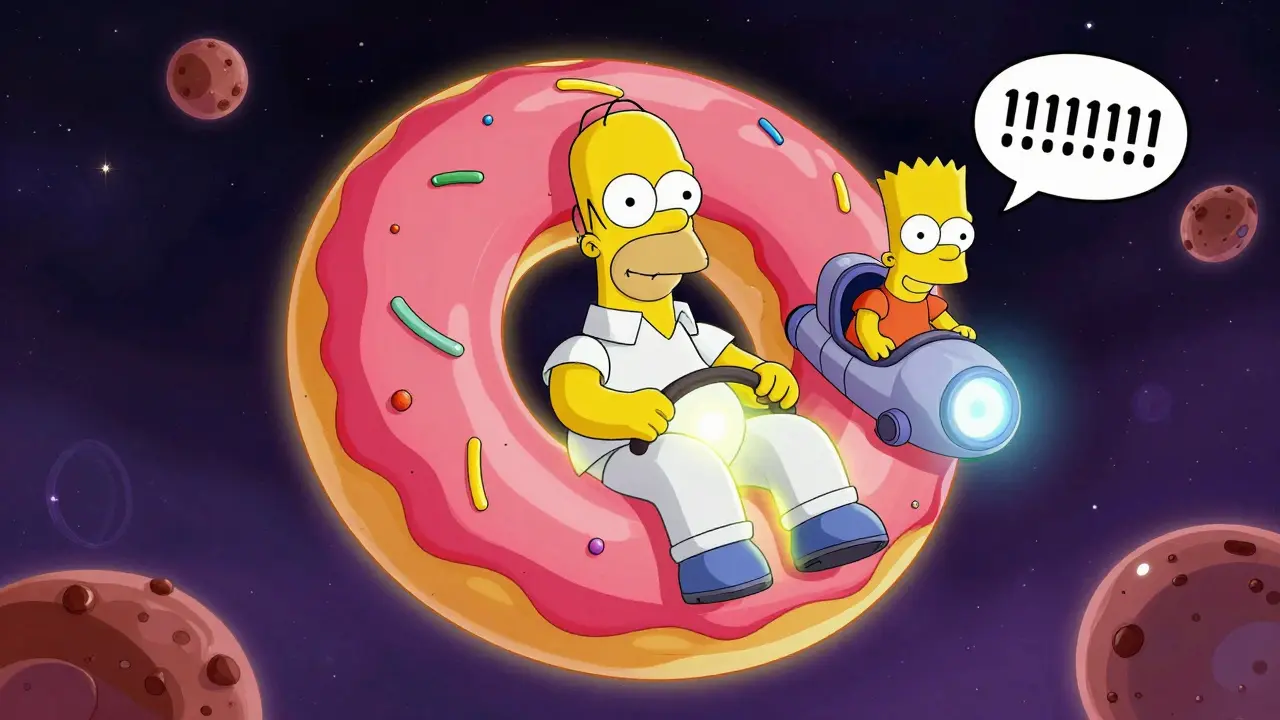
The Homer Simpson (Solana) coin, also known as HOMER, is a meme-based cryptocurrency built on the Solana blockchain. It’s not a serious financial project - it’s a joke turned into a token, built around the iconic, doughnut-loving character from The Simpsons. If you’ve ever seen a crypto token named after a cartoon dog or a dancing cat, you know what you’re dealing with here. HOMER is one of those tokens that doesn’t aim to change the world. It just wants you to laugh, maybe hold on for a wild ride, and possibly get lucky.
Launched in early 2024, HOMER quickly gained attention for its absurd branding. The team behind it didn’t hide behind vague pseudonyms. They named themselves after Simpsons characters: Bart Simpson as lead developer, Marge Simpson handling community operations, and Ned Flanders managing engagement. That’s not a marketing gimmick - it’s the whole personality of the project. You’re not investing in a whitepaper. You’re joining a cartoon-themed party on the blockchain.
The token has a total supply of 420 trillion HOMER coins. Yes, you read that right - 420 trillion. That’s not a typo. It’s a meme number, borrowed from internet culture and used by dozens of other meme coins to signal irreverence. The idea? Make the supply so massive that the price per token looks comically low - and then hope someone buys enough to push the value up.
When HOMER first launched, it had some traction. The all-time high price hit $0.0102102 on April 26, 2024. For a moment, people were trading it. Some made small profits. Others held on, hoping for another surge. But the momentum didn’t last. By August 29, 2025, the price had crashed to $0.000132174. That’s a drop of nearly 99.7% from its peak. Today, major price trackers like CoinMarketCap and Crypto.com show the price as $0.00. Trading volume? Zero. The market cap? Around $26,740 USD. That’s less than what a small startup might spend on a single ad campaign.
So why does this coin still exist? Because meme coins don’t die easily. They linger. They’re not meant to be stable. They’re meant to be viral. HOMER’s team claimed they locked liquidity for one year to protect investors. That sounds responsible - until you realize no one is buying or selling. Locked liquidity means nothing if nobody cares enough to trade.
What’s interesting is that HOMER isn’t alone. There was an earlier version of this coin on the Ethereum blockchain called Homer (SIMPSON 2.0). It launched before HOMER on Solana, with the same 420 trillion supply and same Simpsons theme. But by April 2025, it was abandoned. The team disappeared. The token became worthless. HOMER on Solana was meant to be its successor - but it’s following the same path.
Some of the project’s more creative features still stand out. There’s a Twitter AI bot that claims to learn from every user interaction - answering questions about HOMER with Simpsons-style humor. There’s also a Telegram bot that turns text prompts into cartoon images of Homer, Bart, or even Mr. Burns doing crypto-related things. These aren’t just gimmicks. They’re the only real engagement left. No real utility, no DeFi staking, no NFTs, no roadmap. Just bots and memes.
And here’s the kicker: HOMER isn’t listed on Binance. You can’t buy it there. It’s only available on decentralized exchanges like Onchain (Crypto.com’s DEX) and a few other obscure platforms. That means you need a Solana wallet, some SOL to pay for gas, and the patience to navigate a crypto market where most coins are either scams or jokes. And HOMER? It’s definitely in the joke category.
Is there any chance HOMER could come back? Technically, yes. If someone decides to pump it again - maybe a viral tweet, a celebrity mention, or a fake news story - the price could spike overnight. That’s how meme coins work. But without real demand, without community growth, and without any new features, it’s just a ghost of a token. The charts show nothing. The wallets are empty. The hype is gone.
If you’re thinking of buying HOMER, ask yourself: Are you investing, or are you gambling on a cartoon? There’s nothing wrong with fun. But don’t mistake a meme for a strategy. You won’t find financial advice here. You won’t find innovation. You’ll find a token named after a guy who once turned a donut into a rocket ship. And that’s okay - if you know what you’re getting into.
There’s no future in HOMER unless someone decides to revive it. And right now, no one is. It’s a relic of 2024’s meme coin frenzy - a time when anyone could launch a coin with a funny name and a cartoon logo and get attention. That time has passed. The market moved on. HOMER is still here, but it’s not alive. Just floating.


I'm a blockchain analyst and crypto educator who builds research-backed content for traders and newcomers. I publish deep dives on emerging coins, dissect exchange mechanics, and curate legitimate airdrop opportunities. Previously I led token economics at a fintech startup and now consult for Web3 projects. I turn complex on-chain data into clear, actionable insights.