
Right now, your Bitcoin holdings are protected by math so complex that even the fastest supercomputers on Earth would take billions of years to crack. But what if that math suddenly became easy? That’s not science fiction. It’s the real, growing threat posed by quantum computing to blockchain technology - and it’s closer than most people think.
How Blockchain Security Works Today
Blockchain networks like Bitcoin and Ethereum don’t rely on passwords or secret codes. Instead, they use something called Elliptic Curve Cryptography (a mathematical system that generates public-private key pairs for digital signatures). When you send Bitcoin, you sign the transaction with your private key. Everyone on the network can verify that signature using your public key - but no one can reverse-engineer your private key from it. That’s the magic.This system works because of two hard math problems: factoring huge prime numbers and solving elliptic curve discrete logarithms. Classical computers struggle with these. They take too long. But quantum computers? They don’t.
The Quantum Weapon: Shor’s Algorithm
The real danger comes from Shor’s algorithm (a quantum algorithm that can factor large numbers exponentially faster than any classical method). In simple terms, if a quantum computer runs Shor’s algorithm, it can take a public key and calculate the matching private key in minutes - not billions of years.This isn’t theoretical. Researchers have already demonstrated that Shor’s algorithm works on small-scale quantum systems. The problem isn’t whether it works - it’s whether we have a quantum computer powerful enough to use it on real blockchain keys.
How Many Qubits Do We Need?
A qubit is the basic unit of quantum information. Think of it like a bit in your laptop, but way more powerful because it can be 0 and 1 at the same time. To break Bitcoin’s current encryption, you’d need a quantum computer with about 13 million qubits - and that’s if everything else (error correction, stability, cooling) works perfectly.Today’s most advanced quantum computers, like Google’s 105-qubit Willow chip from 2024, are nowhere close. Even IBM and Rigetti are stuck in the thousands. So, no, your Bitcoin isn’t about to vanish tomorrow.
But here’s the twist: we don’t need to break a key today. We just need to break it before the transaction finishes.
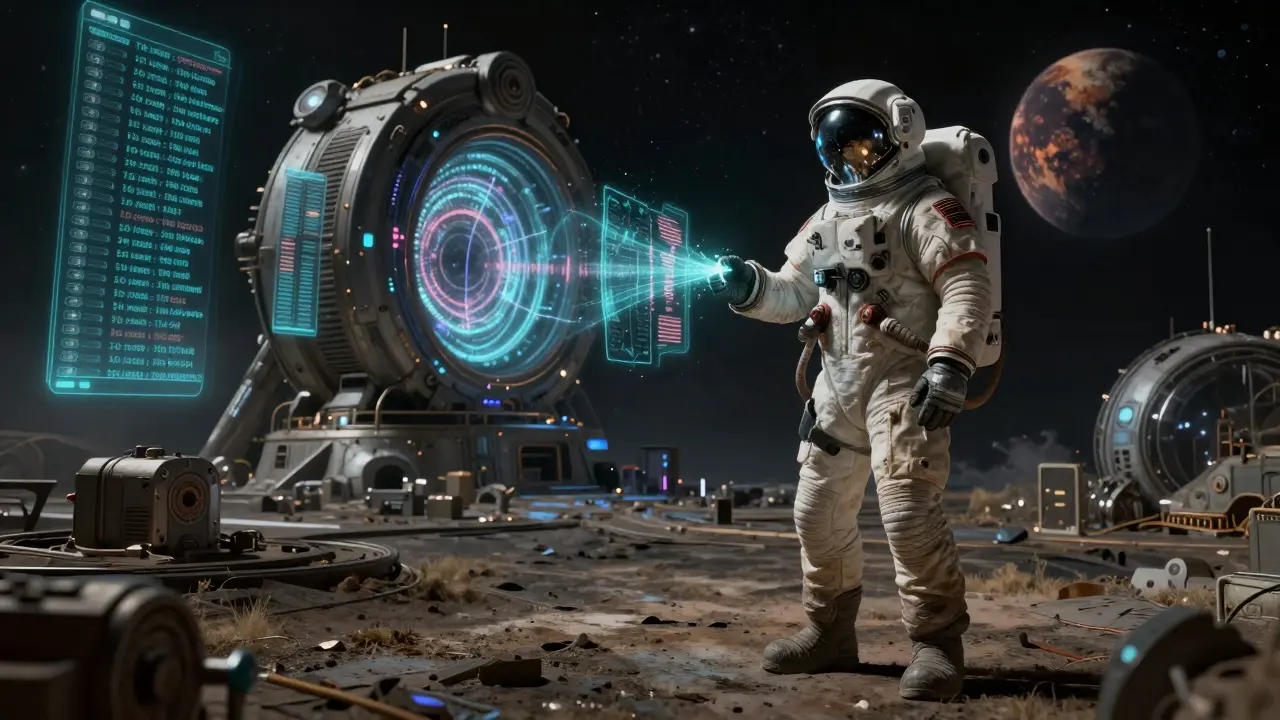
The "Harvest Now, Decrypt Later" Attack
This is the scary part. Hackers don’t have to crack your wallet right now. They just need to collect your public keys - which are permanently stored on the blockchain - and wait. Once quantum computers become powerful enough, they’ll go back and decrypt every transaction ever made.That means every Bitcoin you’ve ever sent, every Ethereum address you’ve used, every wallet you’ve touched - all of it could be exposed. Not in 50 years. Maybe in 10.
Imagine someone collecting public keys from blockchain transactions today, storing them on a hard drive, and then, in 2030, using a quantum machine to unlock every single wallet that ever reused an address. That’s not paranoia. It’s a documented threat model used by intelligence agencies and cybersecurity teams worldwide.
Why Address Reuse Is a Disaster
Here’s the practical truth: if you’ve ever reused a Bitcoin address to receive funds, your private key is already exposed on the blockchain. Every time you receive Bitcoin, your public key is recorded. If a quantum computer can reverse that key, it can steal everything ever sent to that address.Most modern wallets avoid this by generating a new address for every transaction. But older wallets, exchanges, and users who’ve held Bitcoin since 2010 often reuse addresses. Those wallets are sitting ducks.
According to blockchain analytics firms, over 20% of all Bitcoin in circulation is tied to addresses that have been reused. That’s more than $100 billion at risk - if quantum computers break the math.
What’s Being Done? Quantum-Resistant Blockchains
The good news? The blockchain community isn’t waiting. Major projects are already building defenses.Ethereum (a blockchain platform that supports smart contracts and decentralized applications) is testing post-quantum cryptography (new cryptographic algorithms designed to resist attacks from both classical and quantum computers), especially lattice-based cryptography (a math-based system believed to be resistant to Shor’s algorithm). The National Institute of Standards and Technology (a U.S. government agency that sets cryptographic standards) has already selected four quantum-resistant algorithms for standardization - and blockchain developers are starting to adopt them.
Hyperledger (an open-source blockchain framework used by enterprises) is working with quantum researchers to build test networks that simulate quantum attacks. Their goal? To make sure future blockchains are built with quantum resistance from the start.
Even D-Wave, a company that builds quantum computers, is experimenting with using quantum annealing to run blockchain consensus algorithms - not to break them, but to make them more secure and energy-efficient. In 2024, they successfully ran a blockchain across four quantum computers in Canada and the U.S., proving that quantum tech can be part of the solution, not just the problem.

What You Can Do Right Now
You don’t need to be a coder to protect yourself. Here’s what actually works:- Stop reusing addresses. Every time you receive crypto, use a new one. Modern wallets do this automatically.
- Move old funds. If you’ve held Bitcoin since 2012 on the same address, send it to a new wallet. You’re not losing anything - you’re just closing a vulnerability.
- Watch for upgrades. When Ethereum or other major chains announce quantum-resistant updates, make sure you’re on the latest version. Don’t ignore software updates.
- Don’t panic-sell. Quantum threats aren’t here yet. But ignoring them? That’s the real risk.
The Bigger Picture: Beyond Bitcoin
This isn’t just about crypto. Everything that relies on public-key cryptography is at risk: secure websites (HTTPS), encrypted email, digital IDs, government records, even military communications. If quantum computers break RSA and ECC, the entire digital world needs a new foundation.That’s why governments and banks are already investing billions into quantum-safe infrastructure. The blockchain community is just one piece of a much larger puzzle.
Will Quantum Computing Kill Blockchain?
No. It will force it to evolve.Blockchain’s core strength isn’t its current encryption - it’s its decentralized, open, and auditable nature. That won’t change. What will change is how it protects itself. The next generation of blockchains won’t use ECC or RSA. They’ll use math that even quantum computers can’t crack.
The race isn’t between quantum computers and blockchain. It’s between the speed of quantum progress and the speed of human adaptation. And right now, the blockchain world is moving fast - faster than most people realize.
Can quantum computers steal Bitcoin today?
No. Current quantum computers lack the number of stable qubits and error correction needed to break blockchain encryption. The smallest system that could theoretically crack Bitcoin requires around 13 million qubits - today’s best machines have fewer than 1,000. The threat is real, but not immediate.
What is Shor’s algorithm and why is it dangerous?
Shor’s algorithm is a quantum computing method that can factor large numbers and solve elliptic curve problems in polynomial time - something classical computers can’t do efficiently. Since blockchain relies on these math problems for security, Shor’s algorithm could let a quantum computer derive private keys from public keys, making digital signatures useless.
What is the "harvest now, decrypt later" attack?
This is when attackers collect encrypted data - like public keys from blockchain transactions - today and store it, waiting until quantum computers are powerful enough to decrypt it later. It’s a long-game attack, and it’s already happening. Any public key exposed on the blockchain today could be vulnerable in 5-15 years.
Are there quantum-resistant blockchains already in use?
Not yet in mainstream use, but several are in development. Ethereum is testing post-quantum cryptography, and projects like QANplatform and Quantum Resistant Ledger are building blockchains from the ground up with quantum-safe algorithms. These won’t replace Bitcoin or Ethereum overnight, but they’ll become critical for long-term security.
Should I sell my cryptocurrency because of quantum threats?
No. Quantum computers capable of breaking blockchain encryption don’t exist yet, and even when they do, the community will have time to upgrade. Selling now based on fear could mean missing out on future growth. Instead, focus on securing your wallet: avoid address reuse, update your software, and move old funds to new addresses.
How long until quantum computers can break blockchain?
Experts estimate it could take 10-20 years before a quantum computer has enough stable, error-corrected qubits to break Bitcoin’s encryption. But because of the "harvest now" threat, action is needed now. The goal isn’t to predict the exact date - it’s to be ready before it arrives.
The future of blockchain isn’t being destroyed by quantum computing - it’s being upgraded by it. The same technology that threatens today’s security will help build tomorrow’s. The key isn’t fear. It’s preparation.


I'm a blockchain analyst and crypto educator who builds research-backed content for traders and newcomers. I publish deep dives on emerging coins, dissect exchange mechanics, and curate legitimate airdrop opportunities. Previously I led token economics at a fintech startup and now consult for Web3 projects. I turn complex on-chain data into clear, actionable insights.