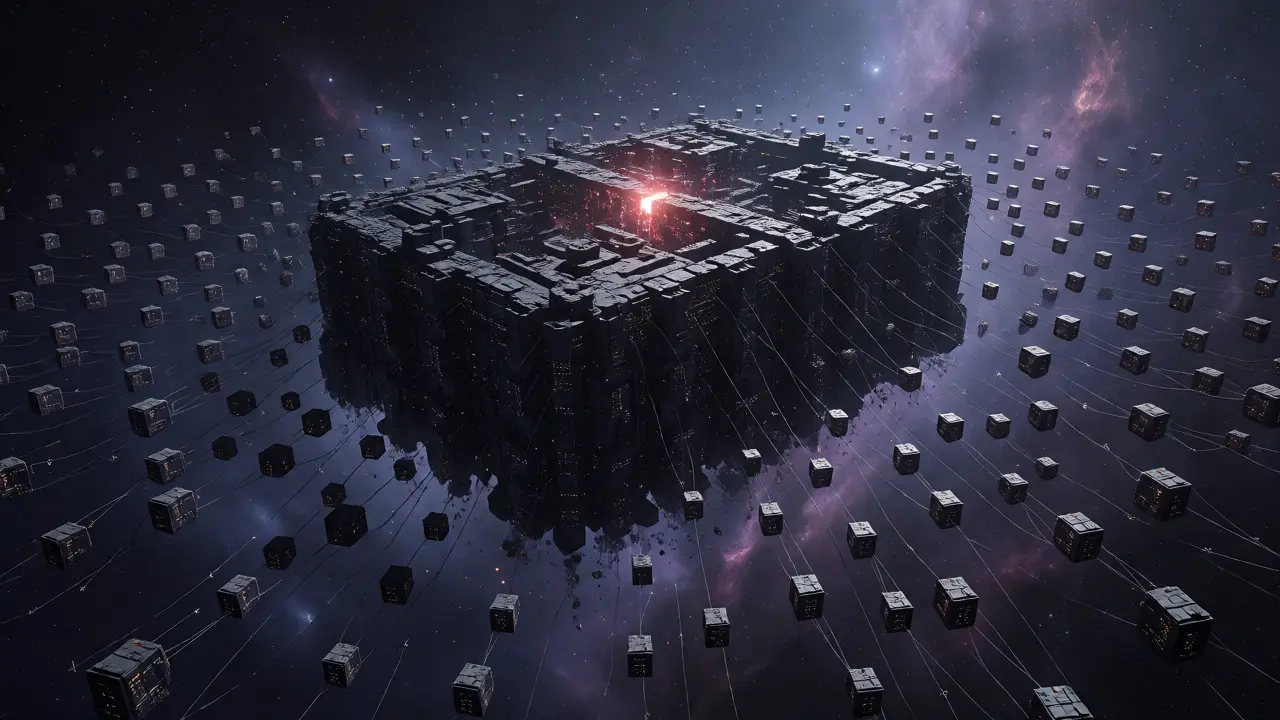
You know that sinking feeling when a major service goes down? Remember when Facebook was offline for six hours in October 2021? Billions of people couldn't post, message, or shop. It wasn't just annoying; it exposed a fragile truth about our digital lives: we store our memories, work, and identities on servers owned by a handful of corporations. If they blink, we go dark. Decentralized storage is the answer to this fragility. It shifts power from centralized giants like Amazon Web Services or Google Drive back to you, using a network of independent computers to hold your data.
This isn't just tech hype. It's a practical shift happening right now in 2026. You're probably wondering if it's actually better than the cloud you already pay for. The short answer is yes, but not for every single file. Let's break down exactly why decentralized storage matters, where it saves you money, and how it keeps your private stuff truly private.
The End of Single Points of Failure
Traditional cloud storage relies on centralization. Your photos live on hard drives in a specific data center, managed by one company. If that center floods, catches fire, or suffers a software bug, your data is at risk. Even with backups, the architecture itself is vulnerable. Centralized storage creates a honeypot for hackers. Attackers know exactly where the treasure is buried.
Decentralized storage networks, like IPFS (InterPlanetary File System) or Filecoin, flip this model on its head. Instead of one giant server farm, your data is chopped into tiny encrypted pieces. These pieces are scattered across thousands of independent nodes worldwide-people’s laptops, dedicated servers, and enterprise machines. No single entity controls the whole picture.
- Redundancy: Because data exists in multiple places, losing one node doesn't mean losing your file.
- Censorship Resistance: Governments or corporations can't easily shut down access to content because there's no single switch to flip.
- Uptime: If one provider goes down, the network automatically routes requests to other nodes holding your data.
Think of it like a library versus a bookshelf in your living room. If the library burns down, books are gone. If everyone in town has a copy of your favorite novel, it survives regardless of what happens to any single house.
True Data Sovereignty and Privacy
Here is the uncomfortable truth about free cloud services: you are often the product. When you upload files to Google Drive or Dropbox, you aren't always keeping them entirely private. In many cases, the provider holds the encryption keys. This means they can scan your files. They do it to serve ads, improve search features, or comply with legal requests. You trade privacy for convenience.
Decentralized storage restores control. With end-to-end encryption, only you hold the private key. The nodes storing your data see nothing but random gibberish. They don't know who you are, what you stored, or even which pieces belong together without your permission. This is called data sovereignty.
For businesses, this is huge. Regulations like GDPR in Europe or CCPA in California demand strict control over user data. Using centralized clouds often requires complex legal agreements to ensure compliance. Decentralized models simplify this. You decide exactly who accesses your data. If you want to delete a file, you revoke the key. The data becomes unreadable everywhere, instantly. No more waiting for a support ticket to confirm deletion.

Slashing Costs: The Egress Fee Killer
Let's talk money. Most users focus on storage costs per gigabyte. But the real killer in traditional cloud bills is egress fees. That's the cost you pay to get your data out of the cloud. AWS, for example, charges significant fees for data transfer out of their network. If you run a media site or a backup service, these fees can dwarf the storage costs.
| Feature | Centralized Cloud (e.g., AWS S3) | Decentralized Network (e.g., Filecoin) |
|---|---|---|
| Storage Cost | Fixed tiered pricing | Market-driven, often lower |
| Egress Fees | High ($0.09/GB typical) | Often zero or negligible |
| Vendor Lock-in | High (proprietary APIs) | Low (open standards) |
| Pricing Model | Monopoly/Oligopoly | Competitive Marketplace |
In decentralized networks, providers compete on price. Since storage is abundant and supplied by individuals or small firms, prices drop. More importantly, many protocols eliminate egress fees entirely. Retrieving your data doesn't hit your wallet as hard. For startups and creators moving large video files, this difference alone can save thousands of dollars annually. You stop paying a tax just to access your own work.
Performance Through Edge Distribution
A common myth is that decentralized storage is slow. In reality, it can be faster for global users. Traditional clouds rely on massive data centers in specific regions (like us-east-1). If you're in Portland, accessing data hosted in Virginia adds latency. If you're in Tokyo, it's worse.
Decentralized networks distribute data geographically. Your file might have chunks stored in Seattle, London, and Singapore. When you request it, the network pulls pieces from the closest available nodes. This mimics Content Delivery Networks (CDNs) but without the corporate markup. As the network grows, more nodes join closer to end-users, naturally improving speed and reducing load on any single server.
This edge computing capability is vital for modern apps. Think about IoT devices or real-time collaboration tools. Lower latency means smoother experiences. You aren't bottlenecked by a distant server rack processing millions of other requests.

Security Through Fragmentation
Hackers love targets. A centralized database is a juicy target. Breach one server, and you potentially steal millions of records. Decentralized storage makes hacking exponentially harder. To steal your data, an attacker needs three things simultaneously:
- They must compromise multiple distinct nodes.
- They need to reassemble the fragmented pieces correctly.
- They must possess your unique decryption key.
Without the key, the fragments are useless noise. This architecture creates a "fortress of nodes." Even if a bad actor breaches a node operator, they gain almost nothing. This security model aligns perfectly with blockchain principles, where immutability and cryptographic proof ensure integrity. You can verify that your file hasn't been tampered with, providing an audit trail that centralized logs can sometimes obscure.
When Should You Switch?
Is decentralized storage right for you today? Not necessarily for everything. Here is a quick decision guide:
- Use it for: Long-term archives, static websites, NFT metadata, sensitive documents requiring privacy, and media assets where egress fees hurt.
- Stick with centralized for: High-frequency transactional databases, applications requiring sub-millisecond consistency, or legacy systems deeply integrated with proprietary cloud APIs.
The hybrid approach is becoming standard. Many companies keep hot data (frequently accessed) in the cloud for speed and move cold data (archives) to decentralized networks for cheap, secure storage. This balances performance with cost efficiency.
Is decentralized storage slower than the cloud?
Not necessarily. While initial retrieval can involve finding nodes, once cached, performance rivals CDNs. Latency depends on node proximity. For global audiences, decentralized networks often provide faster access by pulling data from nearby nodes rather than a distant central server.
What happens if all nodes storing my data go offline?
This is rare due to redundancy protocols. Networks like Filecoin use proofs of replication to ensure data remains stored. However, if nodes fail, the network typically incentivizes new nodes to retrieve and store copies. You should always choose providers with high replication factors (number of copies) to mitigate this risk.
Can I lose my data if I forget my encryption key?
Yes. In true decentralized systems, you are responsible for your keys. Unlike Google, there is no "forgot password" link that lets the provider reset access. Losing your private key usually means permanent loss of access to encrypted data. Secure backup of your keys is critical.
Are decentralized storage costs predictable?
Prices fluctuate based on market supply and demand, similar to cryptocurrency markets. However, long-term contracts can lock in rates. Generally, costs are significantly lower than centralized equivalents, especially when factoring in zero or low egress fees.
Is decentralized storage legal?
Yes, it is legal. However, regulations vary by region. Because data is distributed globally, determining jurisdiction can be complex. Users are responsible for ensuring their stored content complies with local laws regarding copyright and content restrictions.
I'm a blockchain analyst and crypto educator who builds research-backed content for traders and newcomers. I publish deep dives on emerging coins, dissect exchange mechanics, and curate legitimate airdrop opportunities. Previously I led token economics at a fintech startup and now consult for Web3 projects. I turn complex on-chain data into clear, actionable insights.