
You might think all meme coins live on Ethereum or Solana, just waiting for a viral tweet to pump their price. But there’s a weird outlier in the crypto world that refuses to play by those rules. It’s called PEPEPOW, also known as PEPEW. Unlike the thousands of ERC-20 tokens that launched during the 2023 hype cycle, this one runs on its own blockchain using classic Proof-of-Work mining. If you’ve ever wondered if you could mine a frog-themed coin on your home gaming PC and actually have a say in how the network works, this is the project you need to know about.
The Origin Story: Built by the People
PEPEPOW launched on May 12, 2023, right in the middle of the meme coin frenzy. But while other projects were busy selling pre-mined tokens to venture capitalists, PEPEPOW took a different path. The team behind it-mostly anonymous contributors working under aliases like "MattF42" on GitHub-described the project as "built by the people, for the people." There was no premine. No central company owned the chain. Instead, the developers forked the code from Dash, a privacy-focused cryptocurrency known for its masternode architecture, and adapted it for the meme culture surrounding the Pepe the Frog internet icon.
This approach creates a stark contrast with typical meme coins. Most rely on smart contracts where the developer holds significant power. PEPEPOW relies on hardware. To get coins, you have to compute them. This philosophy attracts a specific type of user: the hobbyist miner who cares more about decentralization and participation than quick flips. The community often describes itself as a collective organization rather than a corporation, emphasizing open governance and grassroots growth.
How the Technology Works: A Hybrid Model
Technically, PEPEPOW isn’t just a simple copy-paste job. It operates as a layer-1 blockchain, meaning it has its own ledger and consensus mechanism. The core technology is derived from Dash version 0.12.2.2, incorporating features like SHANI functionality from later Dash updates. But the real twist is the hybrid consensus model. It combines standard Proof-of-Work (PoW) mining with a masternode layer.
Here is how the two tiers function:
- Mining Layer: Regular users use their CPUs or GPUs to solve cryptographic puzzles and validate transactions. This secures the network and issues new coins.
- Masternode Layer: Users lock up a certain amount of collateral to run a full node that provides extra services, such as instant transactions and governance voting rights.
The block time is set at 20 seconds, which is relatively fast compared to Bitcoin but slower than some high-throughput chains. The initial block reward was massive-100,000 PEPEW per block-to incentivize early miners. Over time, this reward decreases according to a fixed emission schedule, capping the total supply at approximately 90 billion coins. This design aims to keep mining accessible to individuals with consumer-grade hardware, avoiding the dominance of specialized ASIC machines.
| Attribute | Value / Description |
|---|---|
| Consensus Mechanism | Hybrid Proof-of-Work & Masternodes |
| Base Code | Dash v0.12.2.2 with SHANI updates |
| Block Time | 20 Seconds |
| Max Supply | ~90,000,000,000 PEPEW |
| Mining Algorithm | Memehash (until block 1.93M), then XelisV2 |
| Hardware Requirement | CPU/GPU Friendly (AMD, Nvidia, Intel) |
The Mining Algorithm Shift: Memehash to XelisV2
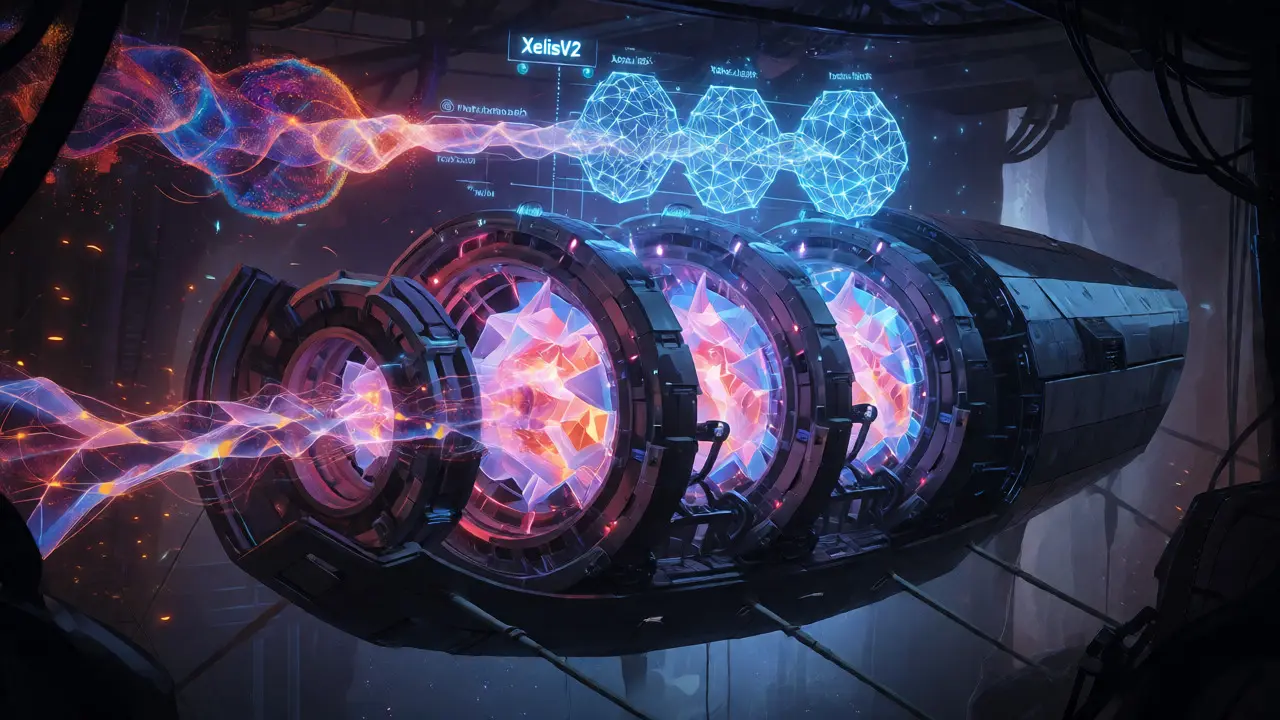
One of the most interesting aspects of PEPEPOW is its planned algorithm evolution. Initially, the network used an algorithm called "memehash," designed specifically to be resistant to ASICs and friendly to general-purpose graphics cards. However, as the network matured, the developers identified a need for stronger security and better decentralization properties.
To address this, they implemented a hard fork transition. Up until block height 1,930,000, the network ran on memehash. After that point, it switched to "XelisV2." Why does this matter? XelisV2 is a modern, memory-hard algorithm that further levels the playing field between small miners and large farms. By switching algorithms mid-lifecycle, the project demonstrates a commitment to active development-a rarity among meme coins that often stagnate after launch. This technical agility helps maintain network health and keeps GPU miners engaged, ensuring that the hash rate remains distributed across many nodes rather than concentrated in a few hands.
Tokenomics and Supply Confusion
If you look at different data aggregators, you’ll notice slight discrepancies in PEPEW’s supply numbers. This is common in smaller, community-run projects where data feeds aren't perfectly synchronized. Most sources agree on a maximum supply cap of roughly 90 billion coins. However, circulating supply estimates vary widely, ranging from 40 billion to 56 billion depending on the platform and date.
For instance, CoinMarketCap reported a circulating supply of nearly 40 billion in early 2026, while other trackers suggested higher numbers. These differences usually stem from how different exchanges report locked coins, masternode collateral, or unsynced blocks. Despite these minor variances, the core tokenomic principle remains clear: inflationary pressure decreases over time, and the total number of coins that will ever exist is finite. This scarcity model contrasts sharply with infinite-supply memes like Dogecoin, appealing to investors who prefer predictable monetary policy even in speculative assets.
The Big Trap: Two Different PEPEW Tokens
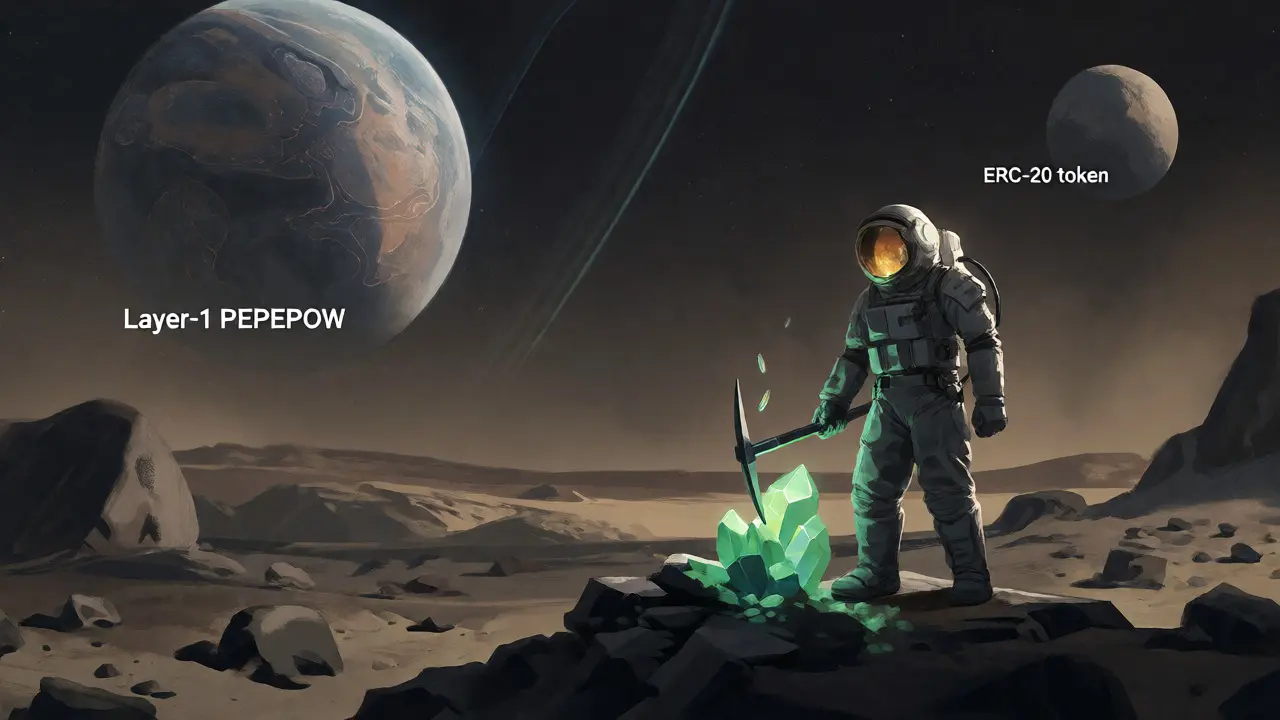
Here is where things get tricky for newcomers. There are actually two distinct cryptocurrencies using the ticker "PEPEW." You must distinguish between them to avoid buying the wrong asset.
- PEPEPOW (Layer-1): This is the main subject of our article. It runs on its own blockchain, uses Proof-of-Work, and has a max supply of ~90 billion. It is mined, not minted via smart contract.
- Pepe PoW (ERC-20): This is a separate token on the Ethereum blockchain. It was created in July 2023, has a much smaller supply of 120 million, and trades on decentralized exchanges like Uniswap. Its market cap is tiny, often hovering around $2,000.
Because both share the same ticker symbol, automated trading bots and inexperienced traders can easily mix them up. When checking prices on sites like CoinGecko or Coinbase, always verify the contract address or the underlying blockchain. The Layer-1 coin is traded on smaller centralized exchanges and through peer-to-peer networks, while the ERC-20 token lives in the DeFi ecosystem. They do not interact directly; owning one does not give you rights to the other.
Market Performance and Liquidity
Let’s talk numbers. As of late 2025 and early 2026, PEPEPOW remains a micro-cap asset. Its price fluctuates in the seven-decimal-place range, often trading between $0.00000038 and $0.00000328 USD. Daily trading volumes are low, sometimes dropping below $100 USD on quiet days. This lack of liquidity means that large sell orders can significantly impact the price, and spreads between buy and sell offers can be wide.
Despite the low volume, the coin has maintained a presence on major tracking platforms. LiveCoinWatch ranked it around #4534 by market capitalization in March 2026. While it hasn’t seen the explosive growth of top-tier memes like Shiba Inu or Pepe (the original ERC-20), its survival is noteworthy. Many Proof-of-Work meme coins launched in 2023 have since died out, with empty blocks and abandoned repositories. PEPEPOW continues to update its wallet software, hold governance votes, and process transactions, proving that a niche community can sustain a network without massive marketing budgets.
Who Should Invest in PEPEPOW?
PEPEPOW isn’t for everyone. If you’re looking for a safe haven or a blue-chip crypto investment, look elsewhere. This coin appeals to three specific groups:
- Hobbyist Miners: If you have idle GPU power and enjoy the technical challenge of setting up a mining rig, PEPEW offers a way to earn crypto without competing against industrial farms.
- Decentralization Purists: Users who dislike VC-backed tokens and prefer assets distributed fairly through work (mining) rather than wealth (staking/buying).
- Speculators on Low-Cap Gems: Traders who believe that micro-cap PoW coins could see sudden interest if the broader market shifts toward "real utility" narratives over pure speculation.
However, be aware of the risks. The project lacks a formal corporate structure, which can lead to communication gaps. Documentation is available on GitHub but may require technical literacy to navigate. And because liquidity is thin, exiting a position quickly can be difficult.
Final Thoughts
PEPEPOW represents a stubborn adherence to old-school crypto values in a modern, meme-driven market. It proves that you don’t need billions in marketing spend to keep a blockchain alive-you just need committed miners and a community that believes in the tech. Whether it becomes a major player or remains a niche experiment depends largely on its ability to attract new participants and clarify its branding against the confusing ERC-20 counterpart. For now, it stands as a resilient survivor in the wild west of cryptocurrency.
Is PEPEPOW the same as the Pepe ERC-20 token?
No, they are completely different assets. PEPEPOW (PEPEW) is a layer-1 cryptocurrency with its own blockchain and Proof-of-Work consensus. The popular "Pepe" token is an ERC-20 token on the Ethereum blockchain. They share similar names and tickers but operate on different networks with different supplies and use cases.
Can I mine PEPEPOW with my computer?
Yes, PEPEPOW is designed to be GPU-friendly. You can mine it using standard graphics cards from AMD or Nvidia. It also supports CPU mining, though GPUs are generally more efficient. Specialized ASIC miners are less effective due to the memory-hard nature of the XelisV2 algorithm.
What is the maximum supply of PEPEW?
The maximum supply is capped at approximately 90 billion coins. The exact figure varies slightly across data providers due to rounding and emission calculations, but the protocol enforces a hard limit near this number.
Why did PEPEPOW change its mining algorithm?
The network transitioned from "memehash" to "XelisV2" at block 1,930,000. This change was made to improve security, enhance decentralization, and ensure the algorithm remained resistant to ASIC dominance, keeping mining accessible to everyday users.
Where can I buy PEPEPOW?
Due to its micro-cap status, PEPEPOW is not listed on major exchanges like Binance or Coinbase for direct trading. It is typically found on smaller centralized exchanges or acquired through peer-to-peer swaps and mining pools. Always verify the contract or network details before purchasing.
I'm a blockchain analyst and crypto educator who builds research-backed content for traders and newcomers. I publish deep dives on emerging coins, dissect exchange mechanics, and curate legitimate airdrop opportunities. Previously I led token economics at a fintech startup and now consult for Web3 projects. I turn complex on-chain data into clear, actionable insights.