
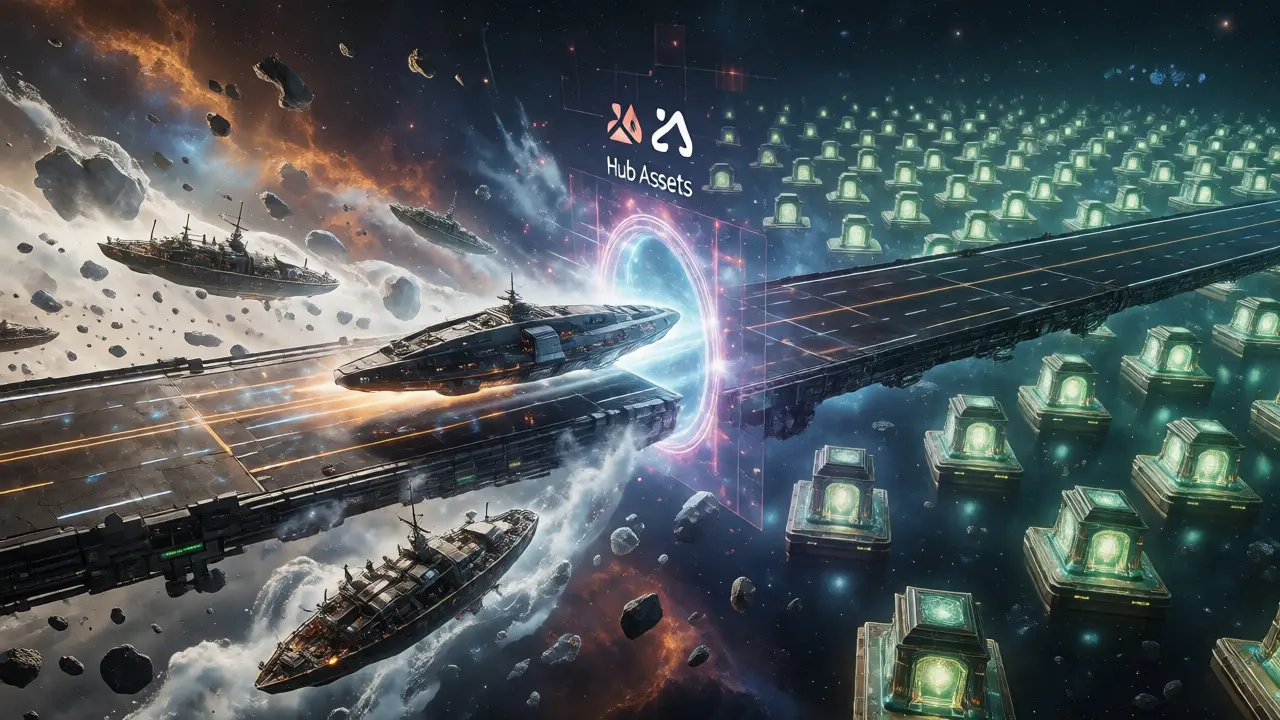
Imagine you have assets scattered across five different blockchains. Managing them feels like juggling water balloons-messy, risky, and inefficient. Mitosis is a modular Layer 1 blockchain and decentralized finance (DeFi) protocol designed to solve this exact problem by creating a unified execution layer for cross-chain liquidity. Instead of leaving your funds fragmented, Mitosis converts deposits from various "branch chains" into a single, programmable asset class called Hub Assets. At the heart of this ecosystem sits the MITO native utility and governance token, which powers everything from validator consensus to user incentives.
If you are wondering whether this project is just another hype cycle or a genuine infrastructure upgrade, you are in the right place. We will break down exactly how Mitosis works, why its three-token model matters, and what the current market data says about MITO’s potential. This isn't academic theory; it's a practical look at a protocol trying to make multi-chain DeFi actually usable.
The Core Problem: Fragmented Liquidity
Most Layer 1 blockchains operate like isolated islands. If you want to provide liquidity on Ethereum, you lock funds there. If you want yield on Arbitrum, you move funds there. This fragmentation creates inefficiency. Capital gets stuck in silos, and users lose out on the best yields because moving assets between chains involves high fees and slow bridge times.
Mitosis addresses this with a hub-and-spoke architecture. Think of it as a central bank for DeFi liquidity. When you deposit assets on connected branch chains (like Ethereum or BNB Chain), Mitosis mints 1:1 representations of those assets on its own Layer 1 network. These are called Hub Assets. Because they exist on a single chain, they become fungible and composable. You can use one unified asset to access yield strategies across multiple networks without constantly bridging back and forth.
How MITO Powers the Ecosystem
The MITO token is not just a speculative asset; it is the fuel that keeps the engine running. It serves four distinct functions that align incentives for everyone involved in the network:
- Governance: Holding and staking MITO grants you voting rights. You decide which protocols get integrated, how liquidity is allocated, and how upgrades happen.
- Staking and Security: Validators stake MITO to secure the network. Interestingly, while validator collateral is slashable (meaning they lose tokens if they misbehave), regular user stakes are explicitly non-slashable. This lowers the barrier to entry for passive participants.
- Incentivization: The protocol uses MITO to reward liquidity providers who deposit assets into Mitosis Vaults. This encourages users to bring real capital into the system rather than just trading the token.
- Fees and Utility: MITO is used to pay for certain protocol interactions and access enhanced yield opportunities within the Matrix platform.
This design ensures that the people providing liquidity-the ones actually making the protocol useful-are also the ones governing it. It puts the power in the hands of active participants rather than passive speculators.
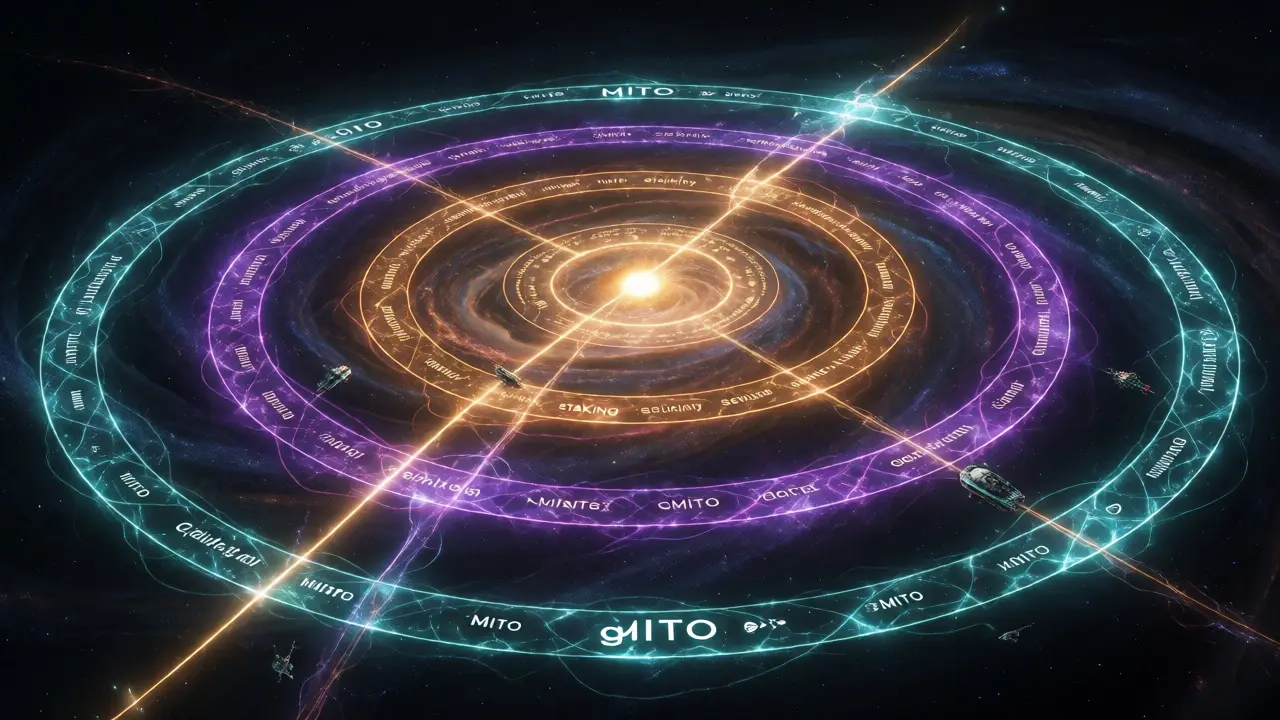
The Three-Token Model: MITO, gMITO, and tMITO
One of the most interesting aspects of Mitosis is its tripartite token structure. Most projects have one token for governance and one for utility. Mitosis splits these roles further to encourage long-term commitment.
| Token Type | Primary Function | Key Benefit | Risk Profile |
|---|---|---|---|
| MITO | Utility & Staking | Base currency for fees, rewards, and securing the network. | Standard market volatility. |
| gMITO | Governance | Voting rights on vaults and protocol parameters. Earned by staking MITO. | No direct financial risk; value tied to influence. |
| tMITO | Time-Locked Yield | Higher yields for locking MITO for extended periods. | Liquidity risk (tokens locked). |
When you stake MITO, you receive gMITO. This separates the act of securing the network from the act of governing it, although both require holding the base token. Meanwhile, tMITO is a time-locked version of MITO. If you believe in the long-term vision, you can lock your tokens to earn boosted rewards. This mechanism reduces sell pressure because holders are incentivized to stay put, stabilizing the ecosystem during volatile market conditions.
Technical Architecture: ERC-4626 and Hub Assets
Under the hood, Mitosis relies heavily on the ERC-4626 standard. For the uninitiated, ERC-4626 is a standardized interface for tokenized vaults. Why does this matter? It means every yield-bearing position created on Mitosis looks the same to other smart contracts. Whether your yield comes from lending on Aave or farming on Uniswap, it gets wrapped into a uniform token format.
This standardization allows for two main types of position tokens:
- miAssets: Created via the Ecosystem-Owned Liquidity (EOL) mechanism. These represent shares in vaults managed directly by the community treasury.
- maAssets: Produced through the Matrix yield platform, which aggregates external yield strategies.
By converting diverse yield sources into these standardized tokens, Mitosis makes it easier for developers to build new applications on top of existing liquidity. You don't need to write custom code for every new yield source; you just interact with the standard ERC-4626 interface.
Market Performance and Tokenomics
Let's look at the hard numbers. As of late 2025 and early 2026, MITO has experienced significant price volatility, typical for early-stage DeFi assets. The total supply is fixed at 1 billion tokens. At its initial exchange listing in August 2025, only about 18% of the supply was circulating. This low float often leads to high price swings because small buy or sell orders can move the market significantly.
Data shows that MITO launched with considerable enthusiasm, trading around $0.15 USD shortly after its Token Generation Event (TGE). However, like many altcoins, it faced a correction phase. By September 2026, prices had dropped to the low cents range (approximately $0.016-$0.017 USD). This represents a drawdown of nearly 90% from its post-launch highs. While this might scare off casual observers, seasoned crypto investors know that deep corrections can create accumulation zones if the underlying fundamentals hold up.
Circulating supply figures vary slightly depending on the data source, ranging between 181 million and 196 million tokens. This discrepancy usually stems from how different aggregators account for vested team allocations or locked treasury funds. Always check the latest official documentation for the most precise unlock schedules.
Why Choose Mitosis Over Other L1s?
You might ask, "Why not just use Ethereum or Solana?" The answer lies in specialization. General-purpose blockchains try to do everything. Mitosis focuses exclusively on being the best execution layer for cross-chain liquidity. It doesn't compete with Ethereum on transaction speed for gaming or NFTs; it competes on efficiency for DeFi yield seekers.
Traditional bridges are clunky. They often involve wrapping tokens, losing native composability, and paying double gas fees. Mitosis abstracts this away. You deposit once, and your assets become part of a unified liquidity pool that can be routed to the highest-yielding strategy across all connected chains. This "set it and forget it" approach saves time and reduces operational errors.
Risks and Considerations
No investment is without risk, and MITO is no exception. Here are the key factors to weigh:
- Adoption Hurdles: Convincing users to move liquidity to a new Layer 1 requires trust. Competitors like LayerZero or Wormhole already dominate the messaging space. Mitosis needs to prove its vaults offer better net yields after fees.
- Complexity: The three-token model and ERC-4626 standards add layers of complexity. New users may find the learning curve steep compared to simpler DEXs.
- Market Volatility: With a market cap in the tens of millions, MITO is highly sensitive to broader crypto market trends. A bear market could suppress growth regardless of technical progress.
- Regulatory Uncertainty: As a governance token with yield implications, MITO falls into a gray area for some regulators. Keep an eye on global compliance developments.
Despite these risks, the structural design offers protection. Non-slashable staking means ordinary users won't lose their principal due to validator downtime. And the focus on ecosystem-owned liquidity ensures that value accrues to the community rather than just early venture capitalists.
Getting Started with MITO
If you want to participate, here is a simple roadmap:
- Acquire MITO: Buy tokens on centralized exchanges that listed MITO in August 2025.
- Stake for Governance: Lock your MITO to receive gMITO. Use this to vote on upcoming proposals.
- Provide Liquidity: Deposit stablecoins or ETH into Mitosis Vaults. You will receive miAssets or maAssets representing your share.
- Optimize Yield: Consider locking some MITO into tMITO positions if you plan to hold long-term. This boosts your rewards without requiring constant monitoring.
Remember, DeFi moves fast. What works today might change next quarter. Stay engaged with the community forums and follow the official Mitosis University resources for updates on new vault integrations and governance votes.
Is MITO a good investment in 2026?
Investment suitability depends on your risk tolerance. MITO is a small-cap asset with high volatility, having seen significant price corrections since its launch. However, its unique focus on cross-chain liquidity and strong governance model appeals to investors betting on the future of modular DeFi infrastructure. It is not a blue-chip safe haven but a high-risk, high-reward play on ecosystem-owned liquidity.
How is MITO different from other governance tokens?
Unlike many tokens that serve solely as voting mechanisms, MITO is deeply integrated into the network's security and economic engine. It powers validator consensus, pays fees, and drives liquidity incentives. Furthermore, the separation of governance (gMITO) and time-locked yield (tMITO) creates a more nuanced incentive structure that rewards long-term commitment over short-term speculation.
Can I lose my staked MITO?
For regular users, staking MITO is generally considered safe from slashing penalties. The protocol distinguishes between validators, whose collateral can be slashed for misbehavior, and delegators or passive stakers, whose stakes are protected. However, you still face market risk-if the price of MITO drops, the dollar value of your stake decreases even if the token amount remains constant.
What are Hub Assets?
Hub Assets are canonical representations of cryptocurrencies deposited from external "branch chains" onto the Mitosis Layer 1. They allow users to manage liquidity from multiple networks as a single, unified asset. This eliminates the need for complex bridging operations when seeking yield across different ecosystems.
Where can I buy MITO tokens?
MITO is available on several major centralized exchanges that listed the token around August 2025. You can typically trade it against USDT or USDC. Ensure you verify the contract address before sending funds to avoid scams, especially given the proliferation of similar-named tokens in the crypto space.
I'm a blockchain analyst and crypto educator who builds research-backed content for traders and newcomers. I publish deep dives on emerging coins, dissect exchange mechanics, and curate legitimate airdrop opportunities. Previously I led token economics at a fintech startup and now consult for Web3 projects. I turn complex on-chain data into clear, actionable insights.