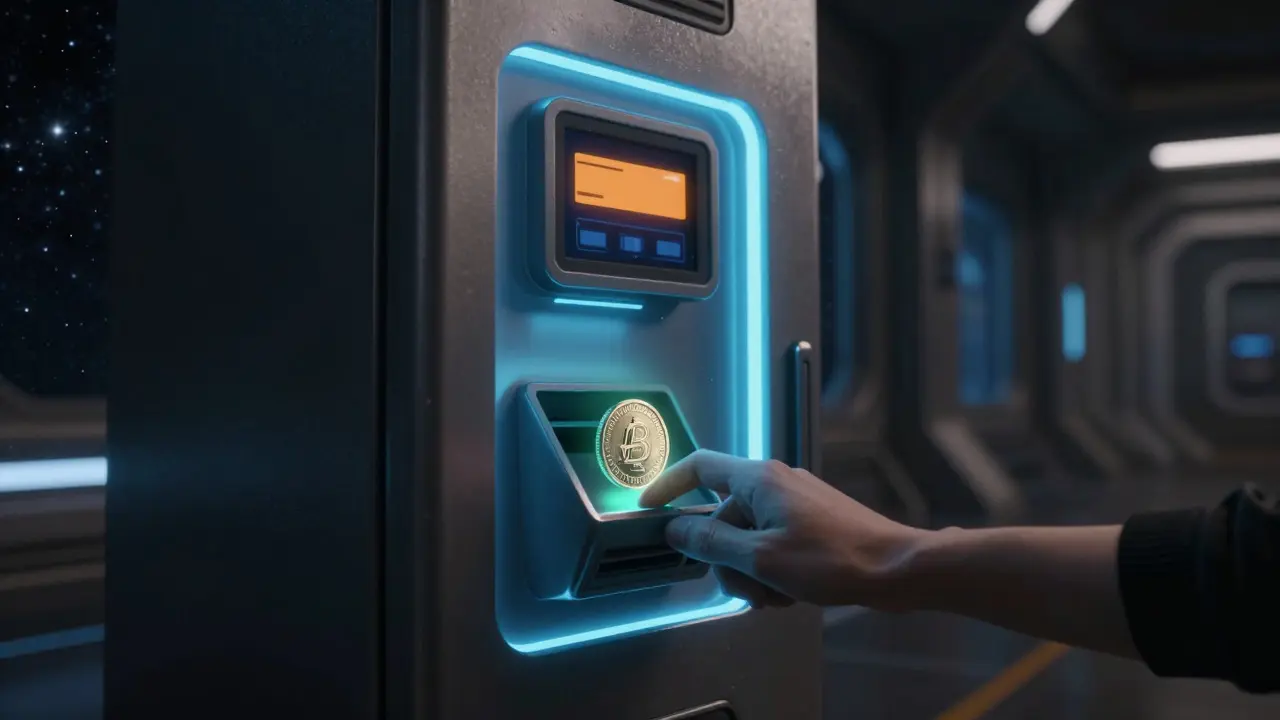
Most people hear about Bitcoin or Ethereum. You rarely hear about FREEdom Coin, which trades under the ticker FREE. Yet this token has been quietly operating in the background since 2018, aiming to solve a very specific problem: making digital currency usable for everyday, small-value transactions. It’s not here to store wealth like gold; it’s designed to be the change you give at a vending machine or the fee you pay for a tiny online service.
If you’ve stumbled upon FREE and are wondering if it’s a scam, a gem, or just noise, you’re not alone. The data is messy, the price is microscopic, and the supply is massive. This guide breaks down what FREEdom Coin actually is, how it works across different blockchains, and whether it makes sense for your portfolio in 2026.
The Core Concept: A Utility Coin for Small Payments
FREEdom Coin is a multi-chain utility token designed for low-cost peer-to-peer transfers and point-of-sale payments. Launched in 2018, the project positions itself as a bridge between traditional finance and the crypto world. The core idea is simple: by having an extremely high supply and an ultra-low unit price, FREE becomes practical for micro-transactions where using Bitcoin might be overkill due to high fees or granularity issues.
The team behind FREE claims the token can be used at physical stores, e-commerce platforms, and even vending machines. They also highlight integration with debit cards that theoretically connect users to over 90 million vendors worldwide. While these are bold claims, they define the token's primary job: to be a functional payment rail rather than a speculative asset. For beginners, Holder.io describes it as an ideal "start-to-crypto" coin because the low entry barrier allows new users to experiment without risking significant capital on volatile swings.
Technical Architecture: Multi-Chain Presence
One of the most distinct features of FREEdom Coin is its multi-chain deployment. Unlike many tokens that live exclusively on one network, FREE exists simultaneously on three major smart-contract platforms:
- Ethereum: The original home of the token, using the ERC-20 standard.
- Binance Smart Chain (BSC): Known for lower transaction fees, suitable for frequent small swaps.
- TRON: Another high-throughput chain popular for stablecoins and fast transfers.
This structure means you need to be careful with wallets. If you hold FREE on Ethereum, you can’t just send it to a TRON address without bridging. Each version of the token is technically a separate contract on each chain. For traders, this offers flexibility. You can use Uniswap V2 on Ethereum or PancakeSwap v2 on BSC depending on which gas fees are cheaper at the moment. However, for casual users, managing multiple networks adds a layer of complexity that single-chain assets avoid.
Tokenomics: The High-Supply Dilemma
Let’s talk numbers, because they explain why FREE looks the way it does. The maximum supply of FREEdom Coin is capped at exactly 10,000,000,000,000 (10 trillion) tokens. As of late 2025 and early 2026, the circulating supply hovers around 8 to 9.94 trillion, depending on which data aggregator you trust. This discrepancy is common in micro-cap coins but highlights a transparency issue. Some trackers report 8 trillion circulating, while others cite nearly 10 trillion.
Why so many tokens? The design philosophy is that a low unit price (often less than $0.00000003) makes psychological barriers to entry lower. Buying 1,000,000 FREE costs pennies, which feels accessible compared to buying a fraction of a Bitcoin. However, this comes with a trade-off. High-supply tokens often struggle with perceived scarcity. In a market where investors chase limited assets, FREE’s abundance can make it harder to attract serious institutional interest.
| Attribute | Value / Detail |
|---|---|
| Ticker | FREE |
| Launch Year | 2018 |
| Max Supply | 10,000,000,000,000 (10 Trillion) |
| Circulating Supply | ~8 - 9.94 Trillion (varies by source) |
| Market Cap | $150,000 - $800,000 range |
| Supported Chains | Ethereum, BSC, TRON |
| Primary Use Case | Micro-payments, P2P transfers, DeFi |

Market Performance and Liquidity
FREEdom Coin sits firmly in the micro-cap segment. Its market capitalization typically fluctuates between $150,000 and $800,000. To put that in perspective, this is a fraction of the value of mid-tier altcoins. On CoinMarketCap, FREE ranks around #2733, indicating it is deep in the long tail of cryptocurrencies.
Liquidity is thin. Daily trading volumes across all exchanges usually sit in the low five-figure USD range. For example, on a typical day in August 2026, total volume might be around $9,000 to $20,000. What does this mean for you? Slippage. If you try to buy or sell a large amount of FREE, your own trade could move the price significantly against you. It’s a coin for small positions, not for heavy lifting.
Volatility is high. Because the market cap is small, news or large whale movements can cause double-digit percentage swings in a single day. We’ve seen FREE jump +32% in 24 hours on certain days in 2026, only to retrace those gains shortly after. This makes it a speculative play rather than a stable store of value.
Where to Buy and Trade FREE
You won’t find FREEdom Coin on Coinbase for direct trading, although they track its price. To buy FREE, you need to go to exchanges that support micro-cap alts. Here are the main venues where you can currently trade:
- Gate.io: One of the more active centralized exchanges for FREE, with daily volumes sometimes exceeding $20,000.
- AscendEX: Offers spot trading and deposit options for both Ethereum and BSC versions of the token.
- Bybit and Bitget: Both list FREE and often run promotional campaigns (like "Learn & Earn") to drive engagement.
- Uniswap V2 and PancakeSwap: For decentralized exchange (DEX) users, these are the primary liquidity pools on Ethereum and BSC respectively.
When buying, check which network the exchange uses. If you buy on Gate.io, ensure you know if you’re receiving the ERC-20 or BEP-20 version before withdrawing to a personal wallet. Sending the wrong type to the wrong network address can result in lost funds.
Risks and Challenges
Like any micro-cap crypto, FREE carries significant risk. The biggest hurdle is adoption. The project claims integration with millions of vendors via debit cards, but concrete, verifiable metrics on actual usage are scarce. Analysts note that while the narrative is strong, the real-world traction remains hard to measure.
Data inconsistency is another red flag. Different platforms report different circulating supplies (8T vs 9.94T), which complicates accurate valuation. Furthermore, the lack of presence on top-tier U.S. exchanges like Coinbase limits visibility for mainstream investors. Finally, the token faces competition from established stablecoins and other payment-focused projects that have deeper liquidity and clearer regulatory paths.
Frequently Asked Questions
Is FREEdom Coin a good investment for beginners?
It depends on your risk tolerance. Because it is a micro-cap with low liquidity, it is highly volatile. Beginners might appreciate the low entry cost, but they should be aware that exiting a position quickly can be difficult due to low trading volumes. It is best viewed as a speculative position rather than a core holding.
Which blockchain is best for storing FREE tokens?
There is no single "best" chain for storage, but BSC (Binance Smart Chain) often has lower transaction fees for moving the tokens. If you plan to use it for DeFi on Ethereum, keep it there. Just ensure your wallet supports the specific network of the token you hold.
Why is the price of FREE so low?
The price is low because the supply is extremely high (10 trillion tokens). The design intent is to make individual units cheap enough for micro-transactions. A price of $0.00000002 is normal for this token and does not necessarily indicate poor performance relative to its peers in the same category.
Can I buy FREE on Coinbase?
No, you cannot buy or sell FREE directly on Coinbase. However, Coinbase tracks the price and provides a converter tool. To trade the asset, you must use other exchanges like Gate.io, AscendEX, Bybit, or Bitget.
What is the maximum supply of FREEdom Coin?
The maximum supply is fixed at 10,000,000,000,000 (10 trillion) tokens. This cap is hardcoded into the token's contract, meaning no more FREE can ever be minted beyond this number.
I'm a blockchain analyst and crypto educator who builds research-backed content for traders and newcomers. I publish deep dives on emerging coins, dissect exchange mechanics, and curate legitimate airdrop opportunities. Previously I led token economics at a fintech startup and now consult for Web3 projects. I turn complex on-chain data into clear, actionable insights.