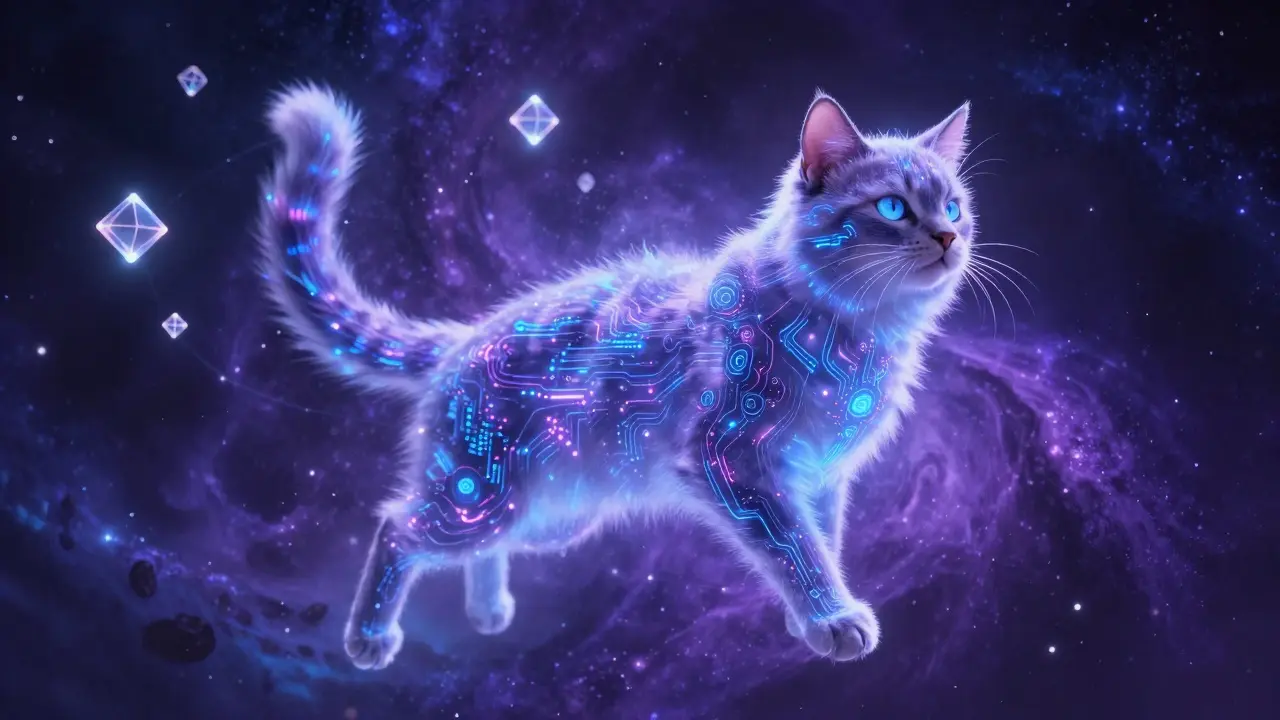
The Tech Behind the Cat: How Bitcat Works
Bitcat doesn't have its own independent network. Instead, it lives on the Solana blockchain a high-performance blockchain known for its extremely fast transaction speeds and low fees . By leveraging this infrastructure, BITCAT avoids the slow confirmation times and high "gas fees" often associated with older networks. For a user, this means you can swap tokens or send them to a friend for a fraction of a cent. The project is essentially a Web3 token that uses Solana's proof-of-history mechanism to ensure that transactions happen almost instantly. Because there is no dedicated whitepaper, the "technology" here is really just the standard SPL (Solana Program Library) token framework, which is the same foundation used by many of the most successful memecoins in the ecosystem.Bitcat Market Stats and Tokenomics
When you look at the numbers, Bitcat is a micro-cap project. It is a high-risk, high-reward play with a very small market footprint compared to giants like Dogecoin or Shiba Inu. One of the most striking things about its supply is the limitation. With a total supply of approximately 100 million tokens, it is significantly scarcer than many other memecoins that launch with trillions of tokens. In the crypto world, a lower supply can sometimes lead to more volatile price swings if demand suddenly spikes.| Attribute | Value |
|---|---|
| Blockchain | Solana |
| Total Supply | ~100 Million BITCAT |
| All-Time High (ATH) | $0.037546 |
| Market Cap | Approx. $12.8K - $59.2K (Variable) |
| Primary Trading Pair | BITCAT/SOL |
Where to Trade and How to Get BITCAT
Since Bitcat is a Solana-based asset, the easiest way to get it is through Raydium a decentralized exchange (DEX) and liquidity provider on the Solana blockchain . On Raydium, you typically swap SOL (the native Solana coin) for BITCAT. This is the most active trading route for the token. If you prefer a centralized platform where you can use a traditional account, Bitcat is listed on MEXC a global cryptocurrency exchange that often lists a wide variety of small-cap and emerging tokens . Using a centralized exchange is often easier for beginners because you don't have to manage your own private keys immediately, though it does mean you are trusting the exchange with your funds. Depending on your location and available platforms, you might also see it on LBANK. A common workflow for buyers is to purchase SOL on a major exchange, move it to a Solana-compatible wallet (like Phantom), and then use Raydium to swap for BITCAT.
Evaluating the Risk: Is it a Safe Bet?
Let's be real: investing in a Bitcat crypto coin is more like gambling than traditional investing. There are several red flags that any cautious trader should notice. First, there is no whitepaper. In the professional crypto space, a whitepaper is the blueprint for the project's future. Without one, you are essentially buying into a marketing slogan. Second, the price history is a rollercoaster. The token has traded significantly below its all-time high, which is common for memecoins but indicates a high level of volatility. However, there is a silver lining: at times, Bitcat has actually outperformed the broader market when Bitcoin or Ethereum were dipping. This suggests there is a small, dedicated group of speculators who keep the token alive even during a "crypto winter." You should also consider the holder count. With fewer than 1,000 recorded holders on some tracking sites, the community is tiny. This means the project's survival depends on a very small number of people. If the main promoters move on to the next "hot coin," the liquidity could dry up quickly.The Memecoin Ecosystem and Bitcat's Place
Bitcat belongs to a broader category of "Animal Coins." This trend started with Dogecoin and expanded to include everything from Shiba Inu to various cat-themed tokens. Why do people buy them? It's rarely about the tech. It's about community, humor, and the hope of finding the "next big thing" before it hits the mainstream. Within the Solana ecosystem, Bitcat competes with thousands of other tokens. Solana is currently the "wild west" for memecoins because the cost of creating a token is incredibly low and the speed of transactions makes it a favorite for day traders. Bitcat's specific angle-the "Mystical Feline Guardian"-is its attempt to carve out a niche in this crowded space.
Common Pitfalls to Avoid
If you decide to dive into the world of BITCAT, keep these rules of thumb in mind to avoid losing your shirt:- Avoid All-Ins: Never put more money into a memecoin than you are willing to lose entirely. These tokens can go to zero overnight.
- Check Liquidity: Before buying a large amount, check the 24-hour volume. If the volume is too low, you might find it impossible to sell your tokens without crashing the price yourself.
- Verify the Contract: Always ensure you are using the correct contract address from a trusted source like CoinGecko. Scammers often create fake tokens with the same name to steal funds.
- Don't Trust "Moon" Promises: If someone on social media promises that Bitcat will hit $1.00 tomorrow, they are likely trying to create an artificial pump so they can sell their own tokens.
What exactly is Bitcat (BITCAT)?
Bitcat is a memecoin built on the Solana blockchain. It is designed around a feline theme and focuses on meme culture rather than providing a specific technical utility or software service. It markets itself as a "mystical feline guardian" of the blockchain.
Which blockchain does BITCAT use?
BITCAT operates on the Solana blockchain. It does not have its own network but instead uses Solana's infrastructure to ensure fast transactions and very low fees.
Where can I buy Bitcat tokens?
You can purchase BITCAT on decentralized exchanges like Raydium (using the BITCAT/SOL pair) or on centralized exchanges such as MEXC and LBANK.
Does Bitcat have a whitepaper?
No, Bitcat does not have a published whitepaper. This is common for many memecoins, as they rely on community engagement and social media narratives rather than a detailed technical or economic roadmap.
How many BITCAT tokens exist?
The total supply of BITCAT is approximately 100 million tokens. Most of these tokens are currently in circulation.
Is BITCAT a safe investment?
Like all memecoins, BITCAT is considered a high-risk asset. It has a very low market capitalization, high volatility, and lacks a technical roadmap. It should be treated as a speculative asset rather than a stable long-term investment.
I'm a blockchain analyst and crypto educator who builds research-backed content for traders and newcomers. I publish deep dives on emerging coins, dissect exchange mechanics, and curate legitimate airdrop opportunities. Previously I led token economics at a fintech startup and now consult for Web3 projects. I turn complex on-chain data into clear, actionable insights.