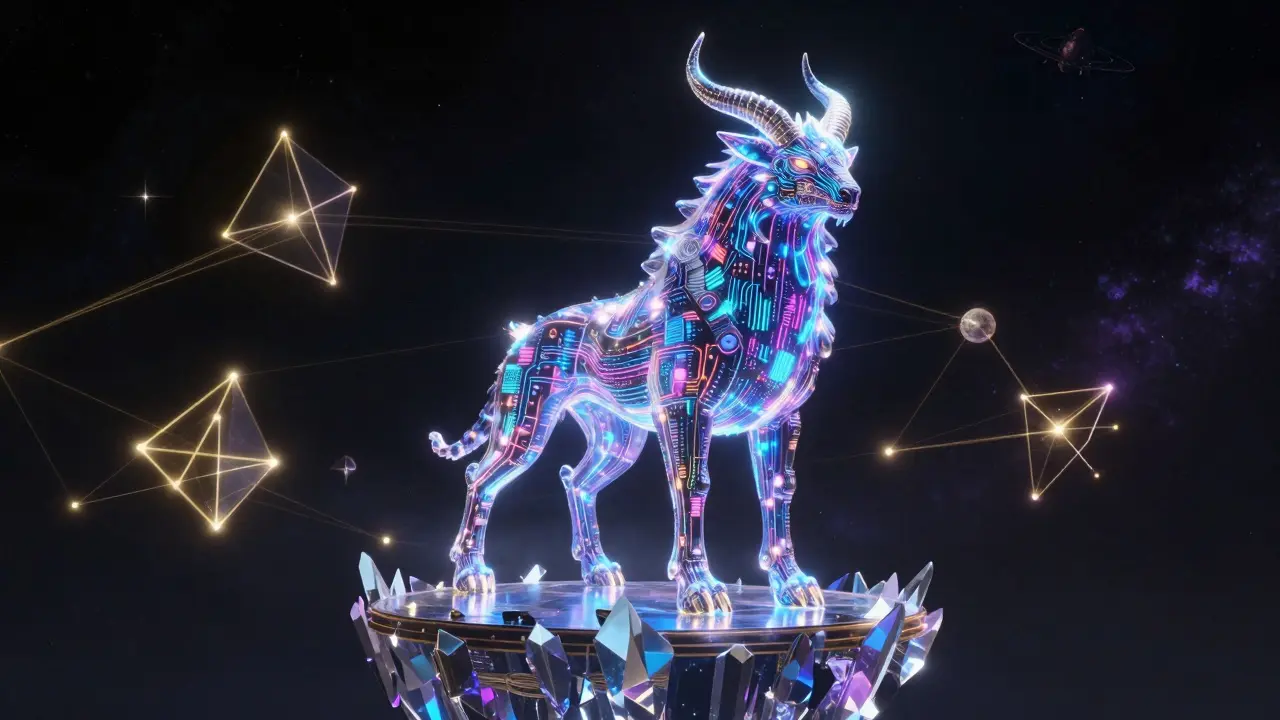
The world of digital collectibles is shifting fast. While most people chase hype, some platforms are trying to merge NFT ownership with actual revenue streams. The Marnotaur a generative NFT collection linked to the TAUR liquidity protocol promises exactly that. If you’ve been watching the cryptocurrency space, you know that holding a token isn’t enough anymore. Utility matters. This guide breaks down exactly what the Marnotaur team has outlined, how their profit-sharing works, and whether the numbers add up before you commit any funds.
What Is the Marnotaur Ecosystem?
To understand the value of the collection, you first need to grasp the underlying infrastructure. The Marnotaur project operates as a liquidity protocol designed for secure undercollateralized margin trading. In simpler terms, it allows traders to borrow assets with less collateral than traditional DeFi standards, which is risky but potentially profitable. The Phase Deposit Limit Status Alpha $10 Completed Beta $100 Completed Gamma $1,000 Completed Live Public Unlimited Active
This infrastructure relies on smart contracts to handle liquidity pools and leverage positions. Unlike basic token swaps, Marnotaur integrates with Chainlink for accurate price feeds. This connection is vital. Without reliable oracle data, a margin trading platform is prone to exploitation. By using a multi-chain approach, the project supports networks including Ethereum, Binance Smart Chain, Polygon, Avalanche, HECO, and Solana. This flexibility means you aren't locked into one expensive network gas fee.
Understanding TAUR Token Economics
The native currency powering this ecosystem is the TAUR token. It acts as the fuel for transactions and governance within the protocol. Tracking its performance requires looking at multiple sources because crypto markets are fragmented. Market data indicates significant variance between exchanges. For instance, CoinGecko has reported prices around $0.0026, while Bybit showed slightly lower valuations near $0.0024 in recent tracking periods. These discrepancies often create arbitrage opportunities for active traders but highlight the importance of checking live rates before transacting.
The supply mechanics are structured to control inflation. During the Token Generation Event (TGE) back in late 2021, 20% of the supply was unlocked immediately. The rest followed a vesting schedule involving a three-month cliff followed by monthly releases. This staggered distribution aims to prevent mass selling events that crash the price. Currently, the fully diluted valuation remains theoretical unless all tokens enter circulation. With a circulating supply far below the max cap, investors need to watch upcoming unlock schedules closely.
- All-Time High: The token reached roughly BTC0.00001511, showing it has experienced massive drawdowns.
- Volatility: Short-term charts show swings of 10-50%, typical for early-stage DeFi projects.
- Liquidity: Daily volume hovers around $17,000 USD, suggesting active interest but limited depth.
How the NFT Profit Sharing Works
Now comes the core incentive. The Marnotaur team has announced a specific campaign for NFT holders. This isn't just about owning digital art; it’s about access to revenue. To qualify for the profit-sharing pool, you must meet two strict criteria. First, you need to own a Marnotaur NFT. Second, you must hold a minimum of $500 worth of TAUR tokens.
Why the $500 threshold? It filters out casual speculators and rewards those who have skin in the game. By requiring token staking alongside the NFT, the protocol aligns holder interests with the platform's health. If the platform fails, your staked tokens lose value. If it succeeds, you receive a share of the operational revenue. This hybrid model attempts to bridge the gap between passive DeFi staking and active NFT collecting.
It is important to note that participation is voluntary. Holding the assets doesn't guarantee profits; it only grants eligibility. The exact distribution percentages haven't been fixed publicly in some disclosures, meaning the return depends on the total volume of trades generated on the platform during that period.
Risks You Should Know Before Entering
Nothing in crypto is guaranteed. While the roadmap looks structured, the historical performance of similar tokens tells a cautionary tale. The TAUR token has traded nearly 99.80% below its all-time high at various points. Enturing a project with such deep correction history requires patience and risk management.
Is the Marnotaur airdrop free?
Based on current data, the reward program functions more like a staking campaign than a free airdrop. You must acquire an NFT and stake $500 in TAUR tokens to qualify for revenue sharing. There is no indication of a zero-cost drop for new users.
Which blockchain networks does TAUR support?
The protocol utilizes a multi-chain strategy supporting Ethereum, BSC, Polygon, Avalanche, HECO, and Solana. Future expansions were noted for Moonbeam and Cardano, though availability depends on development progress.
When did the Marnotaur NFT launch?
The public launch of the generative NFT collection was scheduled for October 4th, 2025. As of March 2026, this phase has concluded, and the focus has shifted to profit sharing execution.
Can I trade TAUR on major exchanges?
Trading pairs exist across several venues. Gate.io reports higher volumes compared to decentralized options. Prices vary slightly between centralized exchanges like Binance and Kraken, so always compare spreads.
What happens to staked TAUR tokens?
Staked tokens remain liquid within the protocol context but are locked to qualify for rewards. Users generally cannot withdraw during an active profit cycle without losing eligibility, though specific smart contract parameters may vary.
Final Thoughts on Strategy
If you decide to engage with Marnotaur, treat it as a calculated risk rather than a savings account. The technology stack is impressive, utilizing established oracle solutions and cross-chain deployment. However, the requirement to hold $500 in a volatile asset like TAUR introduces real financial exposure. Make sure to verify your wallet security and understand the difference between the NFT art value and the token utility value. They operate independently. The success of this model ultimately rests on the trading volume generated by the platform itself.


I'm a blockchain analyst and crypto educator who builds research-backed content for traders and newcomers. I publish deep dives on emerging coins, dissect exchange mechanics, and curate legitimate airdrop opportunities. Previously I led token economics at a fintech startup and now consult for Web3 projects. I turn complex on-chain data into clear, actionable insights.