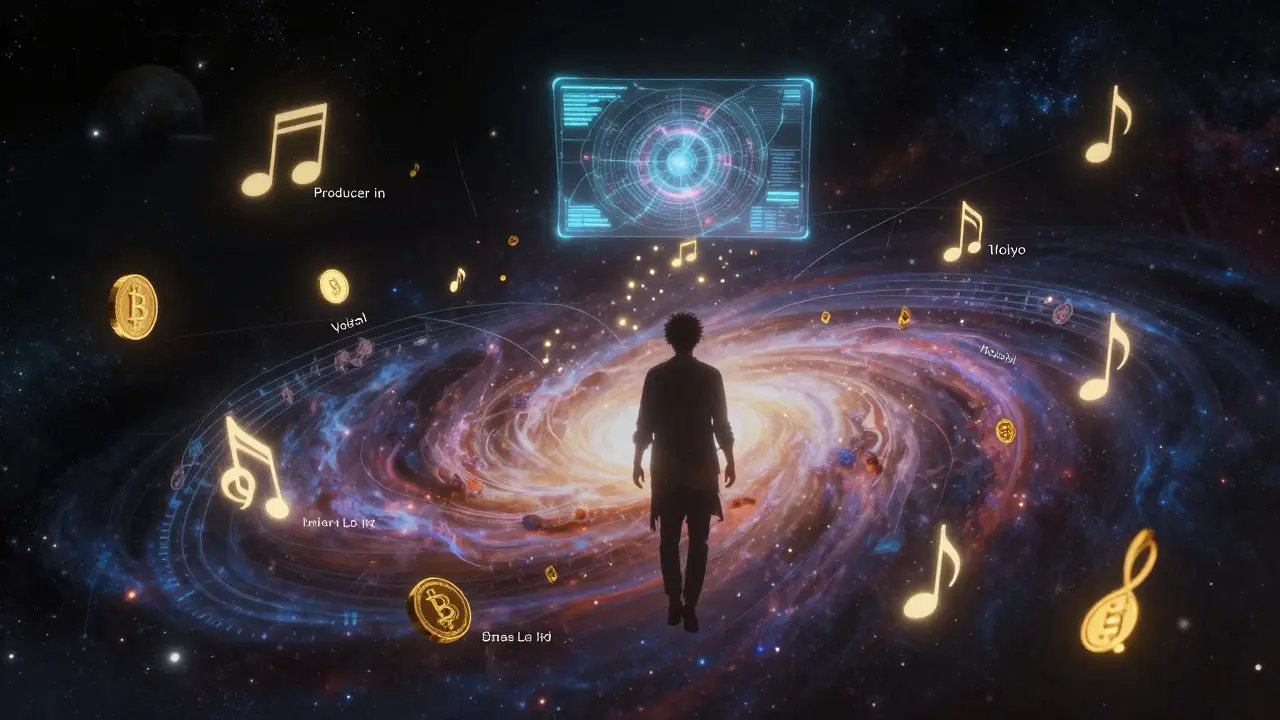
Imagine you’re an independent artist who just released a song. It gets 500,000 streams in two weeks. You should be making money-real money, right? But instead, you wait six months. Then a year. Then, when the payment finally arrives, it’s barely enough for groceries. Why? Because the system is broken. Traditional music rights management is slow, opaque, and stacked against the people who actually create the music. That’s where music rights management on blockchain comes in. It’s not hype. It’s a working fix.
What’s Wrong With How Music Royalties Work Today
Right now, when a song is played on Spotify, Apple Music, or even in a coffee shop, the money doesn’t flow directly to the artist. It goes through a maze of middlemen: record labels, distributors, performance rights organizations (PROs) like ASCAP or BMI, collection agencies, and sometimes even lawyers. Each one takes a cut. And they don’t pay until they’ve collected enough to justify the paperwork. That’s why many artists wait 18 to 24 months to see a dime from streams.
And it gets worse. Who actually owns what? If a song was sampled, remixed, or co-written across three countries, the paperwork gets lost. Disputes drag on for years. Artists lose money. Fans can’t legally remix tracks because they don’t know who to ask. The system was built for physical CDs and radio play-not billions of digital streams per day.
How Blockchain Solves the Ownership Problem
Blockchain isn’t just a ledger for Bitcoin. It’s a tamper-proof, time-stamped record that can track every single change to a song’s ownership. When a track is uploaded to a blockchain-based music rights platform, every contributor-songwriter, producer, vocalist, sample clearance holder-is recorded on the chain. Their share is locked in as a digital token. No more guesswork. No more lost contracts.
Think of it like a public Google Doc that can’t be edited after it’s signed. Once you’re listed as a 15% owner of a song, that fact is written into every block going forward. Even if the artist changes labels, sells their rights, or passes away, the chain keeps going. Every transfer is visible. Every change is permanent.
This matters because music rights are divisible. A single song can have dozens of owners: the original writer, the lyricist, the producer, the label, the publisher, the sample owner, the remix artist. Blockchain doesn’t just track them-it connects them.
Smart Contracts: The Automatic Payroll System
Here’s the real game-changer: smart contracts. These are self-executing pieces of code that run on the blockchain. No human needs to approve a payment. No invoice needs to be sent. No accounting department needs to process a check.
Let’s say your song is streamed 10,000 times on a platform connected to the blockchain. The smart contract detects the play. It checks who owns what percentage. It calculates exactly how much each person is owed-down to the cent. And within seconds, the money is sent directly to their digital wallet. No delays. No middlemen. No excuses.
This isn’t theoretical. Platforms like Audius, Opulous, and Ujo Music already do this. Artists are getting paid within hours, not years. A producer in Lagos gets paid the moment their beat is used in a track streamed in Tokyo. A folk singer in Nashville gets their share from a cover version played on TikTok. All automatically.
Why NFTs Are More Than Just Digital Art
NFTs (non-fungible tokens) are often seen as overpriced JPEGs. But in music, they’re a new kind of ownership tool. An artist can tokenize 10% of their song’s future royalties and sell those shares to fans. Suddenly, your biggest supporter isn’t just a listener-they’re a stakeholder.
When the song earns money, the fans who bought the NFT get a cut. They’re not just cheering-they’re invested. And because the blockchain tracks every transfer, the artist retains full control. No label can take the rights. No publisher can lock them out. The fan owns a piece of the asset, not just a download.
This model flips the script. Instead of fans paying for a concert ticket, they’re paying for a piece of the music itself. It creates loyalty. It creates community. And it gives artists a new revenue stream that doesn’t rely on streaming platforms or record deals.
The Real Limitations (And Why It’s Not Magic)
Blockchain won’t fix everything. And it won’t work if garbage data goes in. If someone uploads a song they don’t own and claims 100% rights, the blockchain will record it as truth. There’s no built-in fact-checker. That’s why verification systems are critical. Some platforms now require identity verification, watermarking, or third-party audits before allowing a track to be registered.
Also, laws don’t change just because technology does. If a song is used illegally in Brazil and the rights holder is in Canada, who enforces the contract? Blockchain records the ownership-but legal enforcement still needs courts, lawyers, and international treaties. The tech is ahead of the law.
And adoption? Slow. Big labels still control 70% of global music revenue. They’re not rushing to ditch their legacy systems. Streaming platforms like Spotify and Apple Music still pay pennies per stream. They’re not eager to cut out their own revenue streams. Change is coming, but it’s not overnight.
Who’s Already Using This?
You don’t have to be a tech genius to benefit. Independent artists are leading the charge. A singer-songwriter in Portland uploaded their album to a blockchain platform last year. They split royalties with their drummer, engineer, and visual artist-all through smart contracts. Within three months, they’d earned more from streaming than they had in the past two years on traditional labels.
Even some indie labels are testing it. A small jazz label in Berlin now registers every release on the blockchain. They’ve cut royalty processing time from 14 months to 48 hours. Their artists are happier. Their fans are more engaged. And their overhead? Down 60%.
It’s not just about money. It’s about trust. When you know exactly who owns what-and when you get paid instantly-you stop feeling like a cog in a machine. You feel like a creator again.
The Future: A Fairer Music Industry
The goal isn’t to destroy the music industry. It’s to fix it. Blockchain doesn’t replace artists, labels, or producers. It removes the unnecessary layers that take value without adding it. The future of music rights management on blockchain is one where:
- Artists get paid the moment their music is used
- Ownership is clear, permanent, and public
- Remixers can legally license tracks in seconds
- Fans can own a piece of the music they love
- Disputes are resolved in days, not decades
This isn’t science fiction. It’s already happening. And it’s growing.
Can blockchain really eliminate music royalty delays?
Yes. Traditional royalty systems rely on manual processing, batch payments, and middlemen who accumulate funds over months or years. Blockchain uses smart contracts that automatically trigger payments the moment usage is recorded. Artists can get paid within minutes or hours-not 18 to 24 months. Platforms like Audius and Ujo Music already prove this works in real time.
Do I need to use NFTs to benefit from blockchain music rights?
No. NFTs are just one tool. You can use blockchain for rights tracking and automated royalties without ever creating or selling an NFT. Many artists register their songs on blockchain platforms simply to lock in ownership and ensure instant payments. NFTs add another layer-fan ownership-but they’re optional.
What happens if someone uploads a song they don’t own?
Blockchain records what’s inputted-but it doesn’t verify authenticity. If someone falsely claims ownership, the blockchain will still store it as fact. That’s why reputable platforms require identity verification, audio fingerprinting, or third-party copyright checks before allowing registration. The tech helps, but human oversight is still needed to prevent fraud.
Is blockchain music rights management legal everywhere?
The technology is legal, but copyright laws vary by country. A smart contract that works in the U.S. might not hold up in India or Brazil without local legal backing. For blockchain to work globally, we need harmonized international copyright standards. Until then, enforcement still relies on existing legal systems-but the blockchain provides undeniable proof of ownership.
Will major labels adopt blockchain?
Some are testing it. Warner Music and Sony have filed patents for blockchain-based royalty systems. But full adoption is slow because it threatens their control over distribution and revenue. Independent artists are driving the change. As more creators leave traditional labels for blockchain-based platforms, the pressure on majors to adapt will grow.
Music rights management on blockchain isn’t about replacing people. It’s about removing the bottlenecks that have held artists back for decades. It’s about giving creators back control, transparency, and fairness. And for the first time in a long time, that’s not just a dream-it’s a working system.


I'm a blockchain analyst and crypto educator who builds research-backed content for traders and newcomers. I publish deep dives on emerging coins, dissect exchange mechanics, and curate legitimate airdrop opportunities. Previously I led token economics at a fintech startup and now consult for Web3 projects. I turn complex on-chain data into clear, actionable insights.