
Imagine sending $500 to help rebuild a school in a disaster zone. You hit 'send,' feeling good about your contribution. But what if that money vanished into a scammer’s pocket? Or worse, what if it was used to buy luxury cars for the organization’s directors instead of textbooks? It happens more often than you’d think. Every year, billions of dollars meant for good causes disappear due to fraud, mismanagement, and lack of transparency.
This is where blockchain is a decentralized digital ledger technology that records transactions securely and transparently across multiple computers. Also known as distributed ledger technology (DLT), it has revolutionized industries from finance to supply chain management. In the context of charitable giving, blockchain acts as an unbreakable audit trail. Once a donation is recorded on the blockchain, it cannot be altered or deleted. This means every penny can be tracked from your wallet to the final beneficiary, leaving no room for hidden fees or stolen funds.
The Hidden Cost of Traditional Charitable Giving
To understand why blockchain matters, we first need to look at how broken the current system is. According to Interpol, approximately $40 billion is lost annually to charity fraud worldwide. That is not just a statistic; that is money that could have fed millions, built hospitals, or cleaned oceans. The problem isn’t always malicious intent. Often, it is bureaucratic opacity. Traditional platforms like GoFundMe or JustGiving operate behind closed doors. Donors trust that their money goes where promised, but they rarely see proof.
A 2023 survey by Charity Digital found that 38-42% of donors felt uncertain about how their funds were actually used. When you donate through a bank transfer or credit card, the transaction disappears into a centralized database controlled by the charity or the payment processor. If that database is hacked, manipulated, or simply poorly managed, there is little recourse for the donor. This lack of visibility erodes trust. As trust drops, donations drop. It is a vicious cycle that hurts the very people charities aim to help.
How Blockchain Creates Unbreakable Transparency
Blockchain solves this by removing the middleman’s ability to hide information. Here is how it works in practice:
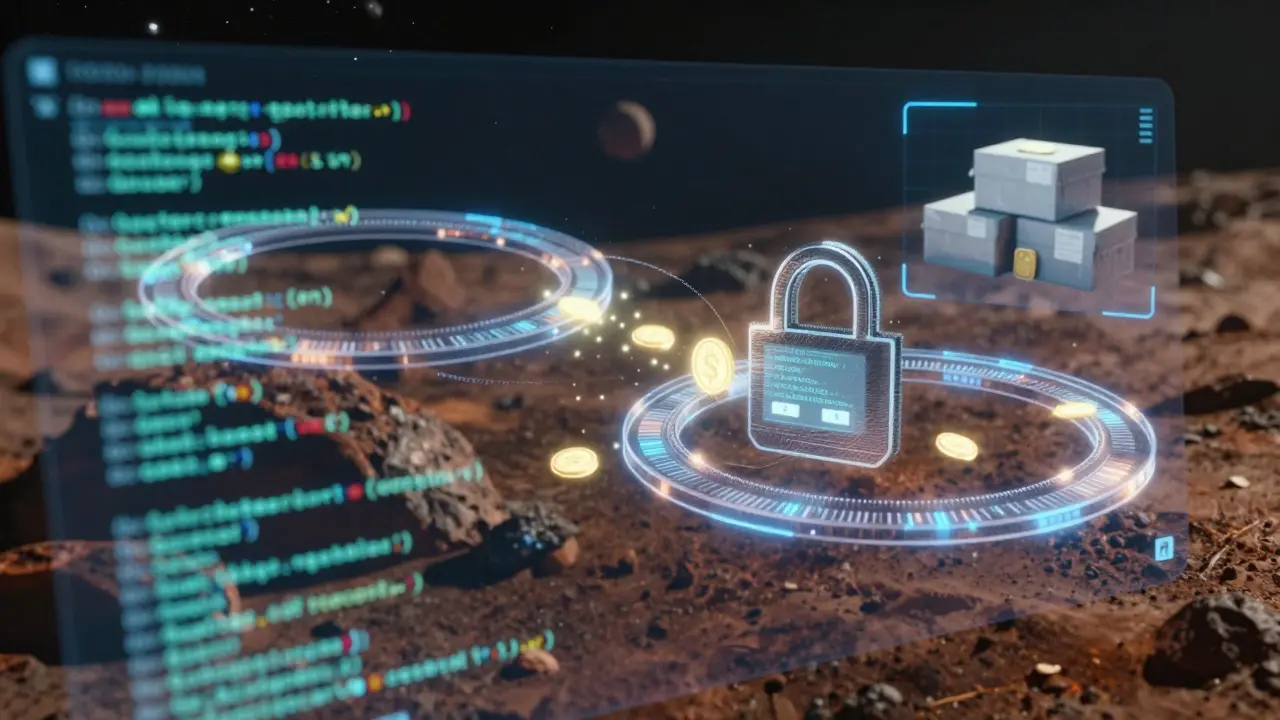
- Immutable Records: When you send cryptocurrency or a tokenized fiat currency to a charity’s blockchain address, that transaction is broadcast to a network of computers. Each computer verifies the transaction and adds it to a block. Once added, it is permanent. No one can go back and change the amount or the recipient.
- Smart Contracts: These are self-executing contracts with the terms of the agreement directly written into code. For example, a charity might set up a smart contract that only releases funds when specific conditions are met, such as a photo verification of delivered supplies. This prevents fund diversion before the work is done.
- Real-Time Tracking: Unlike annual reports that come months after the fact, blockchain allows donors to see exactly where their money is in real-time. You can watch your donation move from the pool to the vendor, and finally to the beneficiary.
Systems like D-Donation is a decentralized application (DApp) built on the Polygon Blockchain designed to provide 100% transaction transparency for charitable donations. Developed by researchers and published in the International Journal for Research in Applied Science and Engineering Technology (IJRASET) in 2023, D-Donation demonstrates this potential. In test environments, it achieved 100% transaction visibility. Donors could trace every cent to its final destination. This level of clarity is impossible with traditional banking systems.
Key Players in Blockchain Charity Platforms
Several platforms are already leading this charge. Let us look at three major examples that are shaping the future of giving:
| Platform | Technology Base | Key Feature | Transparency Level | Best For |
|---|---|---|---|---|
| Charity Wall | Ethereum/Polygon | QR Code Tracking for Physical Goods | 98.7% accuracy in goods tracking | In-kind donations (food, medicine) |
| D-Donation | Polygon (Layer 2) | AI-Powered Fraud Detection (v2.0) | 100% transaction visibility | Disaster relief & large-scale campaigns |
| BECP Framework | Ethereum-compatible | Automated Fund Disbursement via Smart Contracts | Reduces admin overhead by 63% | Organizations needing strict compliance |
Charity Wall has been operational since Q2 2021 and stands out for its ability to track physical goods. During COVID-19 relief efforts, it allowed donors to see exactly how many boxes of pasta or medical kits were delivered. One Italian donor noted he could track his €200 donation to eight boxes of pasta delivered to a Naples shelter within 72 hours. This tangible proof builds immense trust.
D-Donation focuses on speed and cost-efficiency. Running on the Polygon Blockchain, it processes transactions at 65,000 transactions per second (TPS) with gas fees as low as $0.0001. This makes it viable for micro-donations, which are often impractical on Ethereum mainnet due to high fees. Its recent version 2.0 update includes AI-powered fraud pattern detection, adding another layer of security.
The BECP Framework takes a different approach by automating administrative tasks. Through smart contracts, it reduces administrative overhead by 63%. This means less time spent on paperwork and more resources going directly to the cause. However, it requires stricter identity verification, including KYC (Know Your Customer) checks, which can slow down initial setup.
The Technical Reality: Speed, Cost, and Complexity
While the benefits are clear, implementing blockchain is not without challenges. The technology relies on consensus mechanisms to validate transactions. Most modern charity platforms use Proof-of-Stake (PoS) rather than the older Proof-of-Work (PoW). PoS is energy-efficient and faster. For instance, Polygon, a Layer 2 solution compatible with Ethereum, offers transaction finality within 2.6 seconds. Compare this to Ethereum mainnet, which can take 10-15 minutes. Speed matters when coordinating emergency relief.
Cost is another factor. High gas fees on networks like Ethereum can eat into small donations. This is why platforms like D-Donation choose Polygon or other Layer 2 solutions. They offer the security of Ethereum with a fraction of the cost. However, users must still manage crypto wallets like MetaMask or Trust Wallet. This creates a barrier for non-technical donors. A Reddit user in r/BlockchainCharity shared a frustrating experience: "My 70-year-old donor couldn't figure out MetaMask, so we lost a $5,000 donation." This highlights the urgent need for better user interfaces.
For charities, the learning curve is steep. The BECP framework documentation notes that administrators require 8-12 hours of training to use these systems effectively. In a pilot program in Kenya, 34% of charity staff initially abandoned the platform due to technical complexity. Field staff commented that the blockchain interface required more training than their entire existing accounting system. This suggests that while the technology is powerful, it is not yet plug-and-play for everyone.
Expert Perspectives: Promise vs. Pitfalls
Experts generally agree that blockchain reduces fraud, but they warn against viewing it as a magic bullet. Dr. Elena Rodriguez, Director of the MIT Blockchain Lab, stated in an IEEE Spectrum interview that "blockchain-based charity systems reduce fraud vectors by 82% through eliminating single points of control." She cited the D-Donation study’s 50% approver threshold mechanism, which requires multiple parties to authorize large transfers, preventing unilateral theft.
Professor Kenji Tanaka of Tokyo University’s Social Innovation Lab echoed this sentiment, noting that smart contract automation in the BECP framework prevents 94% of common charity fraud scenarios, including invoice falsification and account diversion. By encoding rules into software, human error and malice are significantly reduced.
However, caution is warranted. Dr. Susan Chen of Stanford Center for Philanthropy warned in a TechCrunch op-ed that "over-reliance on blockchain creates new attack surfaces." Independent audits found that 17% of tested charity DApps had smart contract vulnerabilities. If the code has a bug, hackers can exploit it. Additionally, the World Economic Forum’s 2023 report highlighted "digital exclusion risks," noting that 1.2 billion people globally lack reliable internet access. Blockchain solutions currently serve only 41% of rural populations effectively, compared to 79% coverage by traditional mobile money systems. We must ensure that technological advancement does not leave the most vulnerable behind.
Adoption Trends and Future Outlook
Despite these hurdles, adoption is accelerating. The global market for blockchain in charitable giving is growing at a 38% compound annual growth rate (CAGR) since 2021. Cryptocurrency-native donors make up 47% of users on these platforms, while disaster relief organizations account for 32%. Regulatory frameworks are slowly catching up, though only 19 countries currently have specific guidelines for blockchain charities.
Recent developments signal enterprise-level acceptance. In March 2024, Charity Wall integrated with United Nations OCHA systems, enabling blockchain verification for UN-coordinated disaster relief. This partnership legitimizes the technology on a global stage. Meanwhile, the BECP framework secured $2.3 million in EU funding to expand into Eastern Europe. Gartner predicts that blockchain will achieve 22% market penetration in the social impact sector by 2027.
The biggest risk identified by PwC’s blockchain practice is "donor fragmentation across incompatible blockchain networks." With 63% of implementations using different protocols, cross-chain verification remains a challenge. Middleware solutions like Chainlink or The Graph are helping bridge these gaps, but interoperability must improve for seamless global giving.
Practical Steps for Donors and Charities
If you are a donor, start by researching platforms that prioritize transparency. Look for those that publish their smart contract addresses and allow independent auditing. Use reputable wallets and never share your private keys. Consider starting with smaller donations to familiarize yourself with the process.
For charities, consider a phased rollout. Begin with pilot campaigns to test the technology with a subset of donors. Invest in staff training-aim for at least 40 hours of blockchain literacy training for key personnel. Partner with legal experts to navigate regulatory uncertainties. And crucially, focus on user experience. Simplify the donation process as much as possible to avoid alienating non-technical supporters.
Is blockchain really secure for charity donations?
Yes, blockchain is highly secure due to its cryptographic nature and decentralized structure. Transactions are immutable, meaning they cannot be altered once recorded. However, security also depends on the quality of the smart contracts used. Poorly coded contracts can have vulnerabilities, so it is essential to use platforms that undergo regular third-party audits.
Can I donate traditional currency (USD/EUR) to blockchain charities?
Most blockchain charity platforms primarily accept cryptocurrencies like ETH or MATIC. However, some platforms integrate with traditional payment processors via middleware, allowing you to pay with a credit card. The platform then converts your fiat currency into cryptocurrency for the blockchain transaction. Always check the platform's supported payment methods before donating.
Why are gas fees important for charity donations?
Gas fees are the costs paid to network validators to process transactions. On networks like Ethereum mainnet, these fees can be high, sometimes exceeding the value of small donations. This discourages micro-giving. Platforms using Layer 2 solutions like Polygon have negligible fees (around $0.0001), making them ideal for frequent, small donations.
How does blockchain prevent fraud compared to traditional banks?
Traditional banks operate centrally, meaning one entity controls the ledger. This creates a single point of failure and potential for manipulation. Blockchain distributes the ledger across thousands of nodes. To alter a record, an attacker would need to compromise over 51% of the network simultaneously, which is computationally impractical. Additionally, smart contracts automate fund release based on pre-set conditions, reducing human error and embezzlement opportunities.
What are the main barriers to wider adoption of blockchain in charities?
The primary barriers are technical complexity for users, regulatory uncertainty, and digital exclusion. Many donors find managing crypto wallets difficult. Regulations vary widely across countries, creating compliance headaches for international charities. Furthermore, limited internet access in developing regions restricts participation, potentially excluding those who need aid the most.
I'm a blockchain analyst and crypto educator who builds research-backed content for traders and newcomers. I publish deep dives on emerging coins, dissect exchange mechanics, and curate legitimate airdrop opportunities. Previously I led token economics at a fintech startup and now consult for Web3 projects. I turn complex on-chain data into clear, actionable insights.