
Korea Crypto Trading Eligibility Checker
Check Your Eligibility to Trade Crypto in Korea
South Korea requires a real-name bank account linked to your exchange for all KRW crypto trading. Answer these questions to see if you can participate in the local market.
Want to trade crypto in South Korea? You can’t just sign up and start buying Bitcoin like you would on Binance or Coinbase. If you’re in Korea-or even just visiting-you need something most countries don’t require: a real-name bank account linked directly to your crypto exchange. This isn’t just a formality. It’s the law. And it’s one of the strictest crypto rules in the world.
Why Korea Demands Real Names for Crypto
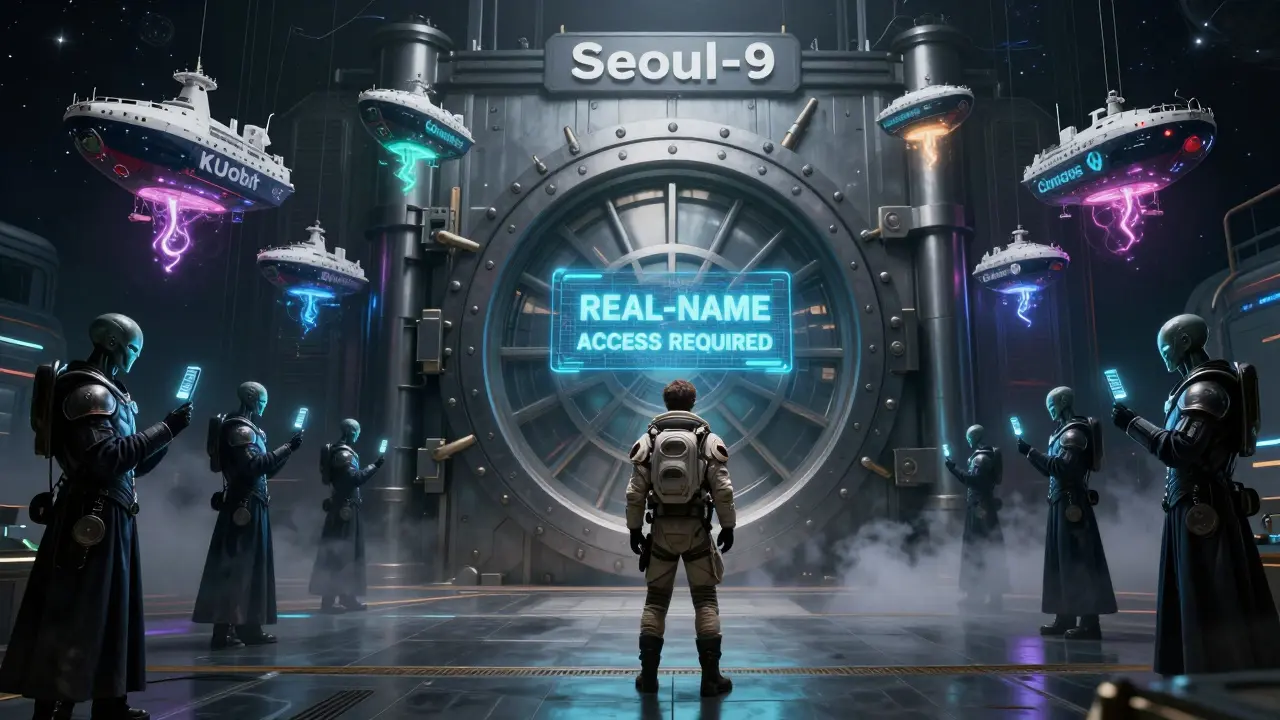
In 2018, South Korea almost banned cryptocurrency entirely. The government was worried about money laundering, fraud, and anonymous trading fueling speculative bubbles. But after over 220,000 citizens signed a petition demanding a legal framework instead of a ban, the Financial Services Commission stepped in. They didn’t shut crypto down-they regulated it hard. The result? A system where every crypto trade must connect to a verified real-name bank account. No exceptions. Your identity, your bank, your exchange-all tied together. This isn’t about privacy. It’s about traceability. The government wants to know who’s buying, selling, and moving money. And they want banks to help enforce it.How the System Actually Works
It’s not complicated to use-if you’re a Korean citizen. Here’s how it works:- You open a bank account under your real name at one of the approved banks: Shinhan, K-Bank, Kookmin, Kakao, or Woori.
- You register on a crypto exchange that’s partnered with that same bank.
- You deposit Korean Won (KRW) from your bank account to your exchange wallet.
- Withdrawals go back to the same account-no exceptions.
Who Can Use It? The Big Divide
This system works smoothly for South Koreans. But for everyone else? It’s nearly impossible. To open a real-name bank account in Korea, you need:- A valid Korean residency permit or long-term visa (not a tourist visa)
- An Alien Registration Card (ARC)
- A Korean mobile phone number
- Proof of address in Korea
What Happens If You Try to Bypass It?
Some users try to use fake names, borrowed accounts, or offshore wallets to move money. The government has cracked down hard. In 2023, authorities froze over 1,200 accounts linked to suspicious crypto activity. Banks are required to report any mismatched transactions-like a deposit from a name that doesn’t match the exchange account holder. Even if you’re not trying to cheat, mistakes can trigger red flags. If you accidentally send KRW from a friend’s account to your Upbit wallet, the system will flag it. Your funds could be frozen for weeks while investigators review the case. There’s no quick customer service fix. This isn’t like a bank error-it’s a compliance issue.Why This System Exists (And Why It’s Not Going Away)
South Korea is one of the world’s top crypto markets. Over 12 million people-nearly a quarter of the population-are estimated to own digital assets. That’s huge. But the government doesn’t want chaos. They want control. The real-name system has reduced pump-and-dump schemes, minimized money laundering, and increased trust in exchanges. When Bithumb or Upbit gets hacked, the government can trace where the stolen funds went. When someone uses crypto to pay for illegal goods, investigators can follow the money back to a real person. It’s also paving the way for taxation. Starting in 2027, South Korea will tax personal income from crypto trading at up to 45%. The real-name system makes that possible. Without it, tracking individual gains would be a nightmare. The government already collects up to 24.2% in corporate taxes from exchanges. Now they’re coming for individual traders.The Trade-Off: Security vs. Access
There’s no denying this system works. Korea’s crypto market is one of the safest in Asia. Fraud is low. Scams are rare. Exchanges are regulated and audited. But it comes at a cost. Foreign investors can’t easily enter the market. International crypto firms avoid Korea because of the banking hurdles. Even major players like Coinbase and Bitfinex don’t offer KRW trading. For Koreans, the trade-off feels fair. They get a stable, transparent market. For outsiders, it feels exclusionary. You can’t even open an account unless you’re legally living there. That’s not just inconvenient-it’s a barrier to global participation.
What’s Next for Korea’s Crypto Rules?
The government isn’t slowing down. In 2025, the Financial Intelligence Unit is reviewing applications from more Virtual Asset Service Providers (VASPs). But they’re not handing out bank partnerships like candy. Each one still needs to prove:- Full KYC compliance
- Secure cold storage for assets
- Real-time transaction reporting to banks
- Audited financial records
What Should You Do?
If you’re a South Korean citizen:- Use only approved exchanges with bank partnerships.
- Link your real-name account to just one exchange at first.
- Keep records of all deposits and withdrawals.
- Start preparing for 2027 taxes-track your gains and losses now.
- Don’t waste time trying to open a Korean bank account unless you have residency.
- Use international exchanges for crypto trading.
- If you move to Korea long-term, get your ARC and Korean phone number first-then open a bank account.
Bottom Line
South Korea’s real-name bank account system for crypto isn’t just a rule. It’s a statement. The government believes financial transparency is more important than convenience. For locals, it means safety and legitimacy. For everyone else, it means exclusion. If you want to trade crypto in Korea, you have to play by their rules. No exceptions. No shortcuts. Just your real name, your real bank, and your real identity.Can I trade crypto in Korea without a real-name bank account?
No. All cryptocurrency trades involving Korean Won (KRW) require a verified real-name bank account linked to a registered exchange. Without it, you cannot deposit or withdraw KRW. International exchanges like Binance or Coinbase don’t support KRW deposits, so you can’t bypass the system using foreign platforms.
Which banks are approved for crypto trading in Korea?
Only five banks currently partner with approved crypto exchanges: Shinhan Bank (Korbit), K-Bank (Upbit), Kookmin Bank (Bithumb), Kakao Bank (Coinone), and Woori Bank (Gopax). You must use one of these banks and match your exchange to the same bank for deposits and withdrawals to work.
Can foreigners open a real-name bank account in Korea for crypto?
Only if you have long-term residency. You need an Alien Registration Card (ARC), a Korean mobile number, proof of address, and a valid visa (not a tourist visa). Tourists, students on short-term visas, and digital nomads cannot open these accounts. Without them, you cannot legally trade crypto using KRW.
Will I be taxed on crypto profits in Korea?
Yes. Starting in 2027, South Korea will tax personal income from crypto trading at rates up to 45%. The real-name system makes this possible by linking every trade to your identity. Keep records of all buys, sells, and transfers. The tax will apply to net gains, not total trading volume.
Why are only five exchanges approved for bank accounts?
The Financial Intelligence Unit (FIU) requires strict compliance with KYC, security, and reporting standards. Exchanges must prove they can track every transaction and share data with banks in real time. Only five have met these requirements so far. Others are registered as VASPs but can’t move KRW until they secure a bank partnership.
What happens if I send money from a friend’s bank account to my crypto exchange?
Your transaction will be flagged as suspicious. The bank and exchange will freeze your funds while they investigate. You may need to provide legal documentation proving ownership of the funds. This can take weeks. Never use someone else’s account-even if they’re a family member. The system is designed to prevent exactly this.


I'm a blockchain analyst and crypto educator who builds research-backed content for traders and newcomers. I publish deep dives on emerging coins, dissect exchange mechanics, and curate legitimate airdrop opportunities. Previously I led token economics at a fintech startup and now consult for Web3 projects. I turn complex on-chain data into clear, actionable insights.