
Wrapped Bera, or WBERA, isn’t a standalone blockchain. It’s a token version of BERA - the native coin of the Berachain network - built to work across different platforms and exchanges. Think of it like converting a US dollar into a travel voucher you can use abroad. WBERA lets people trade, stake, and use BERA on platforms that don’t natively support Berachain. This makes it easier to move value in and out of the Berachain ecosystem without needing to bridge assets manually.
How WBERA Works
WBERA is a wrapped token. That means it’s created by locking up real BERA tokens on the Berachain network and issuing an equivalent amount of WBERA on another chain - usually Ethereum or a compatible EVM network. When you burn WBERA, the original BERA is unlocked and returned to you. This wrapping process keeps the value tied 1:1 to BERA, but gives WBERA the flexibility to be used where BERA can’t go.
Why does this matter? Most major exchanges, wallets, and DeFi apps are built on Ethereum or similar blockchains. If you want to trade BERA on Binance or use it in a DeFi protocol like Uniswap, you need a version that works there. WBERA fills that gap. It’s not just a copy - it’s a bridge. Without it, BERA would be stuck inside Berachain, limiting its use and liquidity.
Supply and Tokenomics
As of February 2026, there are roughly 20.51 million WBERA tokens in circulation. That number hasn’t changed much recently, suggesting the supply is fixed or tightly controlled. Unlike some crypto projects that mint new tokens endlessly, WBERA’s supply is tied to how much BERA is locked up to back it. No extra WBERA can be created unless more BERA is wrapped.
Here’s the twist: the underlying BERA token gets burned every time someone pays a transaction fee on Berachain. That means over time, less BERA exists - and since WBERA is backed by BERA, its total supply could slowly shrink too. This deflationary pressure is intentional. It’s designed to make BERA (and by extension, WBERA) scarcer over time, which can drive up value if demand stays steady or grows.
Price Volatility and Market Data
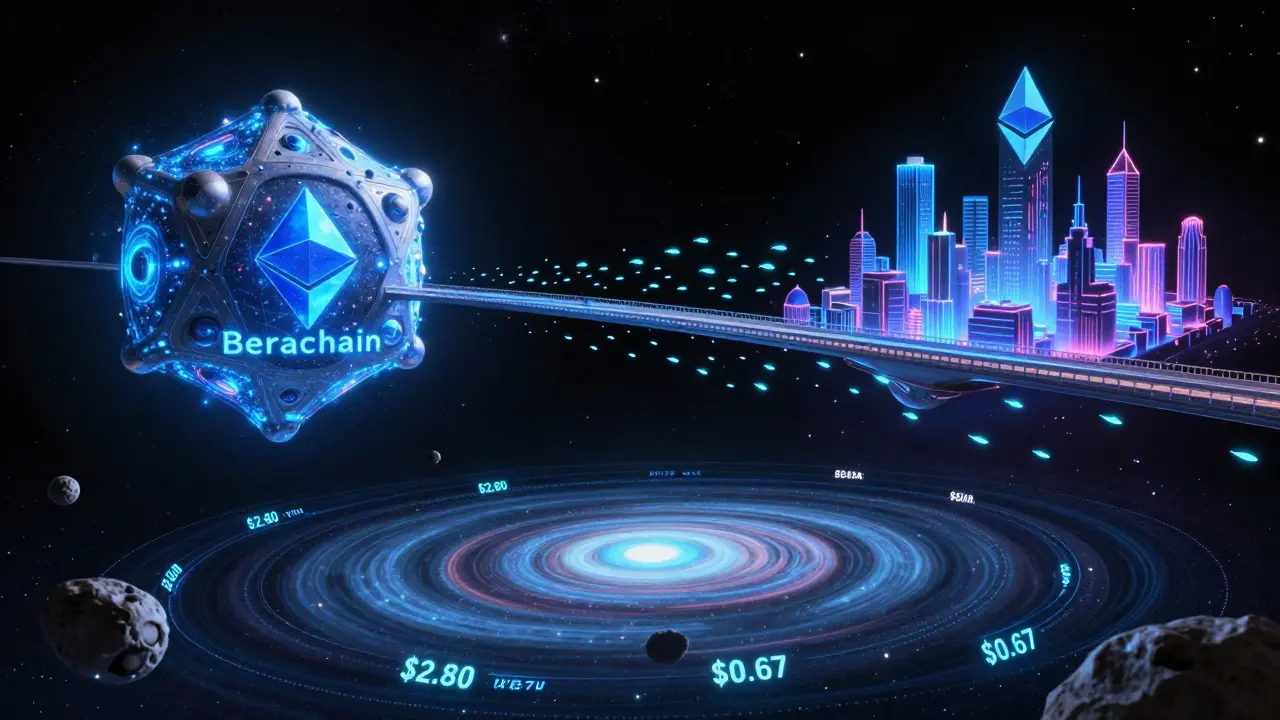
WBERA’s price is all over the map. And that’s normal for newer crypto tokens. Different exchanges report wildly different prices because they’re trading different pairs or have different liquidity.
- Binance shows WBERA at $2.80, with a 24-hour volume of nearly $1 million and a market cap of $57.5 million.
- CoinMarketCap lists it at $0.68, with a $13 million market cap.
- CoinGecko says $0.67, and Crypto.com reports $0.65.
Why such a big difference? One reason is that Binance might be trading WBERA against USDT or BTC, while other platforms use different pairs or have fewer traders. Another reason? Some platforms might be showing outdated data or tracking a different version of the token.
WBERA hit an all-time high of $9.14 on Binance in late 2025. Since then, it’s pulled back - which is common for tokens that surge early. The 7-day trend shows a slight dip, but trading volume remains active. That means people are still buying and selling, even if the price isn’t climbing.
Where You Can Trade WBERA
WBERA isn’t on every exchange, but it’s available on enough to be useful. The main places you’ll find it:
- Binance - highest volume and most reliable pricing
- Beraswap - Berachain’s own DEX, great for direct swaps
- Biconomy C and Kodiak V3 C - smaller exchanges with steady trading
You’ll also find WBERA listed on some DeFi platforms that support Berachain. If you’re using a wallet like MetaMask connected to Berachain, you can swap BERA for WBERA directly. That’s useful if you want to move your holdings to Ethereum-based DeFi apps.
Why WBERA Matters in the Berachain Ecosystem
Berachain is built on something called Proof-of-Liquidity - a new consensus model that rewards users for providing liquidity, not just staking. The native BERA token is used to pay fees and stake in liquidity pools. But not everyone wants to hold BERA. Some people prefer to trade it, others want to use it in DeFi protocols outside Berachain.
That’s where WBERA comes in. It gives users flexibility. You can stake BERA to earn fees on Berachain, or wrap it into WBERA to use in a yield farm on Ethereum. You’re not locked in. This dual-use design helps the whole ecosystem grow faster because it connects Berachain to the rest of crypto.
Projects on Berachain - like lending platforms, AMMs, and prediction markets - often accept WBERA as collateral or payment. That’s because it’s easier for users to bring in WBERA from Binance or other exchanges than to first buy BERA and bridge it over.
Who Holds WBERA?
As of early 2026, over 50,000 unique wallets hold WBERA. That’s a solid number for a token that’s less than a year old. It means adoption is spreading beyond just hardcore Berachain fans. Retail traders, DeFi users, and even some institutional wallets are dipping their toes in.
The fact that WBERA has over 25 trading pairs across four exchanges shows real market demand. It’s not just a speculative asset - it’s being used as a functional token in real trading and DeFi workflows.
Is WBERA a Good Investment?
There’s no easy answer. WBERA’s price has swung from under $0.50 to over $9 in under a year. That kind of volatility means big gains - and big losses - are possible.
If you believe Berachain will grow into one of the top DeFi chains, then WBERA could benefit. Its role as the bridge token makes it essential to the ecosystem’s expansion. If more projects build on Berachain, more people will need WBERA to access them.
But if Berachain stalls, or if BERA becomes widely supported natively on major exchanges, WBERA’s purpose could shrink. Wrapped tokens lose value when their underlying asset becomes easier to use directly.
Bottom line: WBERA isn’t a coin you buy and forget. It’s a tool. Use it if you’re active in the Berachain ecosystem. Trade it if you believe in its long-term growth. But treat it like any high-risk crypto asset - never invest more than you can afford to lose.
How to Get WBERA
Here’s how to get your hands on WBERA:
- Buy BERA on a spot exchange like Binance or KuCoin.
- Connect your wallet (MetaMask, Trust Wallet) to the Berachain network.
- Go to Beraswap or another DEX on Berachain.
- Swap BERA for WBERA - it’s usually a one-click process.
Or, if you don’t want to deal with bridging:
- Go to Binance or another exchange that lists WBERA directly.
- Buy WBERA with USDT, BTC, or ETH.
- Withdraw it to your wallet.
Always double-check the contract address before sending funds. Scammers often create fake WBERA tokens with similar names.
Is WBERA the same as BERA?
No. BERA is the native token of the Berachain blockchain. WBERA is a wrapped version of BERA that works on other networks like Ethereum. They have the same value (1:1), but WBERA can be used on platforms that don’t support Berachain directly.
Can I stake WBERA?
You can’t stake WBERA directly on Berachain. Staking is done with BERA. But if you wrap BERA into WBERA and move it to a DeFi platform on Ethereum, you might be able to stake it there as part of a liquidity pool - depending on the platform’s rules.
Why is WBERA’s price different on different exchanges?
Different exchanges have different liquidity, trading pairs, and user bases. Binance might have high volume with USDT pairs, while smaller exchanges use ETH or BTC pairs. Price differences also happen because of delays in data updates or low trading activity on some platforms.
Is WBERA a good long-term hold?
It depends on Berachain’s success. If Berachain becomes a top DeFi chain, WBERA’s role as a bridge token could make it valuable. But if BERA becomes widely supported natively, WBERA’s usefulness may decline. Treat it as a high-risk, high-reward asset tied to a specific ecosystem.
How do I know if a WBERA token is real?
Always verify the contract address. The real WBERA contract is deployed on the Berachain network and mirrored on compatible chains. Check official Berachain documentation or trusted sources like Binance or Beraswap for the correct address. Never send funds to a token with no verified contract or low holder count.


I'm a blockchain analyst and crypto educator who builds research-backed content for traders and newcomers. I publish deep dives on emerging coins, dissect exchange mechanics, and curate legitimate airdrop opportunities. Previously I led token economics at a fintech startup and now consult for Web3 projects. I turn complex on-chain data into clear, actionable insights.