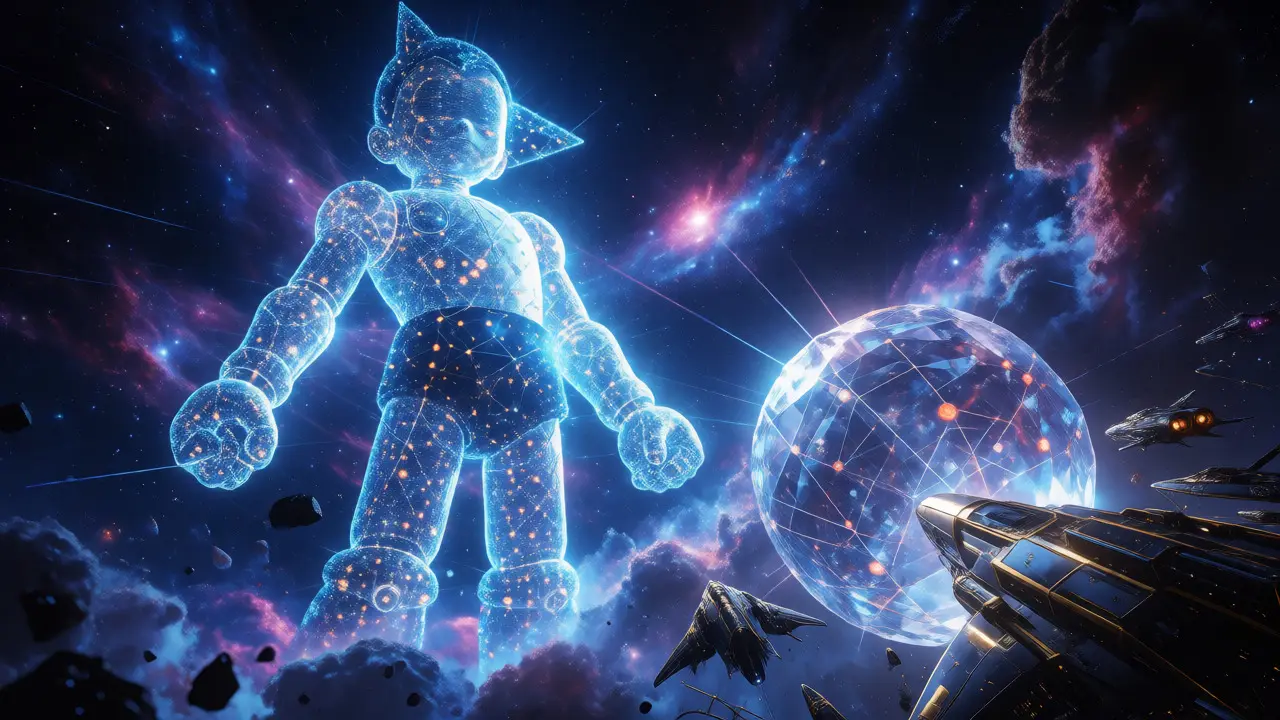
Imagine owning a slice of Astro Boy’s digital future. That’s the core pitch behind TCOM Global, a cryptocurrency project that claims to be the world’s first decentralized intellectual property (IP) governance protocol. But what does that actually mean for your wallet? Instead of just trading memes or speculative tokens, TCOM aims to put the licensing and creation rights of legendary anime and manga works directly on the blockchain.
The project centers on a massive partnership with the estate of Osamu Tezuka, the Japanese artist often called the "God of Manga." By tokenizing access to 65 classic IPs from Tezuka’s catalog, TCOM tries to solve a real-world problem: how do you let global creators remix iconic characters without drowning in legal paperwork? If you’ve ever wondered if crypto can actually support creative industries, this is one of the most concrete attempts to date. Here’s how it works, where to buy it, and why its market cap tells a story of high risk and niche potential.
The Core Concept: Decentralized IP Governance
TCOM Global operates as a utility token on the BNB Chain, designed to manage the lifecycle of entertainment IP through smart contracts. Unlike traditional copyright systems where lawyers and executives gatekeep who gets to use a character like Astro Boy or Black Jack, TCOM uses an on-chain system. This system allows community members and creators to propose, vote on, and license derivative works.
The workflow is surprisingly straightforward compared to traditional media deals:
- Create: Artists or writers build new stories, art, or animations based on licensed Tezuka characters.
- Submit: These works are uploaded to the TCOM platform.
- Govern: The community votes on which submissions deserve official recognition and monetization.
- Reward: Winning works enter the official Web3 library, and value flows back to the original rights holders and the participating creators via the token economy.
This model relies heavily on AI integration. The protocol uses artificial intelligence tools to help generate or refine content, lowering the barrier to entry for fans who might not have professional animation skills but have great ideas.
Tokenomics: Supply, Price, and Volatility
If you’re looking at the numbers, TCOM looks like many other small-cap altcoins: a fixed maximum supply and low circulating volume. As of late 2026, the data shows a strict cap of 1 billion TCOM tokens. However, only about 92 million of those are currently in circulation. That means roughly 90% of the total supply is still locked up, held by the team, investors, or reserved for future ecosystem incentives.
| Metric | Value | Implication |
|---|---|---|
| Max Supply | 1,000,000,000 TCOM | Inflationary pressure when remaining tokens unlock. |
| Circulating Supply | ~92,000,000 TCOM | Low float can cause sharp price swings. |
| Market Cap Range | $0.7M - $6.8M | Micro-cap status; highly volatile. |
| Blockchain | BNB Chain | Low transaction fees for users. |
Price history illustrates the volatility typical of micro-caps. In early 2026, TCOM briefly spiked above $0.07, giving it a market cap near $6.8 million. By August 2026, it had cooled significantly, trading around $0.008 with a market cap under $1 million. This drop isn’t necessarily a failure of the technology; it reflects the broader trend of liquidity drying up in niche sectors after initial hype cycles. For traders, this means the token is susceptible to sudden pumps and dumps based on news about new IP releases or exchange listings.
Why Osamu Tezuka? The Value Proposition
You might ask, why focus on one creator? Osamu Tezuka isn’t just any manga artist; he created over 700 manga titles and animated hundreds of episodes. His works, including Astro Boy, Black Jack, and Kimba the White Lion, are public domain-adjacent in spirit but strictly protected in practice. TCOM secured the rights to 65 of these legendary properties.
This specific portfolio gives TCOM a unique edge over generic metaverse projects. You aren’t buying into a vague promise of "digital land"; you’re buying into access to characters with decades of brand recognition. The protocol aims to let anyone create a comic strip featuring Astro Boy, mint it, and potentially earn royalties if the community validates it. It turns passive fans into active stakeholders.
Where to Buy and Trade TCOM
Liquidity for TCOM is decent for its size but concentrated on a few platforms. If you want to buy TCOM, you generally have two paths:
- Centralized Exchanges (CEXs): Bitget has emerged as the most popular venue for trading TCOM, offering high volume and standard fiat-to-crypto pairs. MEXC also lists the token, providing another option for spot trading. Binance listed TCOM during its Alpha launch phase, though current activity there may vary compared to its peak.
- Decentralized Exchanges (DEXs): Since TCOM is a BEP-20 token on the BNB Chain, you can swap it using PancakeSwap. This requires a Web3 wallet like MetaMask or Trust Wallet and some BNB for gas fees.
Always check the 24-hour volume before executing large trades. With daily volumes fluctuating between $150,000 and $600,000 recently, large orders can slip the price significantly if placed on lower-volume exchanges.
Risks and Challenges
No crypto investment is without risk, and TCOM has specific hurdles. First, the concentration of supply is a major concern. With only 9.2% of tokens circulating, future unlocks could dilute the price if demand doesn’t keep pace. Second, the success of the protocol depends entirely on adoption. Do people actually want to create and buy AI-assisted fan fiction? If the user base remains tiny, the token’s utility value stays theoretical.
Additionally, regulatory uncertainty looms over all IP-based tokens. While the smart contracts handle the technical side, real-world copyright law is messy. If a dispute arises over a derivative work, does the blockchain ruling hold up in court? TCOM assumes yes, but legal precedents are still being written.
Final Thoughts: Is TCOM Worth Watching?
TCOM Global represents a fascinating experiment at the intersection of AI, Web3, and entertainment. It moves beyond speculation into tangible utility by attaching itself to valuable, recognizable IP. For now, it remains a high-risk, micro-cap asset. It’s not a blue-chip coin like Bitcoin or Ethereum, but for believers in the convergence of AI creativity and blockchain ownership, it offers a rare glimpse into how we might govern culture in the next decade. Keep an eye on their developer updates and new IP partnerships-that’s where the real value signals will appear.
What blockchain is TCOM built on?
TCOM Global is deployed on the BNB Chain. This means it is compatible with EVM wallets like MetaMask and benefits from BNB Chain's low transaction fees and fast confirmation times.
Who owns the intellectual property used by TCOM?
The intellectual property belongs to the estate of Osamu Tezuka, the famous Japanese manga creator. TCOM Global holds the licensing agreements to digitize and govern the usage of 65 specific classic works from his catalog.
How can I participate in the TCOM ecosystem?
You can participate by holding TCOM tokens for governance voting, creating derivative content (art, stories) using the platform's AI tools, or trading the token on exchanges like Bitget or MEXC. Creators submit works for community review and potential monetization.
Is TCOM a good long-term investment?
As a micro-cap altcoin, TCOM carries high volatility and risk. Its long-term viability depends on widespread adoption of its IP governance model and successful expansion beyond the initial Osamu Tezuka portfolio. It is best suited for speculative portfolios rather than conservative holdings.
Where can I buy TCOM tokens?
The most liquid centralized exchanges for TCOM include Bitget and MEXC. You can also trade it on decentralized exchanges like PancakeSwap using a Web3 wallet connected to the BNB Chain.
I'm a blockchain analyst and crypto educator who builds research-backed content for traders and newcomers. I publish deep dives on emerging coins, dissect exchange mechanics, and curate legitimate airdrop opportunities. Previously I led token economics at a fintech startup and now consult for Web3 projects. I turn complex on-chain data into clear, actionable insights.