
Imagine buying something online without a middleman taking a cut, keeping your financial history completely private, and doing it all on a platform that no single company controls. That is the promise of Particl. But what exactly is this project, and why does it still exist in a crowded crypto market dominated by giants like Bitcoin and Ethereum?
Particl (PART) is not just another cryptocurrency you can buy and forget. It is a decentralized ecosystem designed for private e-commerce and cross-chain trading. Launched in 2017 without an Initial Coin Offering (ICO) or pre-mine, Particl focuses on giving users control over their data and transactions. While major exchanges might list it with low liquidity, its technical architecture offers features-like quantum-resistant staking and multi-level privacy-that many mainstream coins lack.
The Core Concept: More Than Just a Coin
When you hear "crypto," you often think of a digital dollar. Particl challenges that idea. The native token, PART, serves as fuel for a broader network. Think of it as the operating system for a private internet economy. The project consists of three main layers:
- The Blockchain Layer: A modified version of Bitcoin Core that supports faster transactions and privacy features.
- Secure Messaging (SMSG): An encrypted communication protocol used within the network for secure interactions between users.
- Decentralized Applications (dApps): Software built on top of the chain, primarily the Particl Marketplace and BasicSwap.
This structure means PART isn't just for sending value; it's for paying fees, voting on governance proposals, and securing the network through Proof-of-Stake (PoS). Unlike projects that hand out tokens to early investors, Particl distributed its supply directly to the community, aiming for a more democratic ownership model from day one.
How Particl Handles Privacy
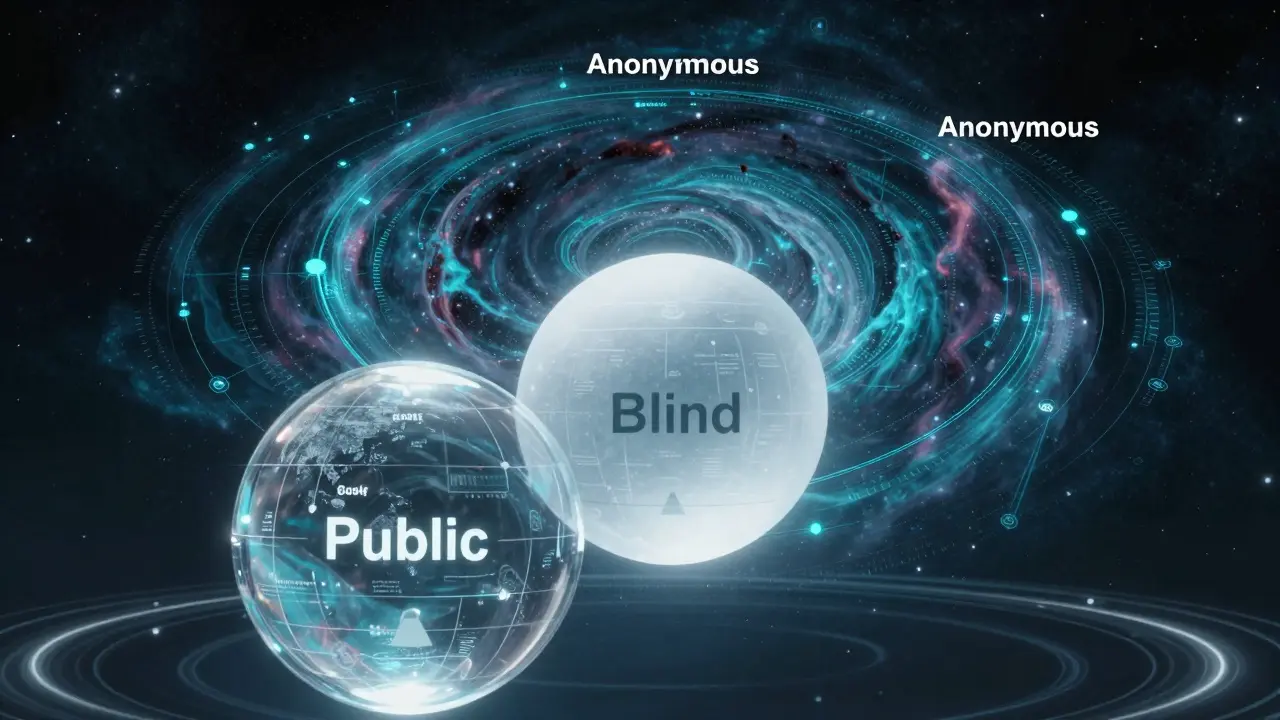
Privacy is the selling point here, but Particl doesn't force it on everyone. Instead, it offers a flexible, three-tiered approach to transaction visibility. This granularity is rare in the crypto space, where coins are usually either fully transparent (like Bitcoin) or always private (like Monero).
| Transaction Type | Sender/Receiver Visible? | Amount Visible? | Best Use Case |
|---|---|---|---|
| Public | Yes | Yes | Standard transfers, regulatory compliance needs |
| Blind | Yes | No (Hidden via Confidential Transactions) | Hiding wealth while maintaining network transparency |
| Anonymous | No (Hidden via RingCT) | No | Marketplace purchases, maximum financial privacy |
The Anonymous mode uses Ring Confidential Transactions (RingCT), similar to technology found in Monero, to obscure both who sent money and how much was sent. On the Particl Marketplace, all payments default to this anonymous state to protect buyers and sellers. Meanwhile, listing data like images and videos are stored off-chain to keep the blockchain lightweight and reduce metadata leakage.
The Particl Ecosystem: Marketplace and BasicSwap
A privacy coin is only useful if you can actually spend it privately. This is where Particl’s flagship applications come into play.
1. The Particl Marketplace This is essentially a decentralized eBay. It allows users to buy and sell goods without intermediaries. Sellers list items, and smart contracts handle escrow. When you order an item, your funds are locked in a contract until you confirm receipt. If there’s a dispute, the community can vote on moderation actions. Because it runs on the blockchain, no central authority can shut it down or seize assets arbitrarily. The marketplace accepts PART for settlements but also supports other cryptocurrencies via atomic swaps.
2. BasicSwap BasicSwap is a decentralized exchange (DEX) built into the Particl desktop client. It enables trustless, cross-chain trading. You can swap PART for Monero (XMR), Litecoin, or other supported coins directly from your wallet without using a centralized exchange like Binance or Coinbase. This is crucial for privacy enthusiasts because it avoids the KYC (Know Your Customer) requirements of traditional platforms.
Technical Foundations: Speed and Security
Particl is built on a fork of Bitcoin Core, which gives it a robust security foundation, but it modifies key parameters to improve usability. Here is how it stacks up against its parent codebase:
- Block Time: Particl produces a block every 120 seconds, compared to Bitcoin’s 600 seconds. This makes transactions feel significantly faster.
- Block Size: With a 2 MB base block size (double Bitcoin’s original limit), it can handle more transactions per second.
- Consensus: It uses Proof-of-Stake (PoS). Holders earn rewards for securing the network, rather than miners burning electricity.
- Cold Staking: A standout feature is quantum-resistant cold staking. You can store your PART coins in a hardware wallet like Ledger while delegating the staking process to an online node. This keeps your assets offline and safe from hacks while still earning yield.
These technical choices make Particl suitable for everyday commerce rather than just long-term holding. The integration of Segregated Witness (SegWit) further reduces transaction fees and increases efficiency.
Tokenomics and Market Reality in 2026
Understanding PART’s economics requires looking at both its design and its current market position. The total supply is capped, with approximately 9 million to 15 million coins in circulation depending on the specific metric (circulating vs. total issued) and data source discrepancies common in small-cap tracking.
As of mid-2026, PART trades in the range of $0.11 to $0.13 USD. Its market capitalization hovers around $1.8 million, placing it outside the top 1,000 cryptocurrencies. Trading volume is often thin, sometimes dipping below $100 per day on smaller aggregators. This indicates low liquidity, meaning large buys or sells could cause significant price slippage.
Historically, PART has experienced extreme volatility. It once reached an all-time high near $46 before crashing to lows under $2. This rollercoaster ride is typical for niche altcoins that rely heavily on community adoption rather than institutional investment. The token’s utility-paying for listings, storage, and governance votes-provides a floor for demand, but widespread adoption remains the primary hurdle for price appreciation.

Who Should Care About Particl?
Particl is not for everyone. If you are looking for quick flips or passive income with zero risk, this likely isn’t the right fit. However, it appeals to specific groups:
- Privacy Advocates: Users who want to conduct financial transactions without leaving a public trail on the blockchain.
- E-Commerce Entrepreneurs: Sellers who want to avoid chargebacks, platform fees, and censorship associated with Amazon or PayPal.
- Decentralization Purists: Individuals who prefer protocols with no pre-mine, no ICO, and community-driven governance.
- Hardware Wallet Users: Those who value the ability to stake securely from cold storage without exposing their keys to the internet.
The project’s longevity is notable. Since its whitepaper draft in March 2017, the team has maintained active development on GitHub, updating the core code and marketplace interface regularly. In an industry where thousands of projects die within a year, Particl’s nine-year survival suggests a dedicated, albeit small, user base.
Getting Started with Particl
If you decide to explore the ecosystem, the barrier to entry is software-based, not financial. You don’t need a specialized account. Here is the basic workflow:
- Download the Client: Visit the official Particl website or GitHub repository to download the Particl Desktop GUI. This application acts as both your wallet and your gateway to the marketplace.
- Sync the Blockchain: Upon first launch, the app will sync with the network. This may take some time depending on your internet speed.
- Acquire PART: Buy PART on a supported exchange or receive it from another user. Transfer it to your Particl Desktop wallet address.
- Enable Staking (Optional): If you hold PART long-term, enable staking in the settings to earn rewards. For maximum security, consider setting up cold staking with a Ledger device.
- Explore BasicSwap: Try swapping a small amount of PART for another coin to experience the cross-chain functionality firsthand.
Remember to verify URLs carefully. There is a non-crypto SaaS product also named "Particl" focused on retail intelligence. Ensure you are interacting with the blockchain project (particl.io) and not the unrelated enterprise software platform.
Is Particl (PART) a good investment in 2026?
Particl is a high-risk, speculative asset due to its low market cap and thin liquidity. While its technology is robust and unique, its price performance has been volatile. It is better suited for users who believe in the long-term vision of decentralized privacy commerce rather than short-term traders seeking guaranteed returns.
How does Particl differ from Monero?
Monero is primarily a currency focused on mandatory privacy for peer-to-peer transfers. Particl is a platform that includes a currency, a decentralized marketplace, and a DEX. Particl offers optional privacy levels (Public, Blind, Anonymous), whereas Monero forces privacy on all transactions. Particl also emphasizes e-commerce applications more heavily than Monero.
Can I use my Ledger hardware wallet with Particl?
Yes. Particl supports cold staking, allowing you to store your PART coins securely on a Ledger device while still earning staking rewards. You delegate the staking rights to an online node, so your private keys never leave the hardware wallet.
What is the Particl Marketplace?
The Particl Marketplace is a decentralized e-commerce platform where users can buy and sell goods without intermediaries. It uses smart contracts for escrow and ensures all transactions are anonymous by default. It operates similarly to eBay but runs on the blockchain, preventing censorship and reducing fees.
Why is Particl’s trading volume so low?
Particl is a niche project focused on privacy and decentralized apps, lacking the mass adoption of major cryptocurrencies like Bitcoin or Ethereum. Most trading happens via atomic swaps on BasicSwap rather than centralized exchanges, which means standard market data trackers often report very low volumes. This reflects its specialized user base rather than a lack of utility within its community.


I'm a blockchain analyst and crypto educator who builds research-backed content for traders and newcomers. I publish deep dives on emerging coins, dissect exchange mechanics, and curate legitimate airdrop opportunities. Previously I led token economics at a fintech startup and now consult for Web3 projects. I turn complex on-chain data into clear, actionable insights.