
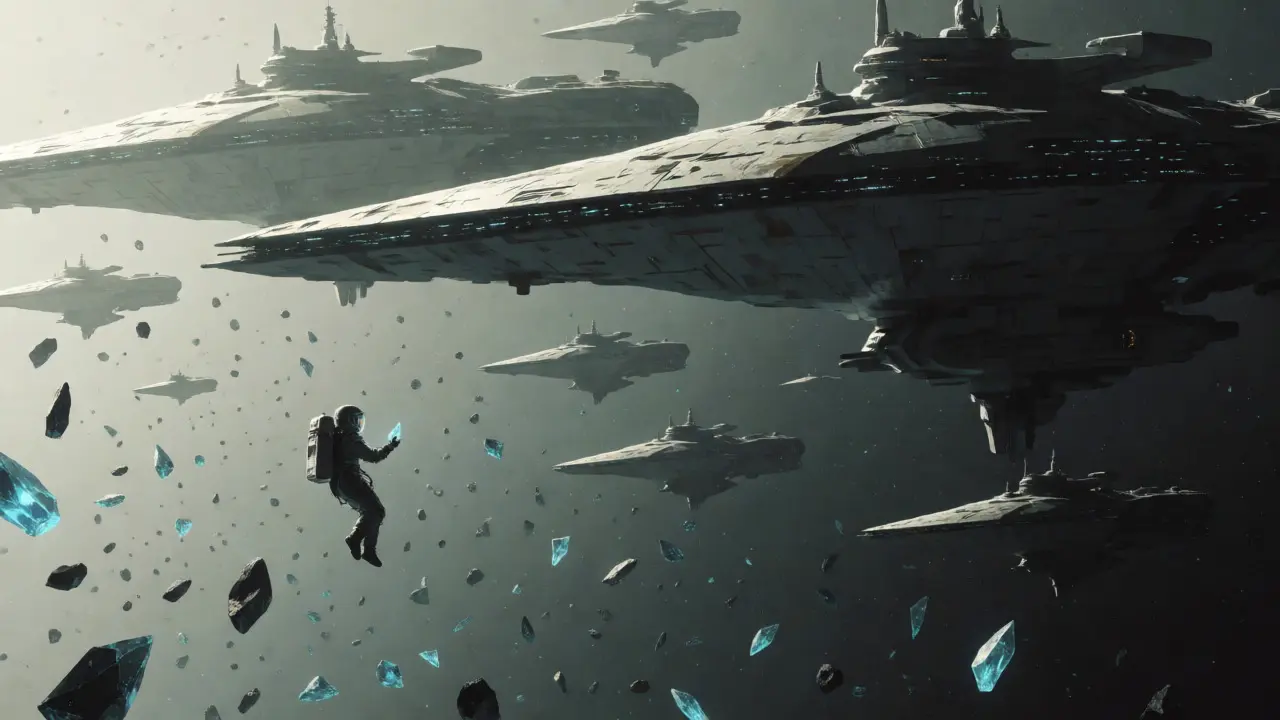
Imagine buying a digital spaceship for $500, hiring virtual workers to mine a fictional mineral, and hoping that mineral becomes worth more than your electricity bill. That was the pitch of CryptoMines, a sci-fi themed blockchain game where players travel through a virtual universe mining for ETERNAL tokens. Launched in late 2021 amidst the peak of the play-to-earn frenzy, it promised a sustainable economy where gameplay translated directly into financial rewards. But as the dust settled on the crypto bull run, the reality proved far harsher than the whitepaper. Today, understanding what ETERNAL is requires looking past the shiny NFT graphics to examine a token that lost nearly all its value while struggling to keep its community engaged.
The Core Concept: Mining in Space with NFTs
At its heart, CryptoMines is not just a coin; it’s an ecosystem built on the Binance Smart Chain (BSC). Unlike Ethereum-based games that suffered from high gas fees, CryptoMines leveraged BSC’s lower transaction costs and faster processing times to make micro-transactions feasible. The game operates on a simple loop: you own a spaceship, you hire workers, and those workers mine ETERNAL tokens on various planets. These tokens are described in the game lore as "a mineral that allows them to survive and generate profits."
The economic model relies heavily on scarcity and utility. ETERNAL serves as both the in-game resource and a tradable cryptocurrency asset. Players use ETERNAL to purchase new spaceships, recruit higher-rarity workers, and upgrade their fleets. This creates a closed-loop economy where demand for the token is driven by player activity. However, the mechanics reveal a critical flaw common to many early play-to-earn games: earning potential scales with initial investment. A one-star spaceship can only hire one worker, while a five-star ship can support up to five. This structure meant that wealthier players could compound their earnings much faster than newcomers, creating a barrier to entry that felt less like gaming and more like investing.
Tokenomics and Supply Mechanics
To understand why ETERNAL struggled, you have to look at its supply constraints. The token has a maximum supply capped at 5 million units. While this fixed cap suggests scarcity, the distribution during the launch phase raised eyebrows among analysts. During the initial token sale, the project raised approximately $379,000 to $535,000 depending on the source, selling around 1.25 million tokens. The listing price started at $1.32, which set high expectations for early investors.
The release schedule included portions with no lock-up and others with a one-month lock-up. This mixed approach aimed to prevent immediate market flooding but also allowed some early buyers to dump their holdings quickly if prices dipped. By mid-2023, the token had depreciated significantly, trading well below $0.11. For context, the reported ROI since listing stood at roughly 0.06x for many holders, meaning investors received only about 6% of their initial investment value at peak listing metrics before further declines.
| Metric | Details |
|---|---|
| Blockchain Network | Binance Smart Chain (BSC) |
| Max Supply | 5,000,000 Tokens |
| Initial Listing Price | $1.32 USD |
| Primary DEX | PancakeSwap (v2) |
| Game Genre | Sci-Fi Play-to-Earn / NFT Mining |
Why Did the Value Collapse?
If the concept sounds fun, why did the price crash? The answer lies in sustainability. Early adopters who bought ships when they were cheap and sold ETERNAL when it was expensive made healthy profits-some reporting gains up to $500 during the late 2021 peak. But as more players entered, the supply of mined tokens increased without a corresponding increase in external demand. When the broader crypto market cooled down, the speculative bubble burst.
By 2023, daily active wallets in the play-to-earn sector had dropped by 92% from their Q4 2021 peak. CryptoMines saw its user base shrink from over 30,000 active players to an estimated 5,000-7,000. With fewer people buying ETERNAL to start playing or upgrading ships, the sell pressure outweighed the buy pressure. Reddit discussions from r/crypto_gaming highlighted a painful reality for current players: "Started with a five-star ship but after gas fees, I'm actually losing money to play now that ETERNAL dropped below $0.10."
Liquidity became another major hurdle. Trading volume concentrated on decentralized exchanges like PancakeSwap often hovered around single-digit dollars per day in later periods. Low liquidity means large sells can crash the price instantly, making it risky for anyone holding significant amounts of ETERNAL. Compared to competitors like Axie Infinity or Splinterlands, CryptoMines lacked the brand recognition to retain users once the easy money dried up.

Community Sentiment and User Experience
Despite the financial losses, the community remains surprisingly vocal. CryptoMines cultivated a substantial following, boasting over 80,000 Discord members and 50,000 Twitter followers at its height. This engagement suggests that people enjoyed the aesthetic and the social aspect of the game, even if the economics failed them. Reviews average around 2.3 out of 5 stars across platforms, with praise directed at the unique sci-fi art style and criticism focused on the "pay-to-win" mechanics.
Newcomers face a steep learning curve. You need a compatible wallet, BNB for gas fees, and enough capital to buy a competitive setup-often between $200 and $500. Transaction fees can consume up to 30% of daily earnings during network congestion, eroding thin margins. Support infrastructure exists, including a 24/7 Discord team and email support, but the frequency of new content creation has slowed. YouTube tutorials peaked in 2022, reflecting waning creator interest as the token’s value declined.
Future Outlook and Risks
Is there hope for a comeback? The development team has outlined plans for PVP gameplay modes, additional spaceship designs, and character development. These features aim to shift the focus from pure earning to actual gameplay quality, aligning with the industry trend toward "play-and-own" models. However, analysts remain skeptical. Blockchain Research Institute rated the project’s sustainability at 2.1 out of 10, citing unsustainable tokenomics and a lack of meaningful differentiation in a crowded market.
Regulatory risks also loom large. Financial authorities, including the SEC, scrutinize play-to-earn tokens closely. If ETERNAL is deemed an investment contract rather than a utility token, it could face stricter compliance requirements, potentially limiting its accessibility. For now, CryptoMines serves as a cautionary tale: great graphics and a clever concept cannot save a token if the underlying economic model doesn’t account for long-term retention and organic demand.
What is the primary function of the ETERNAL token?
ETERNAL acts as the in-game currency for CryptoMines. Players use it to buy spaceships, hire workers, and upgrade equipment. It is also a tradable asset on decentralized exchanges like PancakeSwap.
Which blockchain does CryptoMines operate on?
CryptoMines runs on the Binance Smart Chain (BSC). This choice was made to reduce transaction fees compared to Ethereum, allowing for more frequent in-game transactions.
How do players earn ETERNAL tokens?
Players earn ETERNAL by assigning workers to spaceships. These workers mine ETERNAL tokens on different planets within the game. The amount earned depends on the rarity of the spaceship and the power of the workers.
Is CryptoMines still profitable to play?
For most new players, profitability is difficult due to low token prices and gas fees. Early adopters who bought assets at lower prices may still see returns, but current entrants risk losing money on transaction costs alone.
Where can I buy ETERNAL tokens?
The primary venue for trading ETERNAL is PancakeSwap (v2), a decentralized exchange on the Binance Smart Chain. Other options include Biswap and CoinSwap, though liquidity is generally low.


I'm a blockchain analyst and crypto educator who builds research-backed content for traders and newcomers. I publish deep dives on emerging coins, dissect exchange mechanics, and curate legitimate airdrop opportunities. Previously I led token economics at a fintech startup and now consult for Web3 projects. I turn complex on-chain data into clear, actionable insights.