Imagine trying to send a package from New York to London, but the shipping company insists you first fly the box to Paris, hand it over to a middleman, and hope they don’t lose it before sending it on. That’s how most cross-chain crypto transactions have worked for years-clunky, risky, and dependent on third parties. Blocknet is a decentralized protocol that allows different blockchains to communicate directly without needing a middleman or wrapped tokens. It was launched in October 2014, making it one of the oldest projects still actively building in the blockchain space.
If you’ve ever wondered why swapping Bitcoin for Ethereum often feels like jumping through hoops, Blocknet offers a different approach. Instead of bridging assets through a central hub or creating "wrapped" versions of coins, Blocknet enables trustless communication between chains. In this guide, we’ll break down what Blocknet actually does, how its technology works, and whether the BLOCK token has a place in your portfolio.
The Core Problem: Blockchain Silos
Most blockchains operate as isolated islands. Bitcoin doesn’t know Ethereum exists, and vice versa. This fragmentation creates friction. To move value between these networks, users typically rely on centralized exchanges or complex bridge protocols. These bridges are notorious security risks; billions of dollars have been lost in bridge hacks because the "middle chain" or intermediary becomes a single point of failure.
Blocknet solves this by acting more like the internet than a traditional bridge. Just as the internet connects computers using standard protocols (like TCP/IP), Blocknet connects blockchains using a standardized set of rules. This allows data and value to flow freely between networks without compromising the security of either side.
How Blocknet Technology Works
At its heart, Blocknet is a blockchain itself, but its primary purpose isn’t to store value-it’s to facilitate communication. The network uses several key components to achieve this:
- xbridge: This is the core component that handles cross-chain communication. It allows two different blockchains to verify transactions from each other without trusting a third party.
- xrouter: Think of this as the traffic controller. It routes requests across the network efficiently, ensuring that messages between chains reach their destination quickly.
- xcloud: This provides cloud-based services for developers, allowing them to build applications that interact with multiple blockchains seamlessly.
The magic happens in the verification process. When you want to swap Bitcoin for Litecoin using Blocknet, the protocol doesn’t move your Bitcoin to a middle ground. Instead, it creates a cryptographic proof that your Bitcoin is locked and available for exchange. The receiving chain verifies this proof and releases the equivalent value in Litecoin. No wrapping, no bridging, just pure cryptographic assurance.
The BLOCK Token: Utility Over Speculation
The BLOCK token is the native utility token of the Blocknet ecosystem, used for paying fees and securing the network through staking. Unlike many cryptocurrencies that exist primarily for speculation, BLOCK has specific functional roles within the network.
First, all protocol fees are paid in BLOCK. If you use xbridge to perform a cross-chain swap, you pay a small fee in BLOCK. Second, the token is essential for network security. Blocknet operates on a Proof of Stake model, where validators secure the network by locking up their tokens. However, there’s a twist: Blocknet uses Service Nodes.
To run a Service Node, you must stake at least 5,000 BLOCK. These nodes provide the infrastructure that keeps the network running-hosting data, validating transactions, and facilitating cross-chain communications. In return, Service Node operators receive 100% of the transaction fees generated by the protocol. Regular stakers also earn rewards from normal transaction fees. This structure ensures that those who contribute resources to the network are fairly compensated.
Consensus Mechanism: From Work to Stake
When Blocknet launched, it used Proof of Work (PoW) with the Quark algorithm. Blocks were mined every 60 seconds, rewarding miners with 1.0 BLOCK per block. However, the network transitioned to Proof of Stake (PoS) early in its history. PoW ended at block 2,000, and PoS began at block 2,001.
This shift was strategic. Proof of Work requires massive energy consumption and specialized hardware, which can lead to centralization as mining pools grow larger. Proof of Stake, on the other hand, allows anyone with BLOCK tokens to participate in securing the network. With no minimum requirement for regular staking, the barrier to entry is low, promoting broader participation. Currently, about 45% of the total supply is locked in Service Node collateral, and another 15% is staked regularly, meaning roughly 60% of BLOCK tokens are actively supporting the network’s security.
Market Position and Trading Reality
As of May 2026, Blocknet occupies a niche but dedicated spot in the crypto market. It trades under the ticker BLOCK and is listed on several exchanges, including LBank. However, it is not available on major platforms like Coinbase or Crypto.com, which limits accessibility for retail investors.
| Metric | Value |
|---|---|
| All-Time High (BTC) | 0.006998 BTC |
| All-Time Low (BTC) | 0.000075004 BTC |
| Circulating Supply | 12 Million BLOCK |
| Block Time | 60 Seconds |
| Consensus | Proof of Stake |
The current price of BLOCK hovers around 0.00000019 BTC, placing it significantly below its all-time high. This reflects both the general volatility of the crypto market and the specific challenges faced by interoperability projects. While Layer 1 blockchains like Solana or Avalanche have captured mainstream attention, interoperability protocols remain somewhat behind the scenes. However, this also means BLOCK hasn’t seen the same speculative pumps and dumps as newer tokens.
Trading volume is relatively low, with daily volumes often under $10. This indicates that BLOCK is not a high-frequency trading asset. Investors interested in BLOCK should be prepared for lower liquidity and potentially wider bid-ask spreads. Always factor in platform fees and gas costs when calculating potential profits.
BlockDX: The Killer App
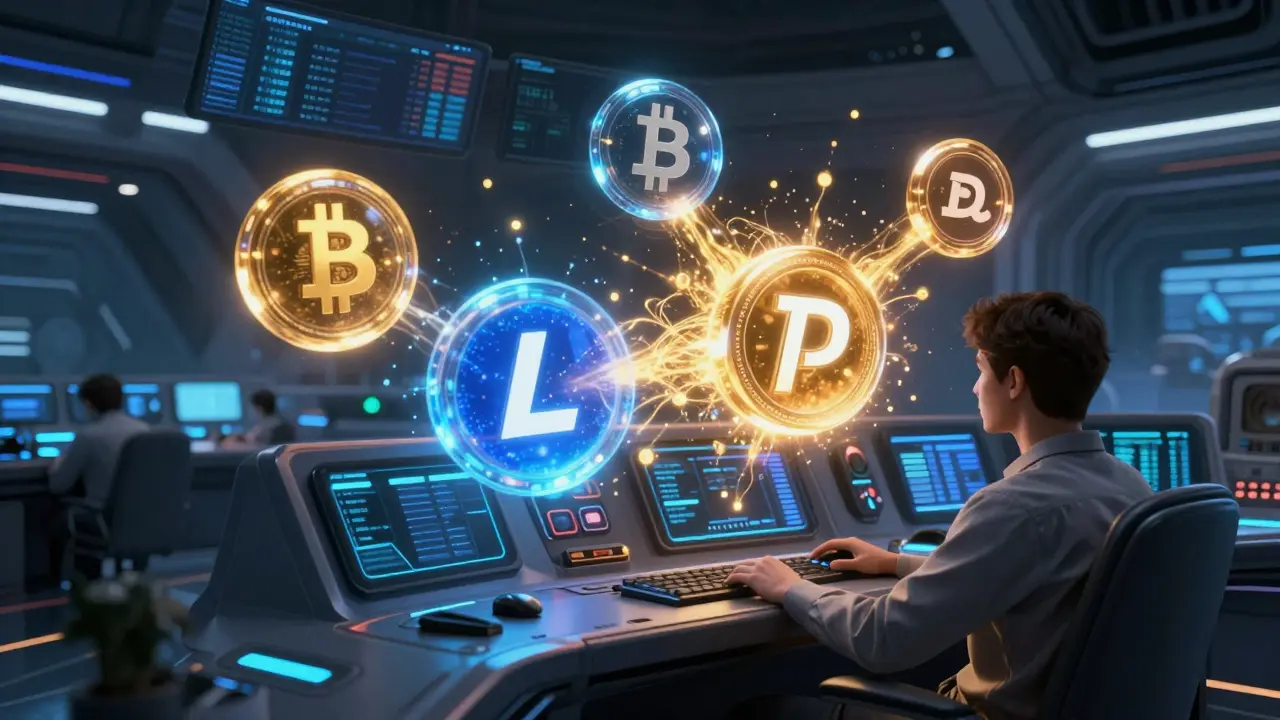
Technology only matters if people use it. For Blocknet, that application is BlockDX is a desktop wallet application that enables trustless cross-chain swaps between compatible cryptocurrencies. BlockDX allows users to connect wallets from different blockchains-such as Bitcoin, Litecoin, and Dogecoin-and execute direct swaps without intermediaries.
Here’s why this matters: Traditional cross-chain swaps require you to withdraw funds to an exchange, sell them, buy the new asset, and withdraw again. Each step involves fees, time delays, and counterparty risk. With BlockDX, the swap happens directly between your wallets. You initiate the trade, the protocol verifies the locks on both sides, and the assets are released simultaneously. It’s faster, cheaper, and safer.
While BlockDX currently supports a limited number of chains compared to centralized exchanges, its focus is on quality and security rather than quantity. As the protocol matures, more blockchains are expected to integrate, expanding the utility of the BLOCK token.
Risks and Considerations
No investment is without risk, and Blocknet is no exception. Here are the key factors to consider:
- Competition: The interoperability space is crowded. Projects like Polkadot, Cosmos, and Chainlink offer similar solutions with much larger ecosystems and funding. Blocknet’s advantage is its simplicity and lack of a "middle chain," but it lacks the marketing budget of its competitors.
- Liquidity: Low trading volume means you might struggle to exit large positions quickly. Slippage can eat into profits during volatile markets.
- Adoption Rate: Despite its long history, Blocknet has not achieved mass adoption. The user base remains relatively small, which limits network effects.
- Inflation: Blocknet has no maximum supply cap. While inflation is capped, the continuous issuance of new blocks could dilute token value over time if demand doesn’t keep pace.
However, for those who believe in the long-term vision of a truly interconnected blockchain world, Blocknet offers a unique proposition. Its non-partisan approach ensures that no single chain dominates the ecosystem, preserving decentralization.
Final Thoughts
Blocknet isn’t trying to be the next Bitcoin or Ethereum. It’s aiming to be the glue that holds the fragmented crypto landscape together. By enabling trustless communication between chains, it addresses one of the industry’s biggest pain points: interoperability. The BLOCK token serves as fuel for this engine, incentivizing participants to maintain the network’s integrity.
If you’re looking for quick gains, BLOCK probably isn’t for you. But if you’re interested in foundational technologies that enable seamless cross-chain interactions, Blocknet deserves a closer look. Its longevity since 2014 speaks to its resilience, and its ongoing development suggests a commitment to solving real-world problems.
Is Blocknet (BLOCK) a good investment?
Whether Blocknet is a good investment depends on your risk tolerance and belief in blockchain interoperability. BLOCK offers exposure to a foundational protocol with a long track record since 2014. However, it faces stiff competition from larger projects like Polkadot and Cosmos. Low liquidity and limited exchange listings mean it’s better suited for long-term holders rather than short-term traders. Always do your own research and never invest more than you can afford to lose.
How does Blocknet differ from other bridge protocols?
Unlike traditional bridges that move assets through a middle chain or create wrapped tokens, Blocknet enables direct, trustless communication between blockchains. It uses cryptographic proofs to verify transactions without relying on a central intermediary. This reduces counterparty risk and eliminates the need for wrapped assets, making swaps more secure and efficient.
Can I mine Blocknet (BLOCK)?
No, you cannot mine Blocknet anymore. The network transitioned from Proof of Work to Proof of Stake at block 2,001. Now, you can earn rewards by staking BLOCK tokens or running a Service Node. Running a Service Node requires locking up 5,000 BLOCK as collateral, while regular staking has no minimum requirement.
Where can I buy BLOCK tokens?
BLOCK tokens are available on select cryptocurrency exchanges such as LBank. They are not currently listed on major platforms like Coinbase or Crypto.com. Due to lower liquidity, always check the order book depth before trading to avoid significant slippage. You may also find peer-to-peer options through community forums.
What is BlockDX and how do I use it?
BlockDX is a desktop wallet application built on the Blocknet protocol. It allows users to connect wallets from different blockchains (like Bitcoin and Litecoin) and perform trustless cross-chain swaps. To use it, download the BlockDX client, connect your supported wallets, select the assets you want to swap, and confirm the transaction. The protocol handles the rest automatically without intermediaries.


I'm a blockchain analyst and crypto educator who builds research-backed content for traders and newcomers. I publish deep dives on emerging coins, dissect exchange mechanics, and curate legitimate airdrop opportunities. Previously I led token economics at a fintech startup and now consult for Web3 projects. I turn complex on-chain data into clear, actionable insights.