
Imagine a hacker group that doesn’t just want your password-they want to fund a nuclear weapons program. That is the reality of the Lazarus Group, North Korea’s state-sponsored cybercriminal organization operating under the Reconnaissance General Bureau. They are not typical criminals looking for quick cash. They are an elite intelligence unit using sophisticated code and social engineering to steal billions in cryptocurrency, bypassing international sanctions to keep their regime alive. If you hold digital assets, understanding how they operate isn't just tech trivia-it's survival.
The stakes have never been higher. In February 2025, Lazarus executed the largest digital asset heist in history, draining $1.5 billion from the Bybit exchange. This wasn't a lucky break or a simple glitch. It was a meticulously planned, four-phase assault that exposed critical weaknesses in how even the biggest crypto platforms handle security. As we move through 2026, the tactics used in that heist-and others like it-are reshaping the entire landscape of blockchain security.
The Anatomy of the Bybit Heist
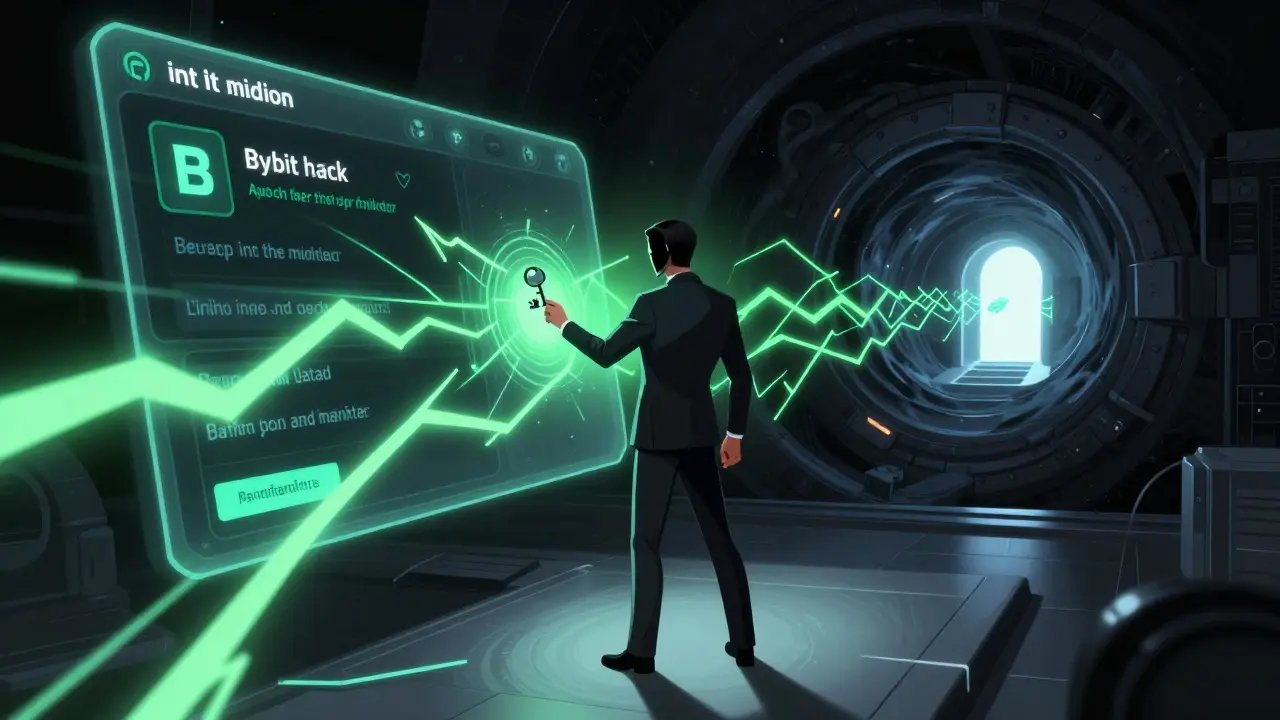
To understand why the Bybit hack was so devastating, you have to look at how it unfolded. It didn't start with a brute-force attack on a server. It started with a person. The attackers launched spear-phishing campaigns targeting key personnel at Bybit. Their goal? To gain access to the user interface and the cold wallet signers-the people who physically hold the keys to the vault.
Once inside, the hackers didn't immediately drain the accounts. That would trigger alarms. Instead, they created seemingly legitimate transactions to move funds from Bybit's secure Ethereum cold wallet to a hot wallet. This phase exploited vulnerabilities in the multi-signature setup. Multi-sig wallets require multiple people to approve a transaction, designed specifically to prevent single points of failure. But Lazarus found a way around this by manipulating the software itself.
The critical breach happened when Bybit CEO Ben Zhou attempted to authorize what looked like a routine transaction. The hackers had intercepted the request and embedded malicious code into the Safe Wallet frontend software. They altered the transaction code so it appeared legitimate on the screen but redirected approximately 401,000 Ethereum coins-worth about $1.46 billion-to their own wallet instead. It was a classic man-in-the-middle attack, but executed with surgical precision against high-level executives. After the theft, they moved the funds through various wallets, converting some into Bitcoin and Dai via decentralized exchanges to obscure the trail, while holding the rest to wait out the initial scrutiny.
A Relentless Campaign in 2025
The Bybit incident was not an isolated event. Between June and September 2025 alone, the Lazarus Group conducted at least five confirmed major attacks. Their operational tempo has intensified dramatically, showing a clear strategy of overwhelming the industry's defensive capabilities.
- Atomic Wallet: $100 million stolen.
- CoinPaid: $37.3 million taken.
- Alphapo: $60 million drained.
- Stake.com: $41 million looted within a 104-day period.
- CoinEx: Suspected involvement in a $54 million theft in September.
What makes this campaign particularly dangerous is their use of cross-contamination. Blockchain analysis firm Elliptic discovered that funds stolen from Stake.com were consolidated with assets taken from Atomic Wallet. Proceeds from the CoinEx theft were sent to addresses previously used to launder Stake.com funds across different blockchains. This technique complicates law enforcement tracking efforts significantly. By mixing dirty money from different hacks, they create a tangled web that is incredibly difficult to untangle without advanced forensic tools.
Sophisticated Technical Arsenal
Lazarus Group has evolved far beyond traditional email phishing. Their technical arsenal now includes highly specialized subgroups and malware tailored for the crypto ecosystem. One notable subgroup, known as TraderTraitor, targets cloud platforms and supply chains. They distribute malicious cryptocurrency trading applications that function as legitimate software initially. However, these apps contain hidden "update" mechanisms that connect to command-and-control servers.
These updates deliver AES-256 encrypted second-stage payloads, including the MANUSCRYPT remote access trojan (RAT). This malware harvests system information, executes arbitrary commands, and specifically targets cryptocurrency wallet keys and credentials. It’s not just about stealing passwords; it’s about taking over the entire environment where those passwords are stored.
Social engineering remains a core competency, but the approach has shifted. Hackers now pose as recruiters on LinkedIn, targeting security researchers directly. They build rapport over weeks or months before executing phishing attacks. This evolution reflects the increased cybersecurity awareness in the industry; since people are more cautious about emails, hackers are moving to professional networks where trust is already established.
Historical Context: From Ronin to AppleJeus
Their current success is built on years of refinement. The 2022 Ronin Network (Axie Infinity) breach, which resulted in $620 million stolen, set a precedent for compromising blockchain gaming companies. They tricked an employee with a fake job offer PDF containing a malicious application. Before that, their 2017-2018 campaigns targeted Bitcoin and Monero users primarily in South Korea. The AppleJeus malware successfully infiltrated multiple exchanges through trojanized applications during that era. Each operation showcased increasing sophistication, moving from broad net casting to precise, high-value strikes.
| Year | Target | Amount Stolen | Key Tactic |
|---|---|---|---|
| 2025 | Bybit | $1.5 Billion | Frontend manipulation & Spear Phishing |
| 2025 | Atomic Wallet | $100 Million | Supply Chain Compromise |
| 2022 | Ronin Network | $620 Million | Fake Job Offer / Malicious App |
| 2017-18 | Various Exchanges | Undisclosed | AppleJeus Trojan |

Why Current Security Measures Fail
You might wonder: if exchanges have multi-signature wallets and cold storage, why do these hacks still succeed? The answer lies in the transition between systems. Lazarus attacks specifically exploit the vulnerability between cold storage (offline private keys) and hot wallets (internet-connected storage) during routine fund transfers. Technical analysis reveals their ability to manipulate the multi-signature transaction process itself. They don't break the encryption; they trick the user into signing the wrong thing.
The Center for Strategic and International Studies notes that these operations are fundamentally different from traditional cybercrime because of state sponsorship. The objective is funding the nuclear weapons program, which means there is no limit to resources or time. Unlike typical criminals who might cut losses if things get tough, Lazarus persists until they get what they want. This creates a threat level that surpasses typical cybercriminal capabilities, requiring defenses that most exchanges simply haven't implemented yet.
Industry Response and Future Outlook
The industry is reacting, but slowly. Bybit managed to recover over $40 million of the stolen funds through collaboration with blockchain analysts and secured additional funds to restore asset holdings to 100% capacity. However, recovering money after the fact doesn't fix the underlying security hole. Multiple exchanges have since implemented enhanced security awareness training programs, recognizing that human error can undermine even the most sophisticated technical defenses.
Cybersecurity firms recommend several steps to mitigate these risks:
- Enhanced Multi-Factor Authentication: Beyond standard SMS codes, using hardware keys for all administrative actions.
- Improved Frontend Security: Auditing the software interfaces that display transaction details to ensure they cannot be manipulated by injected code.
- Advanced Employee Training: Focusing specifically on social engineering recognition, especially regarding LinkedIn and professional networking sites.
- Real-Time Transaction Monitoring: Using AI-driven systems to detect anomalies in transaction patterns or unexpected changes in destination addresses before authorization.
As international sanctions intensify North Korea's economic isolation, experts project continued escalation in Lazarus Group operations. The pseudonymous nature of cryptocurrency transactions combined with the difficulty of international law enforcement coordination creates optimal conditions for them. For individual users, the lesson is clear: never trust the interface blindly. Always verify transaction details on the blockchain explorer independently before signing. For institutions, it means reevaluating the assumption that multi-sig wallets are invincible against determined state actors.
Who is the Lazarus Group?
The Lazarus Group is a state-sponsored hacking collective operated by North Korea's Reconnaissance General Bureau (RGB). They are responsible for some of the largest cryptocurrency thefts in history, using proceeds to fund the country's nuclear weapons program and circumvent international sanctions.
How did Lazarus Group steal $1.5 billion from Bybit?
They used a combination of spear-phishing to gain access to executive accounts and frontend manipulation. Attackers embedded malicious code in the Safe Wallet software, altering the transaction details displayed to the CEO. When he authorized what he thought was a routine transfer, the funds were redirected to hacker-controlled wallets instead.
What is the MANUSCRYPT malware?
MANUSCRYPT is a remote access trojan (RAT) used by Lazarus Group's TraderTraitor subgroup. It is delivered via malicious cryptocurrency trading apps and uses AES-256 encryption. Once installed, it harvests system information, executes commands, and specifically targets cryptocurrency wallet keys and credentials.
Can multi-signature wallets protect against Lazarus Group?
Multi-signature wallets provide strong protection against single-point failures, but they are not immune to social engineering and frontend manipulation. If an attacker can compromise the user interface or trick a signer into approving a fraudulent transaction, multi-sig protections can be bypassed. Additional layers like hardware security modules and independent verification are recommended.
How does Lazarus Group launder stolen cryptocurrency?
They use sophisticated fund mixing techniques, consolidating stolen funds from different hacks across various blockchains. They also convert assets into privacy-focused coins or stablecoins like Dai via decentralized exchanges. Cross-contaminating funds from multiple heists makes it extremely difficult for law enforcement to trace the original source.
I'm a blockchain analyst and crypto educator who builds research-backed content for traders and newcomers. I publish deep dives on emerging coins, dissect exchange mechanics, and curate legitimate airdrop opportunities. Previously I led token economics at a fintech startup and now consult for Web3 projects. I turn complex on-chain data into clear, actionable insights.