
You can buy a coffee with your phone in Istanbul, but try paying for it with Bitcoin, and you’ll hit a wall. Since April 2021, the Central Bank of the Republic of Turkey (CBRT) has banned using cryptocurrency for payments. Yet, if you walk into any tech hub in Kadıköy or listen to conversations at a cafe in Beşiktaş, you’ll hear about people trading millions of dollars’ worth of digital assets daily. How is this possible? The short answer is that while spending crypto is illegal, owning and trading it remains legal. This contradiction has birthed one of the most creative, complex, and resilient crypto markets in the world.
Turkey isn’t just participating in the global crypto wave; it’s riding it harder than almost anyone else. According to the Chainalysis 2023 Global Crypto Adoption Index, Turkey ranked 11th globally for grassroots adoption, processing roughly $70.4 billion in transactions between July 2022 and June 2023. By 2024, the number of active users had swelled to approximately 19.5 million, which is nearly half of the adult population. This isn’t a niche hobbyist market; it’s a mainstream financial behavior driven by inflation hedging, currency volatility, and sheer determination to bypass restrictions.
The Legal Path: Licensed Exchanges and KYC Hurdles
For those who want to stay strictly within the lines, the path is clear but regulated. The Capital Markets Board (CMB) oversees a list of licensed centralized exchanges. As of January 2025, platforms like Binance Turkey, Paribu, and the relaunched Thodex operate under provisional authorization. These platforms are the "safe" option. They offer legal recourse if something goes wrong, and they integrate directly with Turkish bank accounts.
However, safety comes with strings attached. The primary constraint is identity verification. Under the February 25, 2025 Anti-Money Laundering (AML) regulation published in Official Gazette No. 32512, mandatory identity checks kick in for transactions exceeding 15,000 Turkish lira (approximately $425). This threshold creates a strange dynamic. If you’re trading small amounts, you’re fine. But if you want to move serious capital, you’re on the radar. Users report that completing CMB-mandated verification takes 3-5 hours, involving document uploads and biometric checks. While Paribu and others boast fast TRY withdrawals (often under two hours), many users complain about hitting monthly limits after crossing that 15,000 TL mark.
| Method | Regulatory Status | Identity Verification | Typical Fees/Premiums | Risk Level |
|---|---|---|---|---|
| Licensed Exchanges (e.g., Paribu, Binance TR) | Legal & Compliant | Mandatory (>15k TRY) | 0.05% - 0.25% | Low (Platform risk only) |
| P2P Platforms (e.g., LocalBitcoins, Telegram groups) | Gray Area / Unregulated | Optional / Minimal | 0.5% - 2% Premium | Medium (Counterparty fraud) |
| DeFi via VPN/Wallets | Technically Banned Access | None (Self-Custody) | Gas Fees + Slippage | High (Technical error, Smart contract risk) |
The Shadow Market: P2P Trading and Anonymity
When the legal door narrows, the windows open wider. Peer-to-peer (P2P) trading has exploded as the primary workaround for avoiding the 15,000 TRY limit and maintaining privacy. Platforms like LocalBitcoins saw a staggering 217% increase in Turkish user activity from late 2021 to late 2024. By December 2024, these channels were processing around $1.2 billion in monthly transactions. Why do people flock here? Anonymity and flexibility. You can trade USDT for TRY without triggering the same level of scrutiny as a centralized exchange, provided you don’t scream "money laundering" with your transaction patterns.
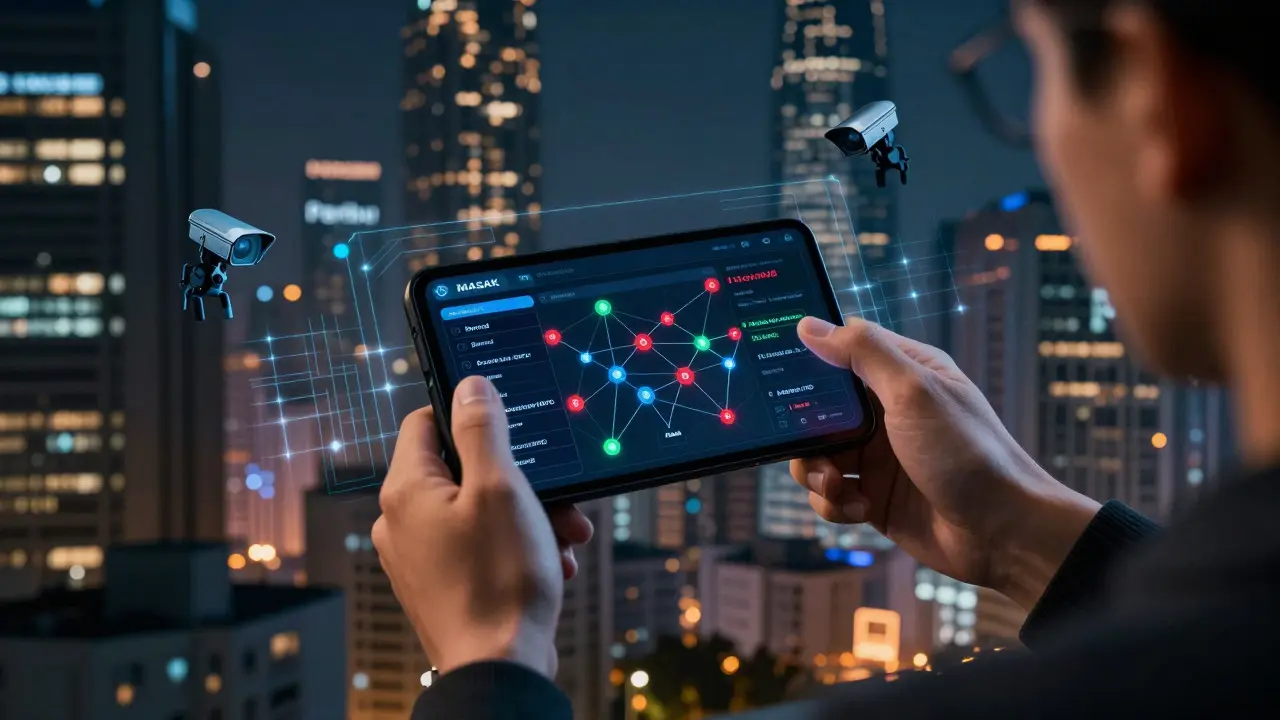
But it’s not all smooth sailing. A May 2024 Capital Markets Board enforcement report revealed that 78% of Turkish crypto users now use at least two different trading methods to diversify risk. Many engage in arbitrage-buying Bitcoin on Paribu at a lower price and selling it on LocalBitcoins at a premium to avoid limits. One user on the CryptoPazar forum reported consistent 3-5% profits using this method. However, the risk is real. The MASAK (Financial Crimes Investigation Board) keeps a close eye on unusual banking flows. In a survey by the Istanbul Blockchain Association, 22% of users reported having their accounts frozen due to MASAK interventions. Resolving these freezes can take 14 to 30 days through formal appeals, locking up your funds during volatile market swings.
Going Off-Grid: DeFi, VPNs, and Technical Workarounds
For the technically savvy, centralized exchanges-even licensed ones-are too restrictive. Enter the decentralized finance (DeFi) ecosystem. In February 2025, the CMB banned 46 platforms, including popular decentralized exchange PancakeSwap, via Announcement No. 562/2025. Did this stop traders? Hardly. It just made them smarter.
Users now rely on Virtual Private Networks (VPNs) to mask their IP addresses and access banned services. A December 2024 TÜBİTAK study estimated that 68% of Turkish crypto users have used VPNs to reach platforms like Coinbase or Kraken. Beyond simple access, there’s a whole subculture built around wallet customization. On Reddit’s r/CryptoTurkey, top posts detail how to use Trust Wallet or MetaMask with custom RPC endpoints to connect to Uniswap or other DeFi protocols without touching a Turkish server.
This requires effort. Setting up a multi-wallet ecosystem with non-Turkish RPC nodes can take 15-20 hours of learning and configuration, according to a May 2025 CryptoPazar Academy study. But the payoff is full access to the global DeFi market. Statistics from TÜİK show that despite the bans, 3.7 million Turkish wallet addresses interacted with DeFi protocols in Q1 2025. The community supports itself through over 1,200 YouTube tutorial videos and hundreds of active Telegram channels, creating a robust knowledge base for circumvention.
Why Do Turks Keep Trading? The Economic Driver
To understand the persistence of the market, you have to look at the macroeconomic context. Turkey has faced significant inflation and currency devaluation over the past decade. For many citizens, holding Turkish Lira (TRY) feels like watching money evaporate. Cryptocurrencies, particularly stablecoins like USDT (Tether), serve as a hedge. In 2024, 38.7% of all crypto transactions in Turkey involved stablecoins. This isn’t speculation; it’s preservation of wealth.
Dr. Ayşenur Acar, Professor of Financial Regulation at Ankara University, described this in a February 2025 Financial Times interview: "The payment ban has created a paradoxical situation where Turkey has one of the world's most active crypto trading markets but with artificially restricted utility, driving innovation in circumvention methods." The World Bank’s 2024 Digital Economy Assessment noted that this regulatory arbitrage has become a $3.2 billion industry in its own right, employing thousands in VPN services, wallet development, and P2P matching.

Risks and Realities: What Can Go Wrong?
If you’re looking to join this market, you need to know the pitfalls. The biggest risk isn’t the government shutting down the internet; it’s the fragmentation of trust. When you trade on unlicensed P2P platforms, you have no legal recourse if the counterparty scams you. Community forums are filled with stories of lost funds. Furthermore, the technical barrier for DeFi means that human error is costly. Sending tokens to the wrong network or connecting to a malicious smart contract can wipe out an account instantly.
Then there’s the regulatory hammer. The CMB is actively updating its banned lists. In May 2025, 17 more platforms were added, bringing the total to 63. This constant whack-a-mole game forces users to stay vigilant. Additionally, MASAK’s monitoring capabilities are improving. Splitting transactions across family members-a tactic used by 68% of users in detailed workaround guides-is becoming less effective as algorithms detect circular flows. If flagged, you face frozen accounts and lengthy bureaucratic battles.
The Future: Centralization vs. Adaptation
Where does this leave Turkey? The regulators aren’t giving up. The CMB’s roadmap, published in June 2025, proposes a "Crypto Asset Gateway" system by Q2 2026. This would centralize all on-ramps and off-ramps, aiming to squeeze out the shadow market while keeping the payment ban intact. The goal is total visibility: every coin entering or leaving the country must pass through a monitored gate.
However, history suggests adaptation will outpace regulation. Dr. Hasan Yılmaz of the Istanbul Finance Center predicts that "as long as the payment ban remains while trading is permitted, innovative workarounds will continue to emerge." The World Bank projects crypto trading volume in Turkey to hit $102 billion in 2025, up from $85.3 billion in 2024. The demand is too strong, and the economic incentives too powerful, for a ban to extinguish the market. Instead, we’re seeing a maturation of the underground infrastructure, with tools like the open-source "TurkWallet" project automating transaction splitting to evade thresholds.
Turkish citizens haven’t stopped trading crypto because they need to. They’ve simply gotten better at doing it in the cracks of the system. Whether through licensed exchanges, P2P networks, or decentralized protocols, the desire to control one’s financial destiny overrides regulatory friction. For now, the market thrives in the gray area, fueled by necessity and ingenuity.
Is buying cryptocurrency illegal in Turkey?
No, buying and holding cryptocurrency is legal in Turkey. The ban specifically applies to using crypto as a means of payment for goods and services. You can legally trade crypto on licensed exchanges or through peer-to-peer methods, but you cannot use it to pay for groceries or rent.
What happens if I exceed the 15,000 TRY transaction limit?
If you exceed the 15,000 TRY threshold on a licensed exchange, you are subject to mandatory identity verification and enhanced monitoring under AML regulations. Frequent large transactions may trigger alerts from MASAK, potentially leading to temporary account freezes while authorities investigate the source of funds.
Are P2P crypto trades safe in Turkey?
P2P trades carry higher risks than licensed exchanges. While they offer anonymity and avoid strict limits, you lack legal protection against fraud. Counterparties may scam you, or banks may freeze your account if they detect suspicious P2P-related transfers. Using reputable platforms with escrow services reduces, but does not eliminate, this risk.
Can I use DeFi platforms like Uniswap in Turkey?
Yes, but indirectly. Several DeFi platforms are on the CMB’s banned list. To access them, users typically employ VPNs to bypass IP blocks and configure wallets like MetaMask with non-Turkish RPC endpoints. This method is legal to attempt but exists in a regulatory gray area, and technical errors can lead to permanent loss of funds.
Which licensed exchanges are recommended for Turkish users?
As of early 2025, Binance Turkey, Paribu, and Bitlo are among the top licensed exchanges with provisional CMB authorization. They offer the highest level of legal security and ease of integration with Turkish bank accounts, though they enforce strict KYC rules and transaction limits.
I'm a blockchain analyst and crypto educator who builds research-backed content for traders and newcomers. I publish deep dives on emerging coins, dissect exchange mechanics, and curate legitimate airdrop opportunities. Previously I led token economics at a fintech startup and now consult for Web3 projects. I turn complex on-chain data into clear, actionable insights.