You just bought a digital monkey for $50,000. Or maybe you minted a piece of art that took ten minutes to make. Either way, you own it. But what does "owning" actually mean when the file is a JPEG that anyone can right-click and save? The answer isn't in the image itself-it's in the blockchain. This article breaks down exactly how Non-Fungible Tokens (NFTs) work under the hood, why they can't be duplicated like files, and where your data actually lives.
| Concept | What It Means For You |
|---|---|
| The Ledger | A public record proving you own the token, not necessarily the file. |
| Fungibility | NFTs are unique IDs; Bitcoin is interchangeable cash. |
| Smart Contracts | Code that automates ownership transfer and royalties. |
| Metadata | The link pointing to where your actual art/video is stored. |
The Core Concept: Fungible vs. Non-Fungible
To get why NFTs matter, you have to understand the word "fungible." If I lend you a dollar bill, and you pay me back with a different dollar bill, we're square. That dollar is fungible. One unit is identical to another. Now, imagine lending someone your original signed baseball card. They can't give you a random copy from eBay; they need to return that specific card. That's non-fungible.
An NFT is a cryptographic asset on a blockchain that has a unique identification code. Unlike Bitcoin, where one BTC equals another BTC, every NFT is distinct. This uniqueness is enforced by the blockchain's structure. When you look at an NFT, you aren't looking at the picture directly. You're looking at a receipt. That receipt says, "Wallet Address X owns Token ID #4592." The picture is separate. The token is the proof of ownership.
Where Do NFTs Live? The Role of Smart Contracts
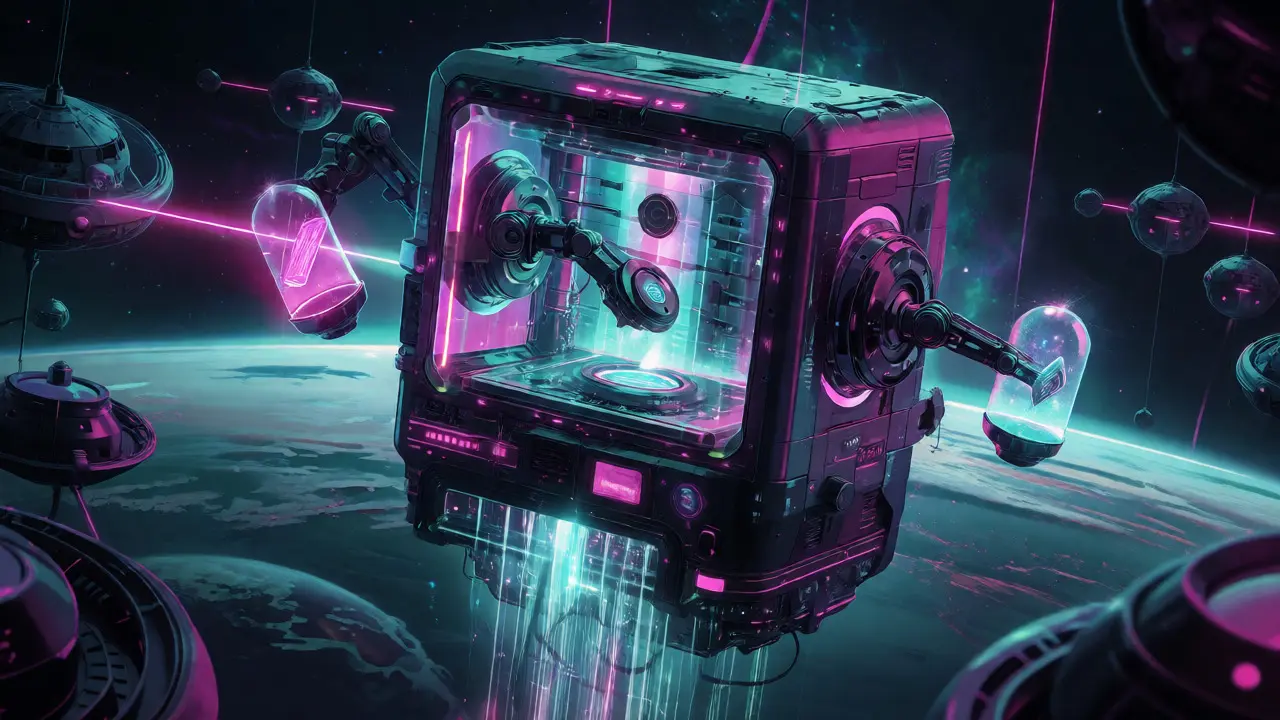
NFTs don't float around in the cloud. They live inside smart contracts. Think of a smart contract as a vending machine. You put in coins (crypto), and it gives you a soda (the token). No shopkeeper needed. On blockchains like Ethereum, these contracts follow specific standards. The most famous is ERC-721, created in 2017. This standard tells the blockchain how to handle unique tokens.
When you buy an NFT, you aren't sending money to an artist's bank account directly. You're interacting with this smart contract. The contract updates its internal list: "Okay, Wallet A owned Token #1, but now Wallet B owns it." Because the blockchain is decentralized, thousands of computers (nodes) verify this change simultaneously. Once recorded, it cannot be changed without overwhelming consensus. This immutability is what creates trust. You don't need to trust the seller; you trust the math and the network.
The Metadata Problem: Where Is the Art?
Here is the part that confuses most beginners. Does the blockchain store your high-resolution artwork? Usually, no. Storing large files on a blockchain is incredibly expensive and slow. Ethereum charges gas fees based on computational power. Storing a 10MB video would cost hundreds or thousands of dollars in transaction fees alone.
Instead, NFTs use metadata. This is a small JSON file containing text details: the name of the collection, the description, attributes (like "hat: red"), and crucially, a URL. This URL points to where the actual image or video is hosted. In the early days, many projects used centralized servers like Amazon Web Services (AWS). If AWS went down or the company forgot to pay the bill, your art disappeared. This happened to about 33% of early CryptoPunks assets during server migrations.
Newer projects often use decentralized storage solutions like IPFS (InterPlanetary File System) or Arweave. IPFS breaks files into chunks and distributes them across many nodes. Arweave aims to store data permanently by paying upfront for mining costs. While better than AWS, these systems still rely on pinning services-companies that agree to keep your data online. If the pinning service fails, your metadata link might break, even if the token remains valid on the chain.
Minting: Creating Your First Token
Creating an NFT is called "minting." It’s the process of publishing a new token on the blockchain. When you mint, you’re essentially writing a new entry into the ledger. This requires two things: a digital wallet (like MetaMask or Phantom) and cryptocurrency to pay for the transaction fee (gas).
The cost varies wildly depending on the network. On Ethereum, minting can cost between $1.20 and $1.80 during quiet times, but spike to over $50 during congestion. Solana offers a cheaper alternative, often costing less than a cent ($0.00025) per mint. Polygon, a layer-2 solution, sits in the middle, offering low fees while staying compatible with Ethereum tools.
- Connect Wallet: Link your crypto wallet to an NFT marketplace like OpenSea or Rarible.
- Upload Asset: Add your image, audio, or video file.
- Add Metadata: Fill in the title, description, and properties.
- Choose Network: Select Ethereum, Solana, or Polygon based on your budget.
- Sign Transaction: Approve the gas fee via your wallet extension.
- Confirmation: Wait for the blockchain to confirm the mint (seconds to minutes).
Marketplaces and Trading Mechanics
Once minted, your NFT exists in your wallet. To sell it, you list it on a marketplace. These platforms act as interfaces for the smart contracts. They don't hold your NFT; they display it. When a buyer clicks "Buy," they send cryptocurrency to a escrow-like mechanism within the smart contract. The contract then swaps the asset: the buyer gets the token ID, and you get the ETH/SOL.
Royalties are a key feature here. Most smart contracts include logic that automatically sends a percentage (usually 5-10%) of every secondary sale back to the original creator. This happens instantly and transparently. However, enforcement isn't perfect. Some marketplaces allow buyers to bypass royalty payments, leading to ongoing debates about how to enforce these terms legally and technically.
Common Pitfalls and Risks
Owning an NFT comes with risks that traditional collectors don't face. First, there's the "rug pull." This is when a project team collects minting fees and disappears, leaving holders with worthless tokens. Since there’s no central authority verifying legitimacy, due diligence is on you.
Second, technical errors happen. Incorrect gas pricing causes failed transactions. Users lose time and sometimes small amounts of fees. Third, phishing scams target private keys. If you share your seed phrase (the backup code for your wallet) with a fake website, someone can drain your funds instantly. Unlike a bank, there is no customer support to reverse a transaction.
The Future: Beyond Profile Pictures
The hype cycle has cooled since the 2021 peak, but utility is growing. We’re seeing NFTs move beyond profile pictures (PFPs) into practical applications. Supply chains use them to track luxury goods. LVMH uses blockchain tech to verify Louis Vuitton bags. Ticketing platforms issue NFT tickets to prevent scalping, ensuring the original price stays with the event organizer.
Regulatory clarity is also emerging. In the US, the SEC looks at whether an NFT acts like a security (investment contract). In the EU, the MiCA framework treats them differently. As infrastructure improves-with upgrades like Ethereum’s Dencun reducing costs by up to 90%-the barrier to entry drops. This makes NFTs viable for everyday items, not just speculative assets.
Do I own the copyright to my NFT?
Usually, no. Buying an NFT typically grants you ownership of the token, not the intellectual property rights to the underlying image. Unless the smart contract explicitly states otherwise, the creator retains copyright. You own the receipt, not the painting.
Why do some NFTs disappear from wallets?
This usually happens because the metadata link broke. If the external server hosting the image goes offline or changes its URL, the wallet can’t find the visual representation. The token still exists on the blockchain, but it appears blank or broken in your interface.
Is Ethereum the only blockchain for NFTs?
No. While Ethereum hosts the majority of high-value NFTs, other chains like Solana, Polygon, Tezos, and Flow are popular. Each offers different trade-offs between speed, cost, and decentralization. Solana, for instance, processes transactions much faster and cheaper than Ethereum.
What happens if the marketplace shuts down?
Your NFT is safe. It lives on the blockchain, not the marketplace. You can view it using any wallet that supports the network (like MetaMask) and trade it on other compatible marketplaces. The marketplace is just a storefront; the asset is in your vault.
Can I burn an NFT?
Yes. Burning means sending the NFT to a null address (a wallet address with no private key). This removes it from circulation permanently. Creators sometimes burn unsold inventory to increase scarcity, or users burn tokens to redeem physical rewards.
I'm a blockchain analyst and crypto educator who builds research-backed content for traders and newcomers. I publish deep dives on emerging coins, dissect exchange mechanics, and curate legitimate airdrop opportunities. Previously I led token economics at a fintech startup and now consult for Web3 projects. I turn complex on-chain data into clear, actionable insights.