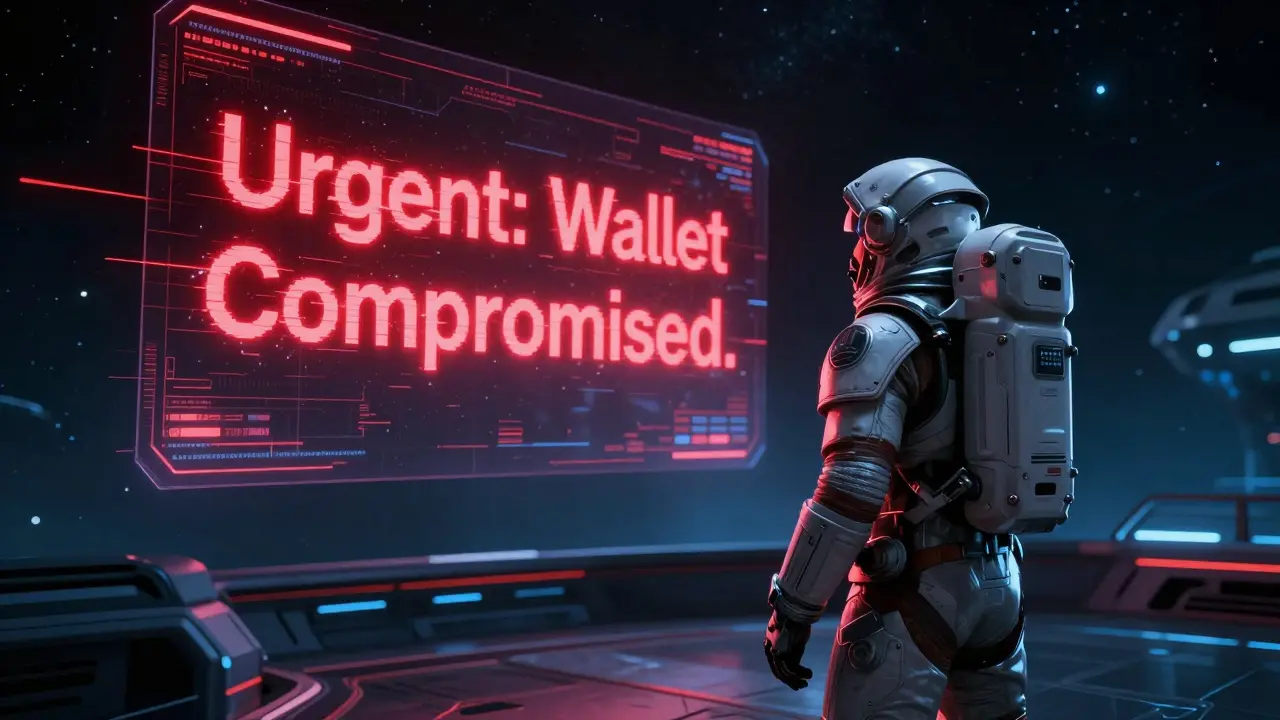
You check your phone. A text message flashes on the screen: "Urgent: Your MetaMask wallet has been compromised. Click here to verify." Your heart skips a beat. You know that if you don’t act fast, your crypto is gone. But what if I told you that this message is likely part of a sophisticated trap designed to steal everything? In 2026, criminals aren’t just guessing passwords anymore. They are using artificial intelligence to craft messages so realistic that even experienced traders fall for them.
The landscape of digital theft has changed dramatically. It’s no longer about brute force hacking; it’s about social engineering. Attackers target your psychology, not just your software. According to recent data from the FBI’s Internet Crime Complaint Center (IC3), the average loss per crypto phishing incident hit $42,850 in late 2025. That is money vanishing into thin air because a human clicked a link. This article breaks down exactly how these attacks work, why they are getting smarter, and most importantly, how you can protect your assets right now.
The Evolution of Crypto Phishing: From Spam to AI Precision
Remember when phishing emails were easy to spot? They had terrible grammar, weird sender addresses, and generic greetings like "Dear Customer." Those days are over. Today, we are dealing with AI-driven personalization engines that scrape your public social media profiles-Twitter/X, LinkedIn, GitHub-in seconds. These systems build a detailed profile of you before you even open the email.
In 2025, the term crypto phishing became synonymous with high-tech deception. Attacks now achieve 99.2% grammatical accuracy. They reference your specific wallet address, your last transaction, and even the token you hold. If you bought Solana yesterday, your phishing email mentions Solana today. This level of detail makes the message feel legitimate. Dr. Elena Rodriguez from MIT’s Digital Currency Initiative noted that these campaigns now have 92% contextual accuracy. That means they bypass not just your skepticism, but also trained security personnel.
The shift from generic spam to targeted precision is driven by profit. With the rise of cryptocurrency adoption, attackers realized that stealing small amounts from millions of people was less efficient than stealing large amounts from thousands of verified holders. The result is a $2.7 billion criminal industry focused entirely on luring users into revealing their private keys or seed phrases.
SMS Smishing: The Silent Threat on Your Phone
While email remains a major vector, Short Message Service (SMS) phishing, or smishing, has exploded. Why? Because we trust our phones more than our computers. We read texts immediately. We assume alerts from banks or exchanges come through SMS.
Attackers exploit this habit. In Q2 2025, a survey by the Blockchain Association found that 63% of mobile crypto users received fake security alert texts impersonizing platforms like Coinbase or Binance. These messages often use Unicode character substitution. To your eye, the URL looks like coinbase.com/security. But hidden within the code are special characters that make it look identical while actually pointing to a malicious server. Keepnet Labs identified that 68% of SMS phishing attempts use this trick to bypass carrier filters.
The urgency is key. The text usually claims your account is locked, a suspicious login was detected, or you need to claim an airdrop. The link leads to a clone of the real platform’s login page. Once you enter your credentials or scan a QR code, the attacker gains access. Unlike email, SMS doesn’t show the full sender ID clearly, making it harder to verify the source instantly.
| Feature | Email Phishing | SMS Smishing |
|---|---|---|
| Average Click-Through Rate | 28.7% | 17.3% |
| Primary Target Audience | Desktop users, institutional investors | Mobile-only traders, retail investors |
| Common Trigger | Fake invoices, tax documents, partnership offers | Security alerts, airdrop claims, delivery notices |
| Bypass Technique | AI-generated content, spoofed domains | Unicode substitution, short links |
| Infrastructure Cost | Higher (requires domain hosting) | Lower (uses bulk SMS services) |

How Attackers Operate: The Anatomy of a Trap
Understanding the mechanics helps you spot the red flags. Most modern crypto phishing follows a three-step process:
- Reconnaissance: Attackers monitor blockchain explorers. When they see a new deposit into your wallet, they trigger an automated message within seconds. StrongestLayer reported that some systems can send a phishing message within 8.3 seconds of detecting wallet activity. This timing makes the attack feel relevant and urgent.
- The Lure: The message uses fear or greed. Fear: "Your wallet is frozen." Greed: "You’ve won a free NFT." The language is polished, professional, and free of errors. It mimics the branding of trusted entities like MetaMask, Ledger, or Kraken perfectly.
- The Payload: You click the link and land on a replica website. Here, the goal is simple: get your seed phrase. The site might ask you to "verify ownership" by entering your 12-word recovery phrase. Or it might prompt you to install a malicious browser extension that drains your funds silently. Some advanced kits use deepfake audio or video calls to convince you to share sensitive info.
The barrier to entry for attackers has never been lower. Platforms like "PhishChain Pro" offer complete phishing kits for under $300 a month. You don’t need coding skills. You just need to understand human psychology. This democratization of crime means that anyone can launch a sophisticated campaign against you.
Why Traditional Security Fails Against Crypto Phishing
You might think your antivirus or firewall protects you. Unfortunately, standard security tools struggle with crypto-specific threats. Here’s why:
- No Central Authority: Unlike a bank, there is no one to call to freeze your account. Blockchain transactions are irreversible. Once you sign a transaction with your private key, the funds are gone forever. UpGuard found that 97% of victims cited the irreversibility as their biggest regret.
- Seed Phrase Vulnerability: The entire security model of non-custodial wallets relies on a single point of failure: your seed phrase. As researcher Alex Thorn argues, this makes crypto inherently more vulnerable to phishing than traditional finance. If an attacker gets those 12 words, they own your assets.
- Domain Spoofing: Attackers register domains that look almost identical to real ones. For example,
metamask-support.netinstead ofmetamask.io. Human eyes easily miss the subtle difference, especially when panicked.
Furthermore, many users rely on convenience over security. Storing private keys on cloud drives, taking screenshots of seed phrases, or reusing passwords across exchanges creates multiple entry points for attackers. Even if you avoid the initial phishing click, poor hygiene elsewhere can lead to compromise.

Practical Defense Strategies for 2026
So, how do you stay safe? You need a layered approach. Relying on one tool isn’t enough. Here are actionable steps to protect your crypto assets:
1. Never Share Your Seed Phrase
This is the golden rule. No legitimate company, support agent, or government agency will ever ask for your seed phrase or private key. If someone asks, it is a scam. Period. Treat your seed phrase like the combination to a nuclear launch button. Write it down on paper, store it in a fireproof safe, and never digitize it.
2. Verify URLs Manually
Don’t click links in emails or texts. Instead, type the official website address directly into your browser bookmark bar. Check the domain carefully. Look for HTTPS, but remember that hackers can get SSL certificates too. Focus on the exact spelling of the domain name. Use password managers that auto-fill only on known sites; if the password manager doesn’t recognize the site, don’t log in.
3. Enable Hardware Wallets
For significant holdings, use a hardware wallet like Ledger or Trezor. These devices keep your private keys offline. Even if you click a phishing link, the attacker cannot move your funds without physically pressing buttons on the device. This adds a critical layer of physical security that software alone cannot provide.
4. Use Multi-Signature Wallets
If you manage larger sums or run a business, consider multi-sig wallets. These require two or more private keys to authorize a transaction. One compromised key isn’t enough to drain the account. Institutional investors use this method, which reduces successful phishing rates to just 4.2% according to Coinbase Institutional Security Report.
5. Educate Yourself on New Tactics
Stay updated. Follow cybersecurity news from reputable sources. Be wary of new trends like "quantum phishing" or deepfake voice calls. If something feels off, pause. Take a breath. Verify through a second channel. Slow down the decision-making process to break the attacker’s momentum.
The Future of Crypto Security
As we move further into 2026, the battle between attackers and defenders intensifies. Security firms are rolling out new tools. Coinbase launched "PhishShield," an AI detector designed to flag suspicious communications in beta. MetaMask is developing transaction simulation features that let you preview what a transaction will do before signing it. These innovations promise better protection.
However, attackers adapt quickly. Europol predicts a slight decline in effectiveness due to better wallet security, but Halborn warns that deepfake video verification requests could increase success rates by 300% by 2027. The technology arms race continues. Your best defense remains vigilance. Trust your instincts. Question every request for sensitive information. And remember, in the world of crypto, once it’s gone, it’s gone.
What is the difference between email phishing and SMS smishing?
Email phishing uses deceptive emails to trick users into clicking malicious links or downloading attachments. SMS smishing does the same via text messages. Smishing is often more urgent and shorter, exploiting the immediate nature of mobile notifications. Both aim to steal credentials or seed phrases, but smishing has higher engagement rates on mobile devices.
Can I recover my crypto if I fall for a phishing scam?
Generally, no. Blockchain transactions are irreversible. Once funds are sent to an attacker’s wallet, they cannot be undone. While some exchanges may freeze accounts involved in fraud if caught early, decentralized wallets offer no such recourse. Prevention is the only reliable strategy.
How do I know if a crypto email is legitimate?
Check the sender’s email address carefully for typos or mismatched domains. Never click links directly; navigate to the official site manually. Legitimate companies will never ask for your seed phrase or private key. If the message creates a sense of urgency or fear, it is likely a scam.
Are hardware wallets immune to phishing?
Hardware wallets significantly reduce risk by keeping private keys offline. However, they are not completely immune. If you interact with a malicious contract or approve a bad transaction on the device itself, funds can still be lost. Always verify transaction details on the device screen before confirming.
What should I do if I accidentally entered my seed phrase on a fake site?
Act immediately. Move all funds from the compromised wallet to a new, secure wallet with a fresh seed phrase. Do not reuse the old seed phrase. Change passwords for any associated email or exchange accounts. Consider reporting the incident to relevant authorities, though recovery is unlikely.


I'm a blockchain analyst and crypto educator who builds research-backed content for traders and newcomers. I publish deep dives on emerging coins, dissect exchange mechanics, and curate legitimate airdrop opportunities. Previously I led token economics at a fintech startup and now consult for Web3 projects. I turn complex on-chain data into clear, actionable insights.