
Trying to move digital assets in countries like Syria or Cuba often feels like navigating a minefield. One day a service works; the next, your account is frozen because of a policy change in Washington. In 2025, the landscape shifted violently. While one country saw its financial chains break, the other saw them tighten. If you're trying to understand where you can actually use International sanctions and crypto without risking a massive fine or a permanent ban, you need to look at the current divergence between the Syrian and Cuban regulatory environments.
| Feature | Syria | Cuba |
|---|---|---|
| General U.S. Embargo | Revoked (via EO 14312) | Active & Strengthened |
| Bank Access | Correspondent banking allowed | Strictly prohibited |
| Crypto Exchange Access | Increased (e.g., Binance) | Highly Restricted |
| Targeted Sanctions | Active (Assad family, Captagon trade) | Comprehensive (CACR) |
The Great Syria Pivot: From Embargo to Gray Area
For years, Syria was essentially a financial black hole for U.S. persons. That changed on July 1, 2025. Executive Order 14312 is the landmark directive that revoked six previous executive orders, effectively ending the comprehensive U.S. sanctions embargo that had been in place since 2004. This wasn't just a minor tweak; it was a full-scale policy reversal.
The Office of Foreign Assets Control (also known as OFAC) took the massive step of removing Syrian financial institutions, including the Central Bank of Syria, from the Specially Designated Nationals (SDN) List. For the average user or business, this means U.S. banks can now actually talk to Syrian banks again. However, don't assume everything is a free-for-all. Targeted sanctions still hit the Assad family and those involved in the captagon trade or human rights abuses. If you're transacting with the wrong person, you're still in legal trouble.
When it comes to crypto, Syria is in a strange spot. There are no laws specifically banning or permitting Bitcoin or Ethereum. It's a legal gray area. While major platforms like Binance is a global cryptocurrency exchange that has become more accessible to Syrian users following the sanctions lift have opened doors, the lack of a clear legal framework creates "perceived risk." This is why some international banks still hesitate to process transfers-they aren't afraid of the law as much as they are afraid of the paperwork involved in proving you aren't a sanctioned entity.
The Cuban Lockdown: High Stakes and Hard Lines
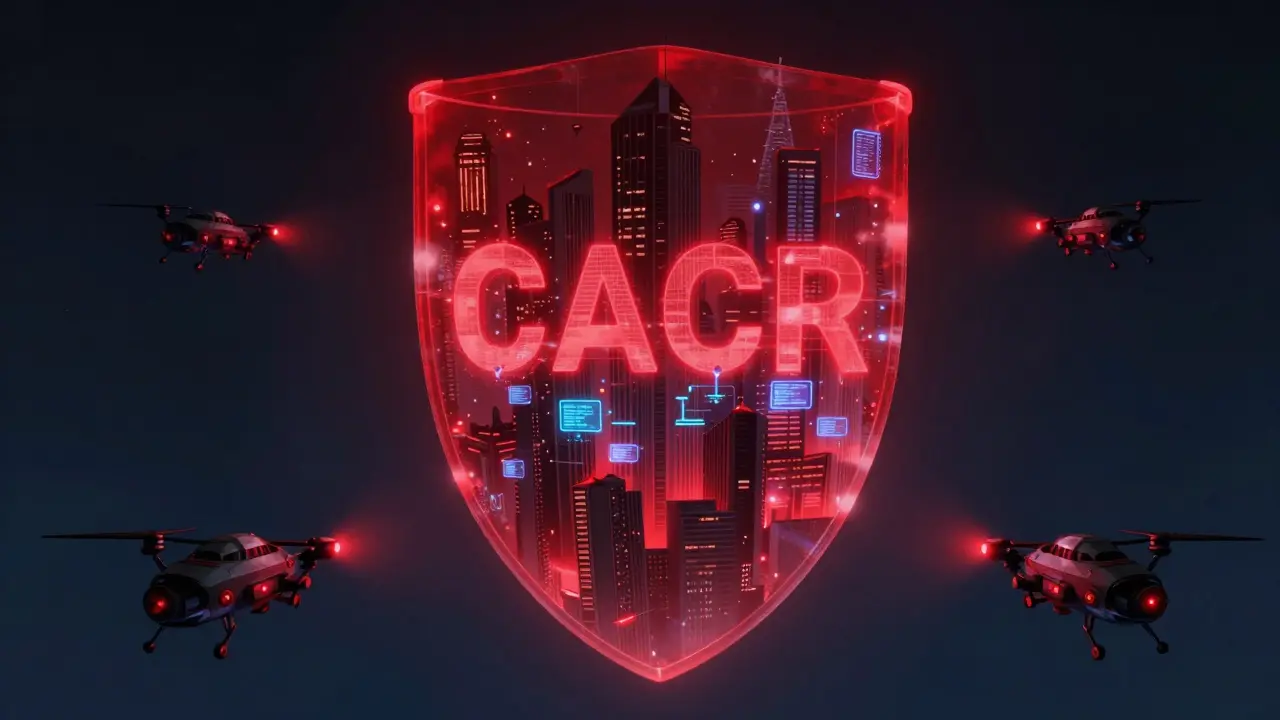
While Syria breathed a sigh of relief, Cuba went the other way. Through National Security Presidential Memorandum 5 (NSPM-5), the U.S. administration doubled down on a hardline approach. The Cuba Assets Control Regime (CACR) is a stringent regulatory framework that restricts nearly all financial transactions and travel between the U.S. and Cuba and is now being enforced with renewed aggression.
The danger here is the "reach" of these sanctions. The CACR doesn't just apply to people sitting in Miami; it applies to non-U.S. subsidiaries of U.S. companies. Take the case of Key Holding, LLC. This Delaware logistics firm had to pay over $600,000 in July 2025 because a subsidiary managed freight shipments from Colombia to Cuba. If a company based in the U.S. has a finger in a transaction involving Cuba, OFAC will likely find it and fine it.
For crypto users in Cuba, this means most centralized exchanges (CEXs) are a no-go. Using a VPN to bypass geographic blocks on an exchange is a common tactic, but it's risky. If the exchange discovers the user is in Cuba, the funds are often frozen immediately to avoid OFAC penalties. This has pushed many Cubans toward decentralized finance (DeFi) and peer-to-peer (P2P) networks where there is no central authority to blacklist an IP address.
Practical Hurdles: AML and the "Compliance Friction"
Even with sanctions lifted in Syria, you'll run into what pros call "compliance friction." Because there's no official crypto law, every transaction must be vetted against Anti-Money Laundering (AML) and Combating the Financing of Terrorism (CFT) frameworks. This means your "simple" transfer might be paused for days while a compliance officer checks if your wallet has ever interacted with a sanctioned address.
To solve this, some fintech companies are getting creative. Lightspark is a financial technology company providing infrastructure for cross-border payments using the Lightning Network. They've introduced Grid Switch, which lets regulated institutions move money using the Lightning Network as a settlement layer. The key here is that the end-user doesn't actually hold crypto; it's used as the "rails" to move fiat currency faster and more reliably in high-risk zones.
Avoiding the Red Flags: A Compliance Checklist
If you are a business or an individual operating in these regions, you can't just wing it. One mistake can lead to a frozen account or a federal investigation. Here is how to handle it:
- Check the SDN List: Always verify the counterparty. Just because the "country" isn't sanctioned doesn't mean the "person" isn't.
- Document Everything: Keep a clear trail of where the funds came from and where they are going. If OFAC asks, "Why did you send $5k to Damascus?", a vague answer isn't enough.
- Avoid VPN Masking for CEXs: If you're in Cuba, using a VPN to access a U.S.-based exchange is a gamble. Once you hit a KYC (Know Your Customer) check, you're done.
- Use P2P with Caution: In Cuba, P2P is the lifeline, but it's where scams are most common. Only trade with verified partners.
The Bigger Picture: Global Sanctions Shifts
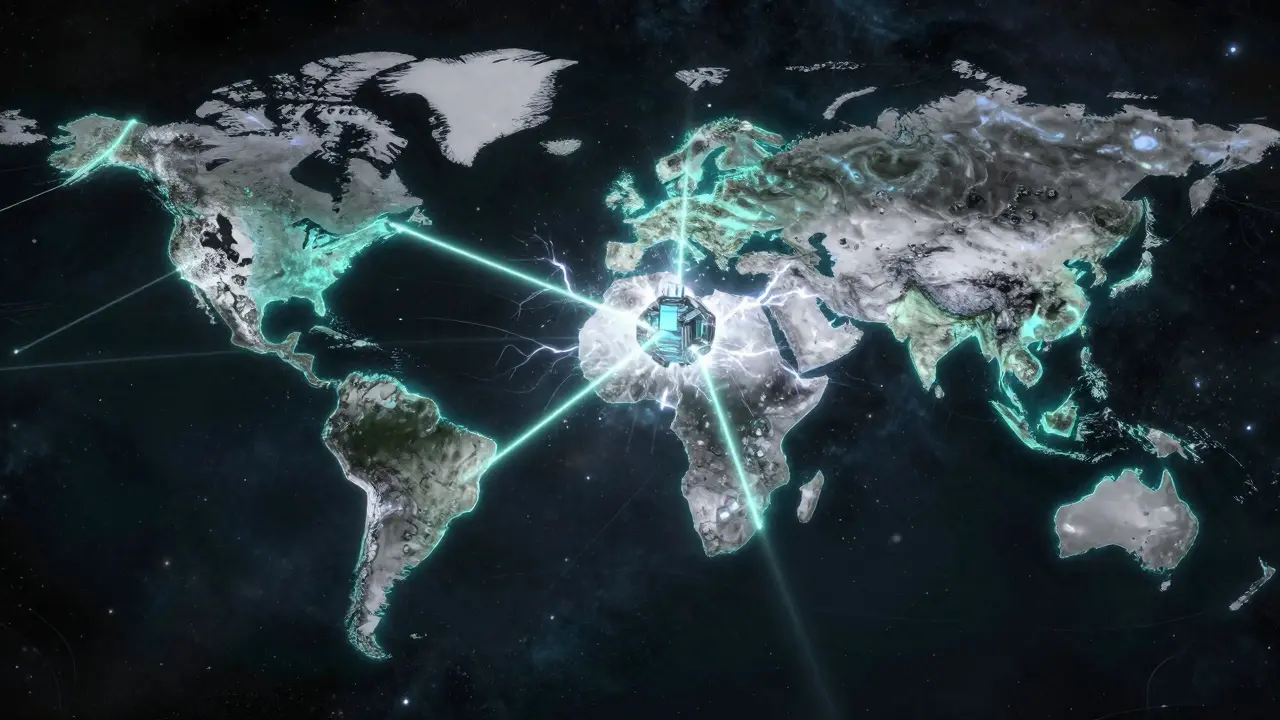
The contrast between Syria and Cuba is part of a larger, fragmented global strategy. While Syria got a pass, Iran remains under "maximum pressure" via NSPM-2. We're seeing a trend where the U.S. uses a scalpel for some (Syria) and a sledgehammer for others (Iran, Russia, Cuba). For example, the U.S. recently targeted networks smuggling Iranian oil disguised as Iraqi oil, proving that the focus has shifted toward high-tech evasion detection.
Meanwhile, the European Union is still wrestling with its own packages against Russia, showing that international coordination is often messy. For the crypto world, this means your "global" asset is actually subject to a dozen different, often conflicting, sets of rules depending on where the exchange's server is located.
Is cryptocurrency legal in Syria in 2026?
There are currently no specific laws in Syria that explicitly permit or forbid the use of cryptocurrency. It exists in a legal gray area. While U.S. sanctions were largely lifted in 2025, making exchanges like Binance more accessible, users must still follow general Anti-Money Laundering (AML) and CFT guidelines.
Can U.S. citizens send crypto to Cuba?
It is extremely risky. The Cuba Assets Control Regime (CACR) remains in full effect and has been strengthened. Most U.S.-based exchanges will block transactions to Cuba to avoid massive OFAC penalties. Any transaction must strictly adhere to specific license requirements or exceptions, which are very narrow.
What happened to Syrian sanctions in 2025?
President Trump issued Executive Order 14312, which revoked the comprehensive sanctions embargo on Syria. This removed Syrian financial institutions from the SDN list and allowed U.S. banks to establish correspondent relationships with Syrian banks, though targeted sanctions on specific individuals (like the Assad family) remain.
What is the risk of using a VPN to access crypto exchanges in Cuba?
The primary risk is account freezing. Exchanges use sophisticated fraud and location detection. If an exchange discovers a user is operating from a sanctioned jurisdiction like Cuba during a KYC check, they will likely freeze the assets to comply with U.S. law, and the user has very little recourse to recover them.
How does the Lightning Network help in sanctioned regions?
The Lightning Network allows for near-instant settlement. Companies like Lightspark use it as a backend to move value between domestic payment systems without the end-user ever needing to touch the volatile cryptocurrency itself, which reduces the direct risk of crypto-specific regulatory hurdles.
Next Steps for Users and Businesses
If you are an institutional investor looking at Syria, your first step is an enhanced due diligence (EDD) report. You need to ensure your Syrian partners are not on the remaining targeted sanctions lists. For those in Cuba, the only safe path is the use of fully decentralized, non-custodial wallets, though this removes the safety net of a centralized exchange.
If you encounter a frozen account, do not immediately attempt to create a second account using another VPN-this is often flagged as "evasion" and can make a legal recovery process much harder. Instead, consult a sanctions lawyer who specializes in OFAC settlements to determine if your transaction falls under a general license.


I'm a blockchain analyst and crypto educator who builds research-backed content for traders and newcomers. I publish deep dives on emerging coins, dissect exchange mechanics, and curate legitimate airdrop opportunities. Previously I led token economics at a fintech startup and now consult for Web3 projects. I turn complex on-chain data into clear, actionable insights.