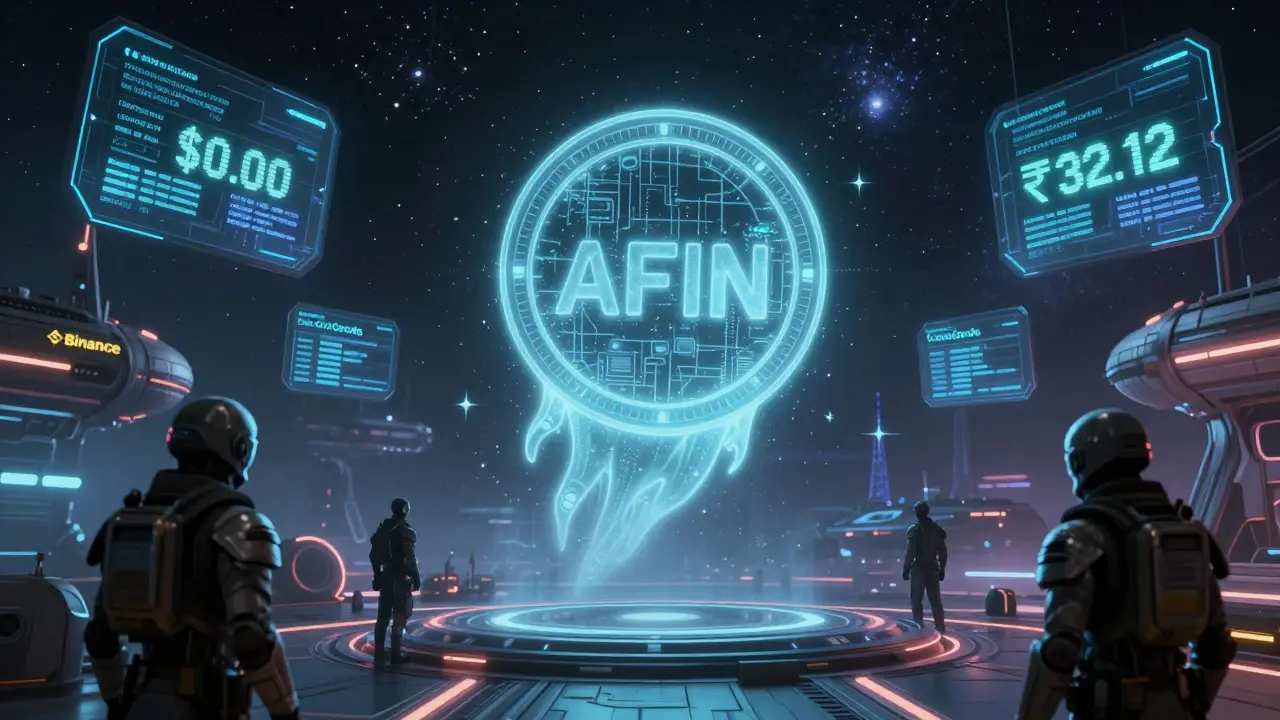
There’s a lot of noise online about an Asian Fintech (AFIN) airdrop. You’ve probably seen posts claiming you can get free tokens, join a community, and cash out big. But here’s the truth: there is no verified, official AFIN airdrop. Not right now. Not in any public record. And if someone’s asking you to send crypto to get AFIN tokens, you’re being targeted.
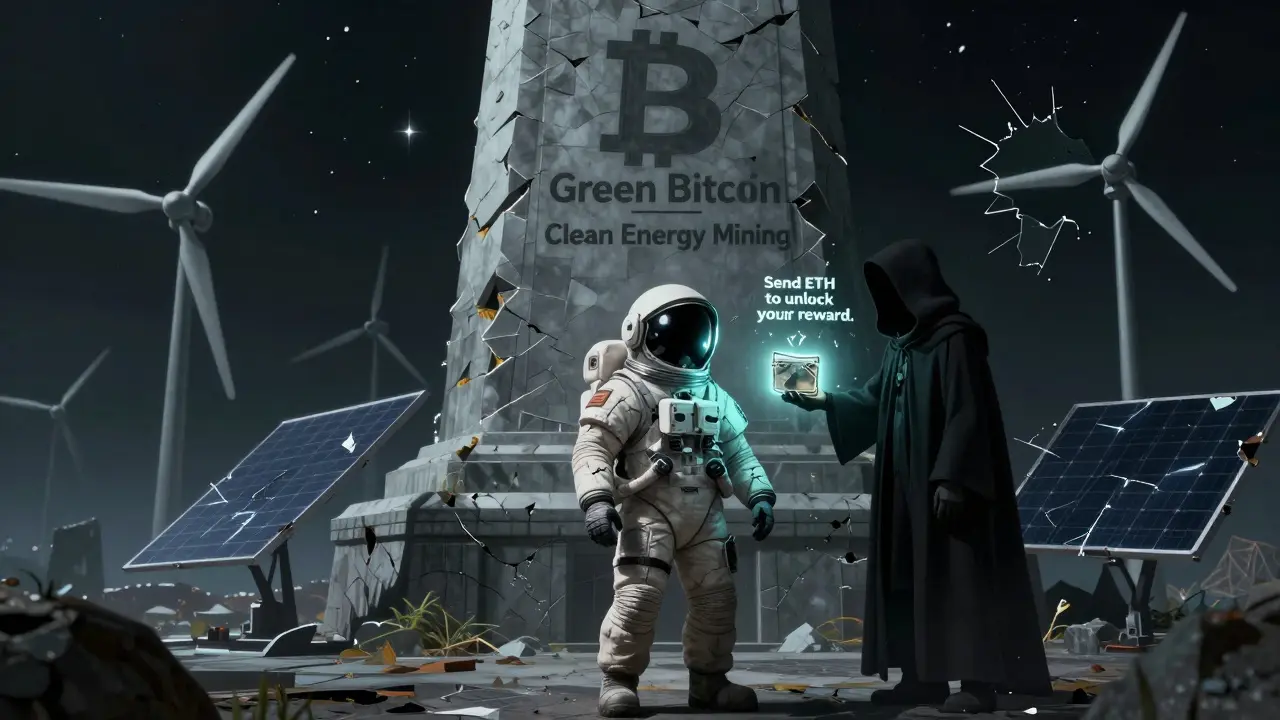
The project behind AFIN says it wants to be a "cryptocurrency with a conscience." It claims to use clean energy-solar, wind, hydro-for mining through its Green Bitcoin initiative. That sounds great. But good intentions don’t pay bills. And in crypto, especially with obscure tokens like this, the lack of transparency is a red flag.
What Is Asian Fintech (AFIN)?
Asian Fintech (AFIN) is a cryptocurrency with a total supply of 500 million tokens. Only 135 million are listed as circulating. Its smart contract address is 0xee9e...f67a72, but that’s not enough. No one can tell you who’s behind the project. No team members. No whitepaper with real technical details. No audits from firms like CertiK or Hacken. That’s not normal for any project that wants to be taken seriously.
On paper, AFIN tries to stand out by tying itself to sustainability. But in practice, it’s barely trading. Binance, one of the biggest exchanges in the world, says AFIN has a price of $0. Zero trading volume. Zero market cap. Meanwhile, CoinCodex claims the price is $0.001218. Which one’s right? Neither, really. It’s like two weather apps giving you different forecasts for the same city. One says sunny, the other says hurricane. You don’t trust either.
Why You Won’t Find an AFIN Airdrop
Let’s cut through the hype. No major crypto platform-CoinMarketCap, CoinGecko, CryptoRank-lists an active airdrop for AFIN. Not even a hint. No dates. No eligibility rules. No contract address for claiming tokens. If there was a real airdrop, it would be on their site. It would be in their newsletters. It would be in the official Telegram or Discord.
Instead, what you’ll find are scammy websites. They’ll say: "Join now, get 5,000 AFIN tokens free!" Then they ask you to connect your wallet. Or send a small amount of ETH or BNB to "unlock" your reward. That’s not a giveaway. That’s a theft. Once you send crypto to one of those sites, it’s gone forever. No refund. No recourse.
Even the token’s historical data is confusing. CryptoRank says AFIN hit a peak of ₹32.12 in January 2019. That’s over five years ago. Since then? Crickets. No new updates. No major partnerships. No development activity on GitHub. No team announcements. It’s like a ghost town with a fancy sign.
Where Can You Even Buy AFIN?
You won’t find AFIN on Coinbase, Kraken, or KuCoin. You won’t find it on Binance’s main platform. But Binance does mention you might be able to trade it through their Web3 Wallet using decentralized exchanges (DEXs) like Uniswap or PancakeSwap. That sounds technical, and it is. It means you need a wallet like MetaMask, you need to know how to swap tokens, and you need to pay gas fees in ETH or BNB just to buy a token that might be worthless.
And even if you do manage to buy AFIN, who’s selling it? There’s no liquidity. No trading pairs. No volume. That means if you want to sell, you’ll struggle to find a buyer. You might be stuck with tokens that can’t be cashed out. That’s not an investment. That’s a parking ticket for your crypto.
Price Predictions? Don’t Believe Them
CoinCodex says AFIN could hit $0.001418 by April 1, 2025. That’s a 16% increase. Then it says a $1,000 investment could turn into $1,607.50 by May 22, 2025. That sounds amazing. But here’s what they don’t tell you: those predictions are based on zero real data. No trading history. No adoption. No demand. Just math on a screen.
They’re using a 30-day volatility of 5.8% and a 43% win rate on green days to build a fantasy. But if a token has zero trading volume, volatility doesn’t mean anything. It’s like predicting how fast a car will go when it’s parked in a garage with no keys.
The Bigger Problem: No One Knows What’s Real
The biggest danger with AFIN isn’t that it’s a scam. It’s that no one can tell if it’s a scam. There’s no transparency. No accountability. No way to verify claims. The team is anonymous. The roadmap? Nonexistent. The code? Not publicly audited. The community? Quiet.
Compare that to real projects. Bitcoin has a public ledger. Ethereum has a dev team you can follow on Twitter. Solana has open-source code and regular updates. AFIN? Nothing. Just a token name and a vague promise about being "environmentally responsible."
That’s not enough. Not even close.

What You Should Do Instead
If you’re looking for crypto opportunities with real potential, don’t chase ghost tokens like AFIN. Instead:
- Look for projects with public teams and verified identities.
- Check if the code is on GitHub and updated regularly.
- See if there’s been a third-party audit from a trusted firm.
- Make sure the token is listed on at least one major exchange.
- Ignore any "free token" offer that asks you to send crypto first.
There are hundreds of legitimate airdrops every year-from established protocols like Uniswap, Arbitrum, and Polygon. They don’t need to trick you. They just announce them on their official channels.
AFIN? It doesn’t even have a real channel.
Final Warning
If you see a website, YouTube video, or Telegram group promising an Asian Fintech airdrop, close it. Block it. Don’t click. Don’t connect your wallet. Don’t send any money. This isn’t a missed opportunity. It’s a trap.
Crypto is full of noise. But the smartest move isn’t chasing every shiny new token. It’s walking away from the ones that don’t want you to know who they are.
Is there an official Asian Fintech (AFIN) airdrop right now?
No, there is no verified or official Asian Fintech (AFIN) airdrop. Major cryptocurrency tracking sites like CoinMarketCap, CoinGecko, and CryptoRank show no airdrop announcements, eligibility rules, or distribution dates. Any website or social media post claiming to offer free AFIN tokens is likely a scam designed to steal your crypto.
Can I buy AFIN tokens on Binance?
No, you cannot buy AFIN on Binance’s main exchange. Binance lists AFIN’s price as $0 and shows zero trading volume. However, Binance suggests you might access AFIN through its Web3 Wallet by connecting to decentralized exchanges (DEXs) like Uniswap or PancakeSwap. This requires advanced knowledge, higher fees, and carries high risk due to lack of liquidity.
Why does AFIN have conflicting price data?
AFIN has conflicting price data because it has almost no trading activity. Some sites like CoinCodex show a price based on minimal or outdated trades, while Binance and CryptoRank report $0 because there’s no real market. This inconsistency signals extreme illiquidity-meaning there’s no active buying or selling, making the token nearly impossible to trade reliably.
Is Asian Fintech a legitimate project?
There’s no solid evidence that Asian Fintech is legitimate. The team is anonymous. There’s no public roadmap, audit reports, or active development on GitHub. While the project claims to use clean energy for mining, there’s no proof or third-party verification. Without transparency, it’s impossible to verify claims, making it a high-risk asset with no real foundation.
What happened to AFIN’s price in 2019?
CryptoRank shows AFIN reached a historical high of ₹32.12 on January 22, 2019. But since then, there’s been no meaningful trading activity. The token’s current price is either $0 or inconsistently reported. This suggests the project lost all momentum after its early days and has not recovered, making past performance irrelevant to current value.
Should I invest in AFIN because it’s "eco-friendly"?
No. Claims about sustainability-like using solar or wind energy for mining-are meaningless without proof. There’s no public data showing how AFIN or its Green Bitcoin initiative actually operates. Many projects use green buzzwords to attract buyers, but if the underlying tech is invisible and unverified, the environmental claim is just marketing. Don’t invest based on slogans.


I'm a blockchain analyst and crypto educator who builds research-backed content for traders and newcomers. I publish deep dives on emerging coins, dissect exchange mechanics, and curate legitimate airdrop opportunities. Previously I led token economics at a fintech startup and now consult for Web3 projects. I turn complex on-chain data into clear, actionable insights.